
Choosing between the Aiko Neostar and the SunPower M Class is a genuinely close decision. Both are premium, all-black, N-type back-contact solar panels designed to deliver high output from limited roof space. The Aiko leads narrowly on stated module efficiency and is the shorter, lighter panel. The latest SunPower panel provides 5W more nominal power, a glass-glass bifacial construction, a slightly better temperature coefficient and substantially longer warranty protection.
At Infinity Energy Services, we install and recommend both panels. The right choice depends on roof dimensions, shading, budget and how much you value long-term warranty certainty. This guide compares the exact models side by side and explains why, on balance, the M Class currently has a small overall edge – without overlooking the areas where the Neostar is stronger.
published 4 September 2025 | updated 23 June 2026
Overview of the Aiko Neostar and SunPower M Class
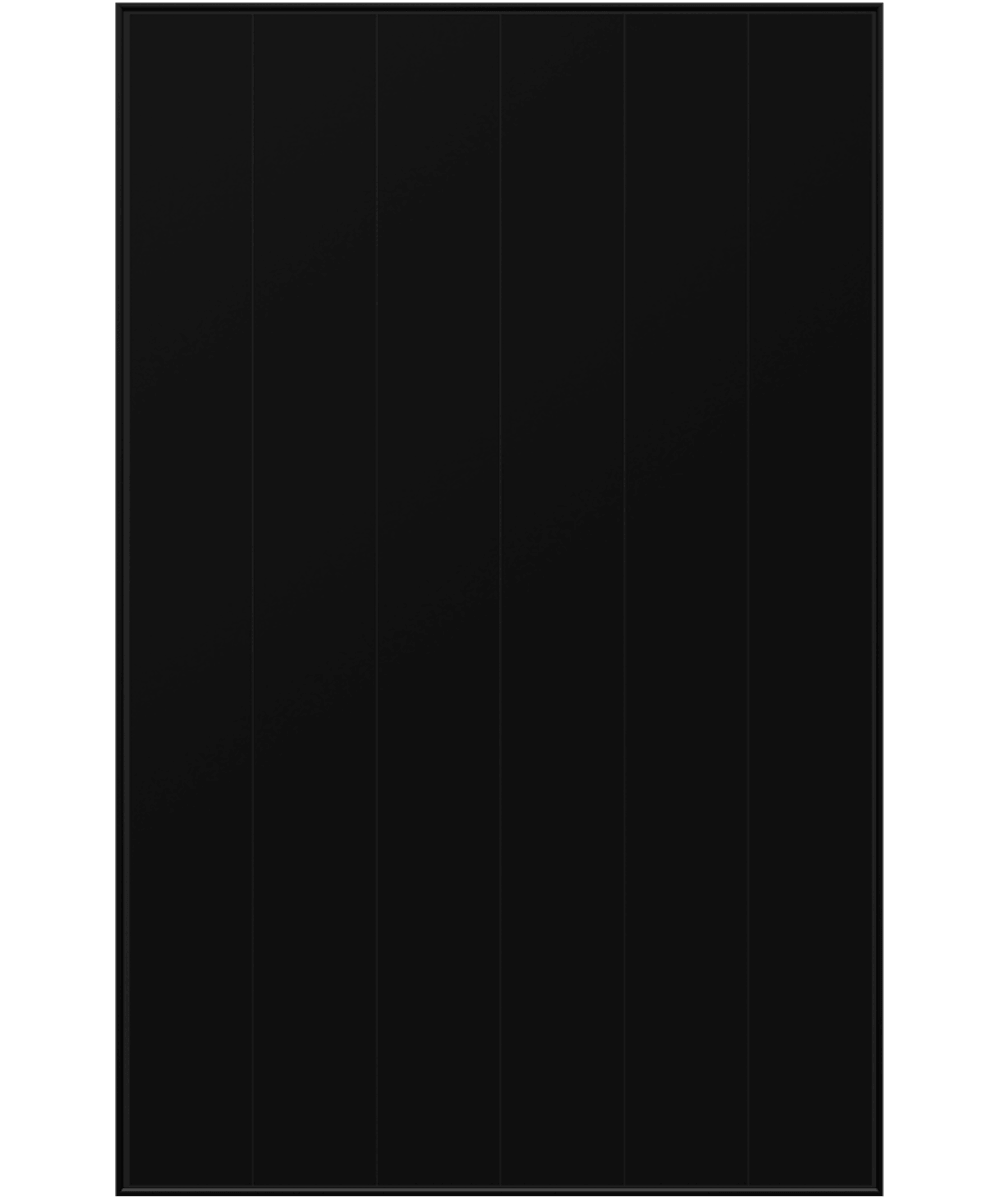
Aiko Neostar 490W
The Aiko Neostar 3S54 490W (AIKO-A490-MCE54Mb) uses N-type ABC – All Back Contact – cell technology. Moving the electrical contacts to the rear gives the panel a clean, uninterrupted black appearance and helps it achieve an excellent 24.5% front-side efficiency. At 1762 x 1134 x 30 mm and 20.6 kg, it is compact and relatively light for a panel in this power class.
Its other strengths include a -0.26%/°C power temperature coefficient, partial-shading optimisation, a positive 0 to +3% power tolerance and a 30-year linear performance warranty. The supplied datasheet gives a 25-year product warranty and guarantees 88.85% of original output at year 30.
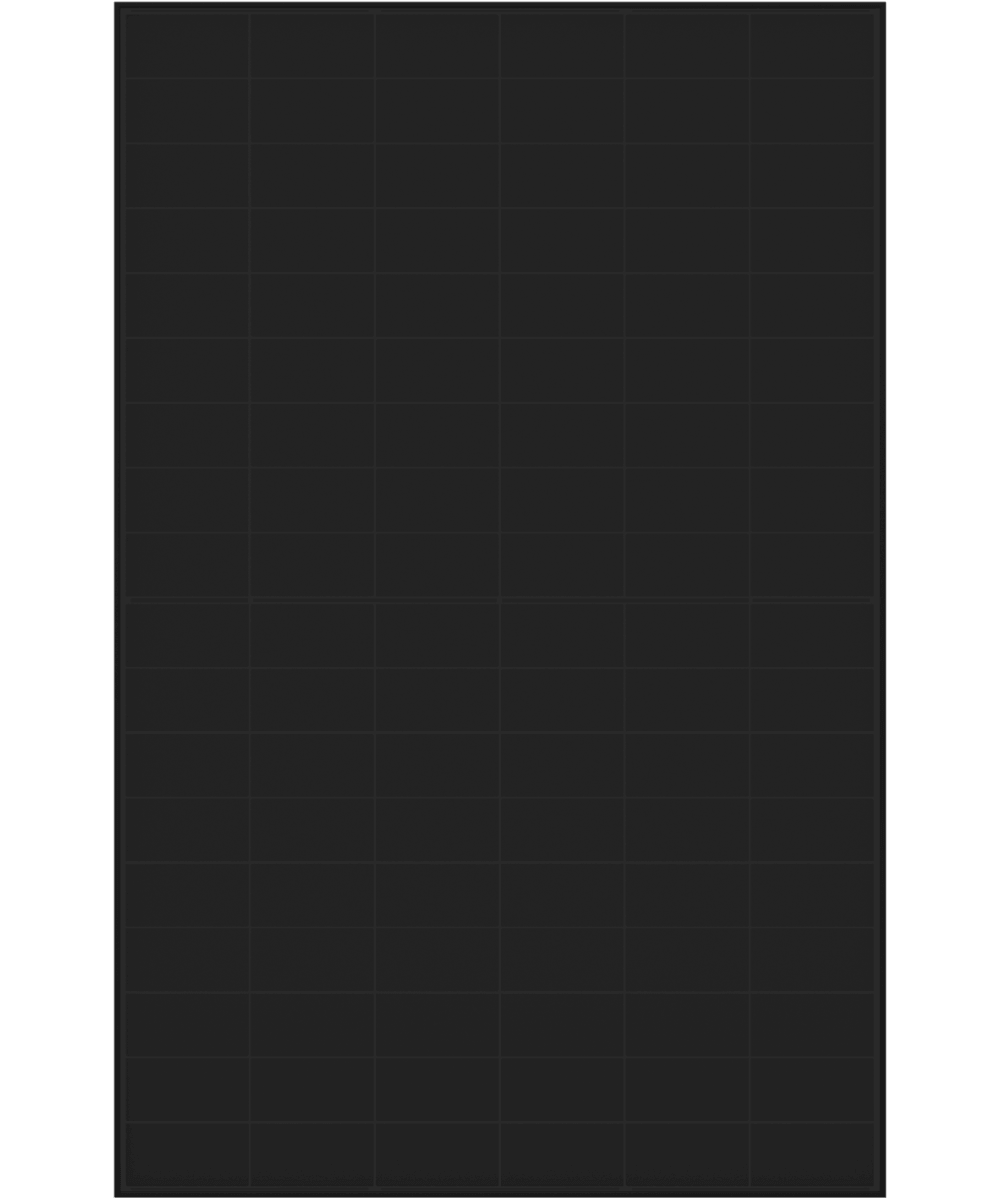
SunPower M Class 495W
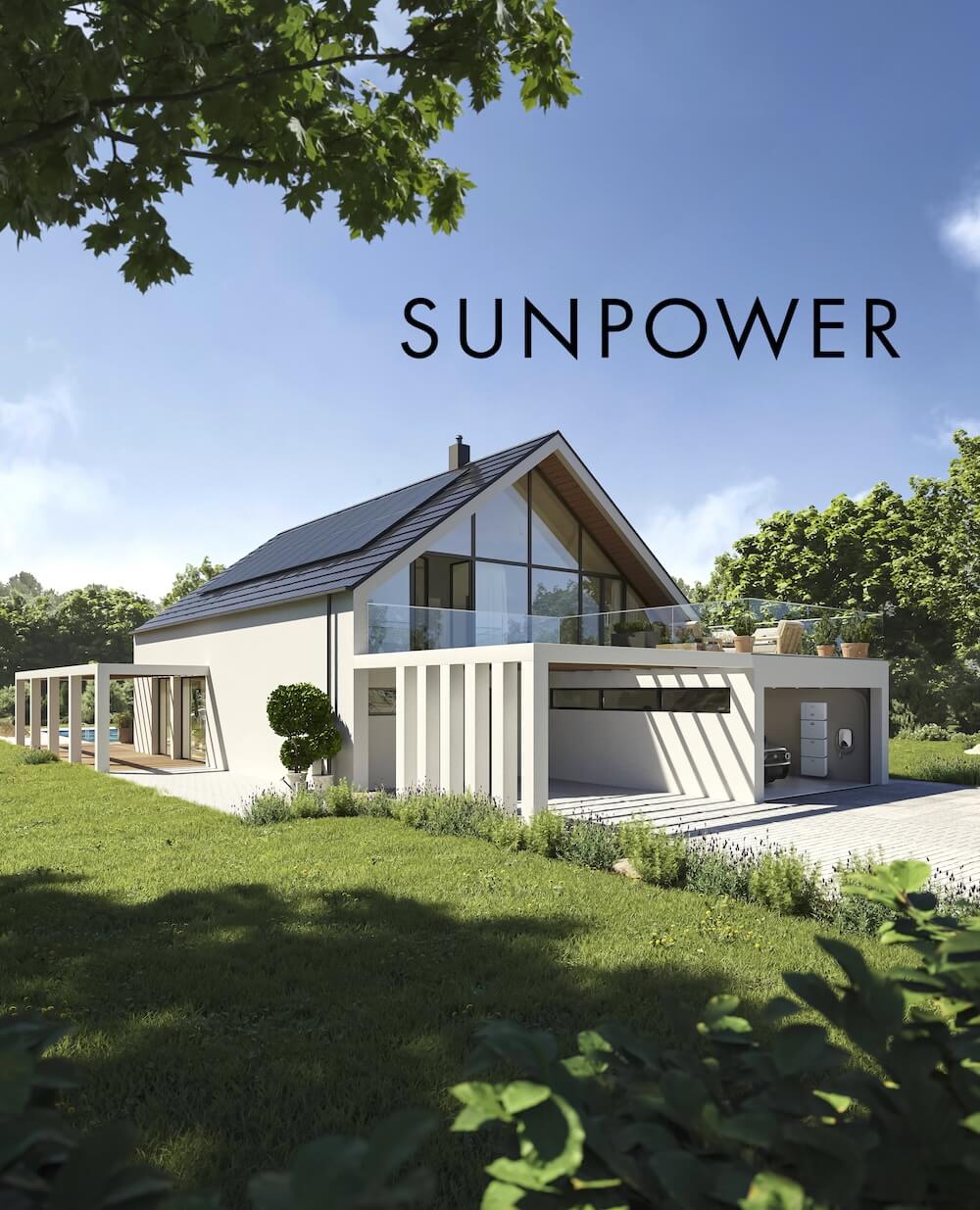
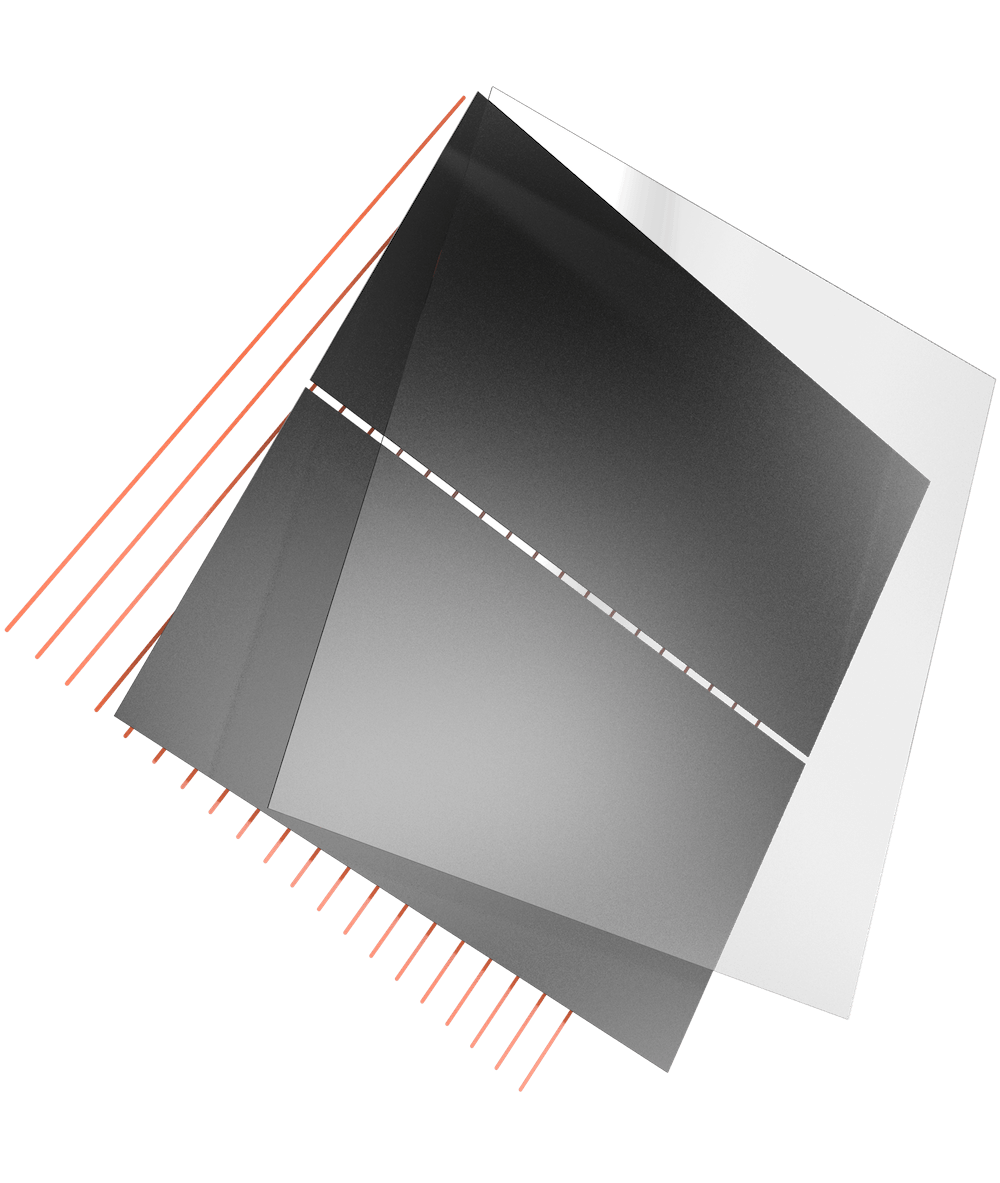
The SunPower M Class 495W (SPR-BD54-DC495) is SunPower’s latest premium residential back-contact panel. It produces 495W at 24.3% front-side efficiency and uses a framed glass-glass, bifacial design, allowing the rear of the module to convert reflected light when the installation provides suitable clearance and a reflective surface.
The M Class is slightly larger and heavier at 1800 x 1134 x 30 mm and 23.5 kg. Its headline advantages are a lower -0.24%/°C power temperature coefficient, maximum annual warranted degradation of 0.25%, and comprehensive 40-year product, power and service coverage, subject to the warranty terms.
Key Comparison Factors: Aiko vs SunPower
For a fair comparison, this guide uses the two exact panels currently under consideration:
- Aiko Neostar 3S54 490W all-black mono-glass panel (AIKO-A490-MCE54Mb)
- SunPower M Class 495W all-black glass-glass bifacial panel (SPR-BD54-DC495)
Efficiency and Power Output
Efficiency measures how much of the sunlight falling on a panel is converted into electricity. This matters most where roof area is restricted and every square metre has to work hard.
- Aiko Neostar 490W: 24.5% module efficiency. This is 0.2 percentage points higher than the 495W M Class and is achieved in a panel that is 38 mm shorter.
- SunPower M Class 495W: 24.3% front-side efficiency, but 5W more nominal output per panel. Where the same number of panels fits, ten M Class panels provide a 4.95 kWp array compared with 4.90 kWp from ten Aiko panels.
- Bifacial potential: the M Class datasheet shows 520W with 5% rear-side gain and 545W with 10% gain for the 495W model. These are illustrative test scenarios, not a guaranteed rooftop uplift. Rear gain depends on panel clearance, mounting geometry and the reflectivity of the surface below.
The practical difference in front-side efficiency is small, so roof layout can matter more than the percentage on the datasheet. If the Aiko’s shorter dimensions allow an additional panel to fit, it may produce the stronger overall array. If both designs use the same panel count, the M Class starts with a modest output advantage and retains the possibility of extra rear-side generation.

VERDICT: Aiko wins narrowly on front-side efficiency and compactness. M Class wins narrowly on nominal power per panel and adds bifacial upside. For like-for-like panel counts, the M Class has the slight overall edge.
PANEL | AIKO NEOSTAR | SUNPOWER M CLASS |
Nominal Power | 490W | 495W |
Efficiency | 24.5% | 24.3% |
Bifacial Gain Potential | No (mono-glass with backsheet) | Yes (glass-glass) |
Cell Technology | N-Type ABC back contact | N-Type back contact |
Durability and Weather Resistance
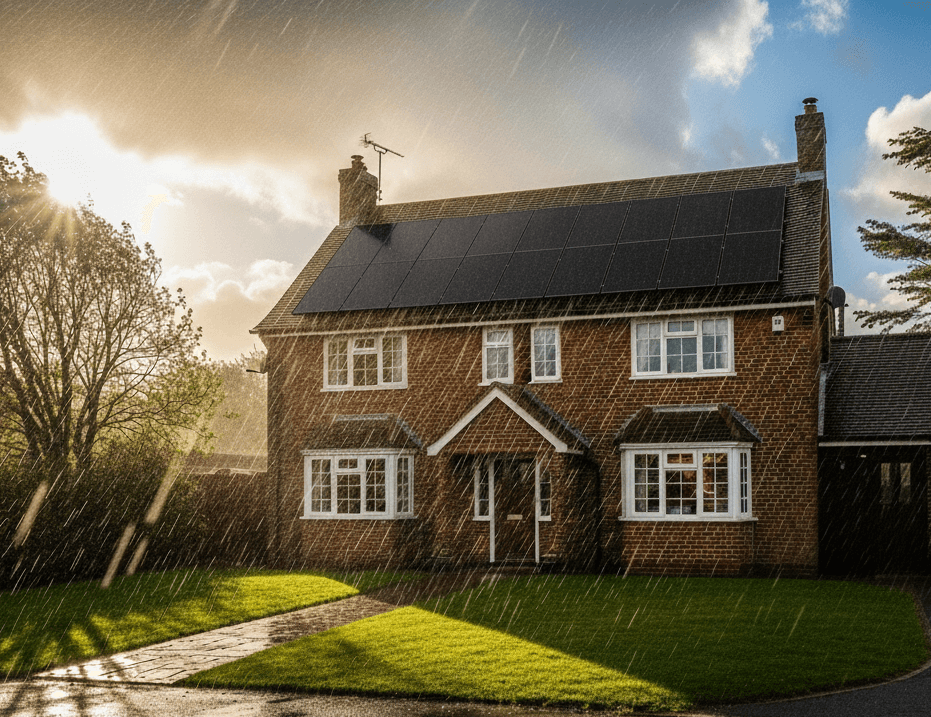
Both panels are designed for demanding outdoor conditions and their datasheets show closely matched mechanical test ratings:
- Maximum front or snow load: 5400 Pa
- Maximum rear or wind load: 2400 Pa
- Hail test: 25 mm diameter hail at 23 m/s
- Protection class: Class II, with an IP68 junction box and three bypass diodes
The main construction difference is that the M Class is glass-glass, while the Aiko uses 3.2 mm tempered front glass with a weather-resistant backsheet. The M Class construction also enables bifacial generation, although it contributes to the panel being 2.9 kg heavier. The Aiko’s lower weight can make handling easier and may be helpful on roofs where load and access deserve extra consideration.
In warmer conditions, the M Class also loses slightly less power as cell temperature rises: -0.24%/°C compared with -0.26%/°C for the Aiko. The difference is modest on any single day, but it supports the M Class’s case for lifetime energy yield.
VERDICT: The published load and hail ratings are effectively level. Aiko is lighter; M Class combines glass-glass construction with the better power temperature coefficient. That gives SunPower a modest long-term durability and thermal-performance advantage.
Aesthetics and Installation
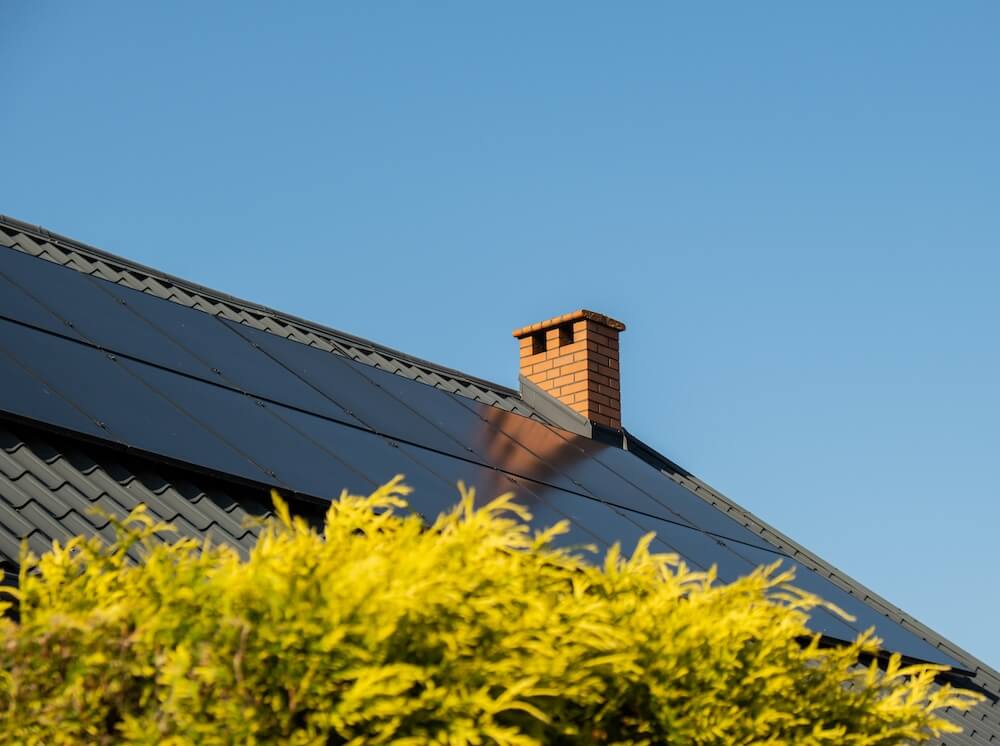
Both panels use back-contact cells, so there are no prominent silver busbars across the front. Both also use black anodised aluminium frames, creating the uniform all-black appearance many UK homeowners prefer.
- Aiko Neostar: 1762 x 1134 x 30 mm; 20.6 kg
- SunPower M Class: 1800 x 1134 x 30 mm; 23.5 kg
The same 1134 mm width means array planning is similar, but the Aiko is 38 mm shorter. On simple roof planes this difference may not change the design; around roof lights, hips, valleys or restricted eaves, it can be useful. The M Class uses a slightly larger footprint to deliver its extra 5W and bifacial construction.
VERDICT: Aesthetics are a draw. Aiko takes the practical installation point for being shorter and lighter, while the M Class remains compact for a 495W glass-glass panel.
Warranty and Long-Term Reliability

Warranty is the clearest difference between these two panels. Both begin with a minimum warranted output of 99% after the first year, but the M Class then allows less annual degradation and continues its cover for ten years longer.
- Aiko Neostar: 25-year product warranty and 30-year performance warranty in the supplied datasheet; maximum annual degradation of 0.35% from years 2 to 30; 88.85% minimum warranted output at year 30.
- SunPower M Class: 40-year product, power and service coverage; maximum annual degradation of 0.25%; approximately 91.75% minimum warranted output at year 30 and 89.25% at year 40, calculated from the datasheet figures.
Applied to the two nameplate ratings, the linear warranty figures equate to roughly 435W for the Aiko and 454W for the M Class at year 30. These are minimum warranty thresholds rather than generation forecasts, but they illustrate the stronger long-term guarantee behind the SunPower panel.
The service element is also important. The M Class datasheet describes 40-year product, power and service coverage, whereas the Aiko documentation supplied for this comparison sets out product and performance cover. All warranty claims remain subject to the manufacturer’s full terms, installation requirements and exclusions.
VERDICT: Both warranties are strong, but M Class is the clear winner for duration, degradation protection and service coverage. This is the most meaningful reason it comes out ahead overall.
Price and Value

Solar panel value should be judged from the complete installed system, not a panel-only price. Scaffolding, inverter choice, roof access, electrical work, monitoring, battery storage and the number of panels that fit can have more impact on the final quote than a small difference in module cost.
The Aiko may be the stronger value choice where its smaller footprint improves the design, where lower weight is useful, or where it enables a more competitive upfront system price. The M Class is positioned as a premium option, but its 40-year service-backed warranty and lower degradation rate strengthen the lifetime-value case.
The fairest way to compare is to request two like-for-like proposals using the same consumption assumptions, roof model, inverter, battery and electricity tariffs. Infinity can then show the effect of panel count, estimated annual generation, warranty and total installed cost side by side.
VERDICT: Aiko may win on upfront value in some quotations. M Class has the stronger long-term value proposition. The correct choice depends on the installed price difference and the roof design, rather than the module price alone.
Pros and Cons Summary
Aiko Neostar 490W Pros
- Excellent 24.5% front-side efficiency
- Shorter and 2.9 kg lighter than the M Class
- Clean all-black back-contact appearance
- Strong -0.26%/°C power temperature coefficient
- Partial-shading optimisation and positive 0 to +3% power tolerance
- Strong 30-year linear performance guarantee
Aiko Neostar 490W Cons
- 5W lower nominal output per panel
- Mono-glass and backsheet construction rather than bifacial glass-glass
- Shorter product cover in the supplied datasheet
- Higher annual warranted degradation than the M Class
SunPower M Class 495W Pros
- 495W nominal output from a residential-size panel
- Glass-glass bifacial design with installation-dependent rear-side gain
- Excellent -0.24%/°C power temperature coefficient
- Lower 0.25% maximum annual warranted degradation
- Comprehensive 40-year product, power and service coverage
- Clean all-black back-contact appearance
SunPower M Class 495W Cons
- Slightly lower 24.3% front-side efficiency
- 38 mm taller and 2.9 kg heavier than the Aiko
- Likely to command a premium upfront price
- Bifacial gain may be limited on close-mounted dark tiled roofs
- Current datasheet is marked preliminary
VERDICT: Aiko offers a particularly strong combination of efficiency, compactness and weight. M Class gives up a fraction of front-side efficiency but adds more nominal power, bifacial construction and much stronger long-term warranty protection.
Specific Model Comparison: Head-to-Head
FEATURE | AIKO NEOSTAR 490W | SUNPOWER M CLASS 495W |
Nominal power | 490W | 495W |
Front-side efficiency | 24.5% | 24.3% |
Cell technology | N-type ABC back contact | N-type back contact |
Construction | 3.2 mm front glass + backsheet | Glass-glass, bifacial |
Bifacial capability | No | Yes; gain is installation-dependent |
Dimensions | 1762 x 1134 x 30 mm | 1800 x 1134 x 30 mm |
Weight | 20.6 kg +/-3% | 23.5 kg |
Power temperature coefficient | -0.26%/°C | -0.24%/°C |
Power tolerance | 0 to +3% | +3/0% |
Maximum front/snow load | 5400 Pa | 5400 Pa |
Maximum rear/wind load | 2400 Pa | 2400 Pa |
Hail test | 25 mm at 23 m/s | 25 mm at 23 m/s |
Operating temperature | -40°C to +85°C | -40°C to +70°C |
Product warranty | 25 years | 40 years |
Performance warranty | 30 years | 40 years |
Service coverage | n/a | 40 years |
Year 1 minimum output | 99% | 99% |
Max. annual degradation after year 1 | 0.35% | 0.25% |
Minimum warranted output at year 30 | 88.85% | Approx. 91.75% |
FAQs About Aiko Neostar vs SunPower M Class
Both are among the strongest residential panels available. The Aiko is marginally more efficient, shorter and lighter. The M Class provides slightly more nominal power, glass-glass bifacial construction, a better temperature coefficient, lower warranted degradation and a 40-year product, power and service warranty. Taken together, those long-term advantages give the M Class a narrow overall lead.
Panel efficiency is only one measure. Aiko leads by 0.2 percentage points, which is useful on a tightly constrained roof. The M Class nevertheless has a higher 495W rating, loses slightly less power in heat, can generate from reflected rear light in suitable installations, and carries stronger long-term guarantees. The result is close, and the roof layout can still change the answer.
On one panel, 5W is small. Across ten panels it adds 50Wp, and across fourteen panels it adds 70Wp, provided the same number of panels fits. If the Aiko’s shorter footprint allows one more module on the roof, that layout advantage is far more important than 5W per panel.
Not necessarily. Bifacial gain depends on how much reflected light can reach the rear of the panel. A raised array over a light-coloured flat roof may benefit more than panels mounted close to dark roof tiles. The M Class datasheet’s 5% and 10% examples show the technology’s potential, not a guaranteed uplift for every home.
The Aiko has the advantage on pure front-side efficiency and is 38 mm shorter, so it can be the better fit around roof lights, hips, valleys or restricted eaves. A detailed roof plan is essential: the best panel is the one that creates the strongest complete array, not simply the one with the highest individual specification.
The M Class has the better power temperature coefficient at -0.24%/°C, compared with -0.26%/°C for the Aiko. Both figures are excellent. The M Class will retain slightly more of its rated output as cell temperature rises, although the difference on a typical UK day is modest.
Both manufacturers promote partial-shading performance and both panels use back-contact cell technology with three bypass diodes. The real result depends on the location and movement of the shade, string design, inverter choice and whether optimisers are used. Infinity will model the specific roof rather than declare a universal winner from the panel alone.
The M Class. Its datasheet offers 40-year product, power and service coverage with maximum annual degradation of 0.25%. The supplied Aiko datasheet offers 25-year product and 30-year performance cover with 0.35% annual degradation after year 1. Even if the newer 30-year AIKO product warranty applies, SunPower still leads on duration and service cover.
Aiko may offer better upfront value and can be the better design choice where its smaller dimensions allow more panels to fit. M Class offers the stronger lifetime-value case through its lower degradation and longer service-backed warranty. Compare complete installed quotations and projected generation rather than module price alone.
Yes. Infinity installs both Aiko Neostar and SunPower M Class panels. We can prepare like-for-like system designs and explain where each option performs best, so the recommendation is based on your roof, consumption and priorities.
Final Verdict: Which Panel Comes Out on Top?
This is much closer than a simple winner-and-loser comparison suggests. The Aiko Neostar 490W is an excellent panel: it has the higher stated efficiency, a smaller and lighter format, strong temperature performance and an attractive all-black back-contact design. For a constrained roof, or where it creates a better-value system layout, it may be the right choice.
The SunPower M Class 495W, however, combines slightly higher nominal power with glass-glass bifacial construction, the better power temperature coefficient, lower warranted degradation and a comprehensive 40-year product, power and service warranty. None of these differences is dramatic in isolation, but together they make the M Class the more complete long-term package.
Our overall view: M Class currently has the edge for homeowners prioritising lifetime performance, warranty certainty and long-term value. Aiko remains a highly credible alternative – and can still be the better panel where its compact footprint or installed price creates the stronger whole-system design.
VERDICT: SUNPOWER M CLASS 495W – narrow overall winner. AIKO NEOSTAR 490W – strongest for compactness and front-side efficiency.
Why Choose Infinity Energy Services for Your Solar Installation?
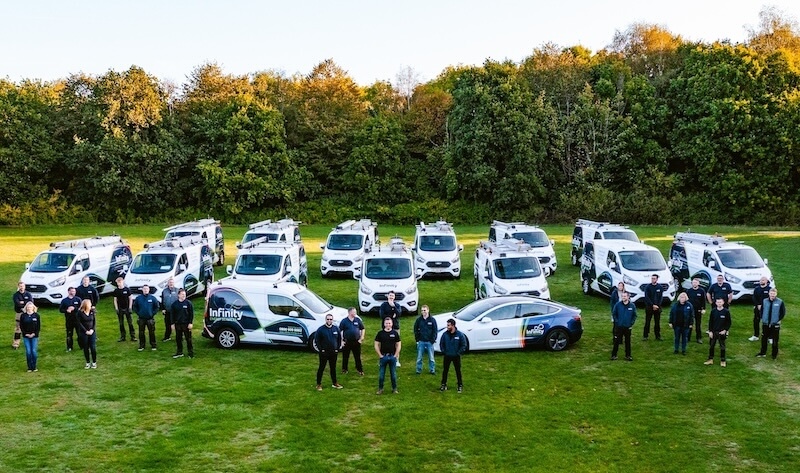
Infinity Energy Services installs both Aiko and SunPower, so our recommendation is not limited to one manufacturer. We assess the whole system and explain the trade-offs clearly.
- A detailed survey and bespoke roof layout
- Like-for-like Aiko and SunPower generation modelling where appropriate
- Clear explanation of warranties, degradation and any installation conditions
- Complete system design covering inverter, monitoring and battery storage
- MCS-compliant installation and long-term aftercare
Next Steps: Free Survey and Quote
- Tell us what you want from your solar system, including bill savings, battery storage, future electric vehicle or heat pump plans, and how long you expect to stay in the property.
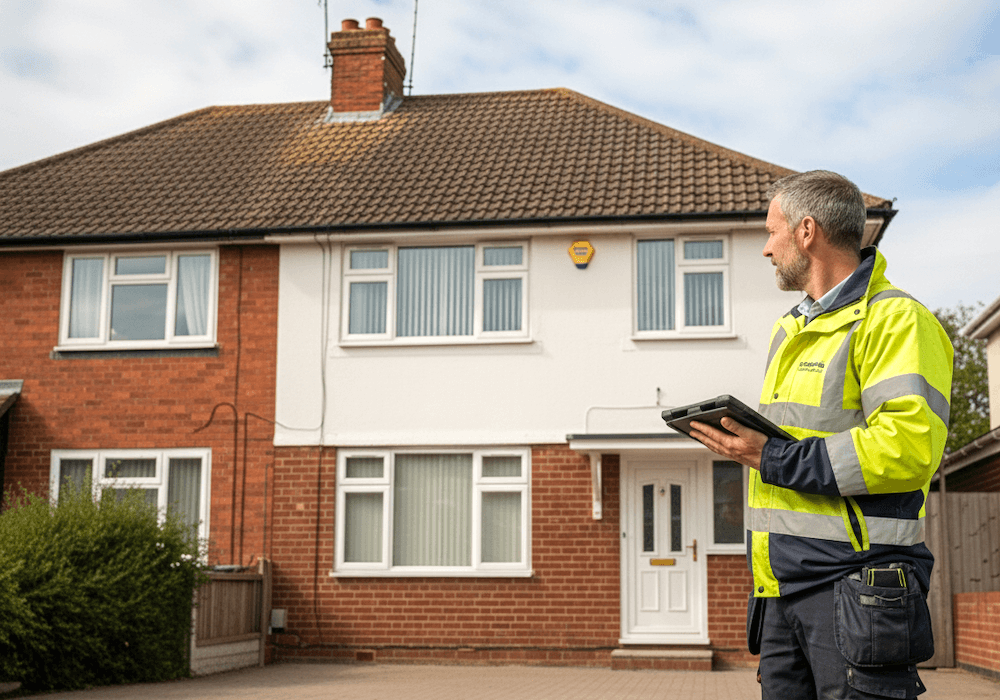
- We will survey the roof and model the strongest Aiko and SunPower layouts, taking account of usable area, orientation, shading and electrical design.
- You will receive a clear proposal showing installed cost, expected generation, warranty and payback assumptions, so you can choose with confidence.
Downloads
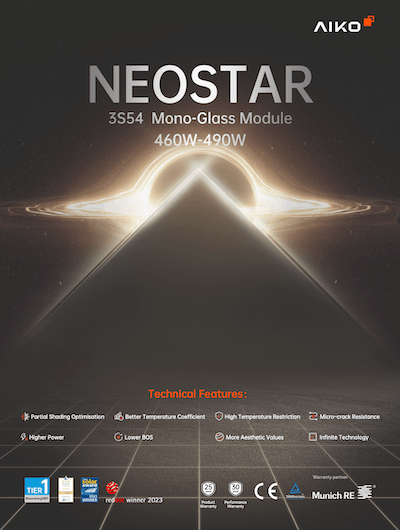
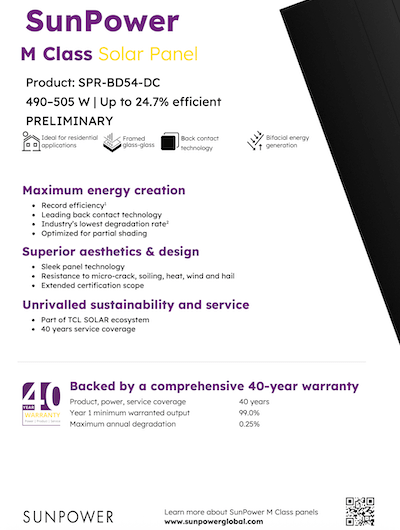
Here you can get quick access to PDF datasheets for the Aiko Neostar and SunPower M Class panels:
What are our customers saying?
LATEST NEWS & GUIDES



SERVICE THAT’S FULLY SUPPORTED, ACCREDITED AND GUARANTEED