
UK’s New Electric Car Grant:
What You Need to Know
£650 million Electric Car Grant Scheme Now Available
by David Lewis | published 7 November 2025 | updated 11 November 2025
The UK’s shift to electric vehicles is well underway. With the 2030 ban on new petrol and diesel cars looming, and electric vehicles (EVs) now accounting for over a quarter of all new car sales in some months of 2025, the momentum is undeniable.
Year-to-date, battery-electric vehicle (BEV) registrations have already surpassed the entire 2024 total, with market share surging to 22.4%.
To fuel this transition, the government has launched a new £650 million Electric Car Grant (ECG) to make new EVs more affordable.
However, if you’re thinking about getting an EV in the coming months, this good news needs to be considered alongside a further question: “How, where, and how cheaply can I recharge?”
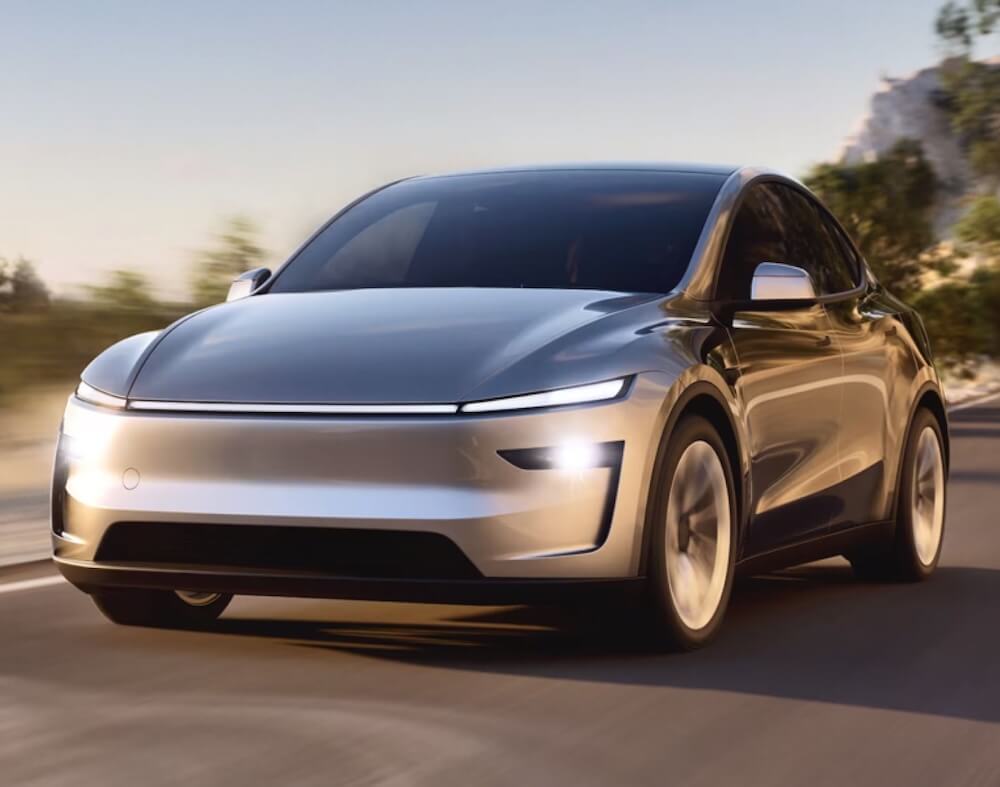
It’s one thing to go green with an electric vehicle more cheaply via the grant, but you also need to work out how much it’s going to cost to run the EV over time.
This article cuts through the confusion, explains the new grants available in 2025 and 2026, and reveals why the smartest investment isn’t just the car, but also an integrated home energy system.
A Tale of Two Grants: Clarifying the 2025 Incentives
The first point of confusion for many is that there are two major government grants active, and they serve very different purposes.

THE ELECTRIC CAR GRANT (ECG): TO BUY THE CAR
This is the new headline-grabbing incentive. Launched on 16 July 2025, this £650 million fund is designed to make the initial purchase of an EV cheaper.
- What is it? A two-tier discount applied automatically by the dealer. There is no paperwork for you to do.
- Who qualifies? Any individual or business buying an eligible new electric car with a list price at or under £37,000.
- How much is it?
• Band 1: £3,750. This is for a very small number of vehicles that meet extremely strict new sustainability and low-carbon production criteria. As of late 2025, only a handful of models, like the new Citroen e-C5 Aircross (Long Range), Ford E-Tourneo Courier and Ford Puma Gen-E qualify.
• Band 2: £1,500. This is the grant that the vast majority of eligible cars (at least 29 models at time of writing) fall into.
For most people, this is a £1,500 discount on a new EV, running until the 2028–29 financial year. The government keeps an updated list of all eligible cars.
THE EV CHARGEPOINT GRANT (EVCG): TO INSTALL A CHARGER
This is a separate, pre-existing OZEV grant specifically for charger installation:
- What is it? A grant that provides up to £350 (or 75% of the cost, whichever is lower) towards the purchase and installation of one home chargepoint.
- Who qualifies? This grant is not available for most detached or semi-detached homeowners. It is specifically targeted at:
• Renters in any residential property (houses or flats).
• Homeowners who own and live in a flat.
- The deadline: This grant is only confirmed to run until 31 March 2026.
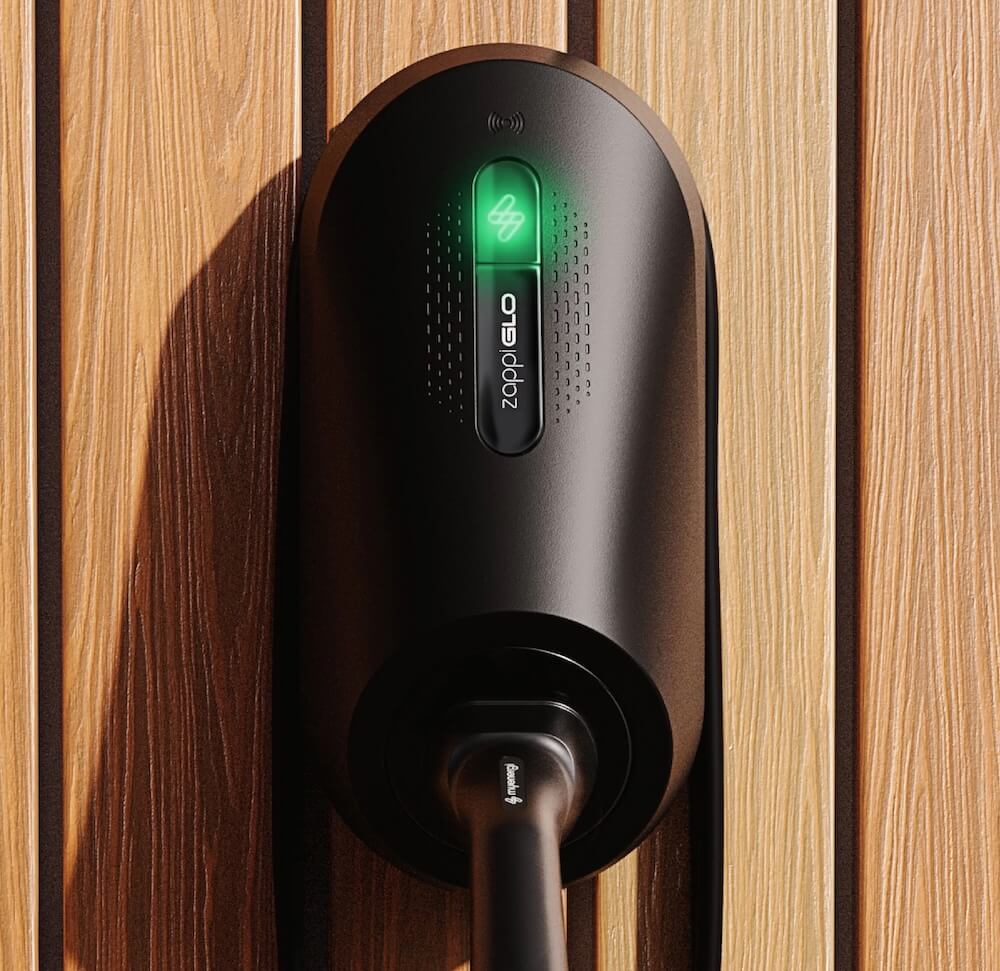
For homeowners in houses, the £350 subsidy is no longer available. However, the financial case for installing a charger is so strong that this subsidy is trivial in the long run. A home charger is now a key home improvement, with property experts noting it can add between £3,000 and £5,000 to your home’s value. With installation costs for a 7 kW smart charger typically around £900-£1,300, the investment not only pays for itself, but delivers a significant return.
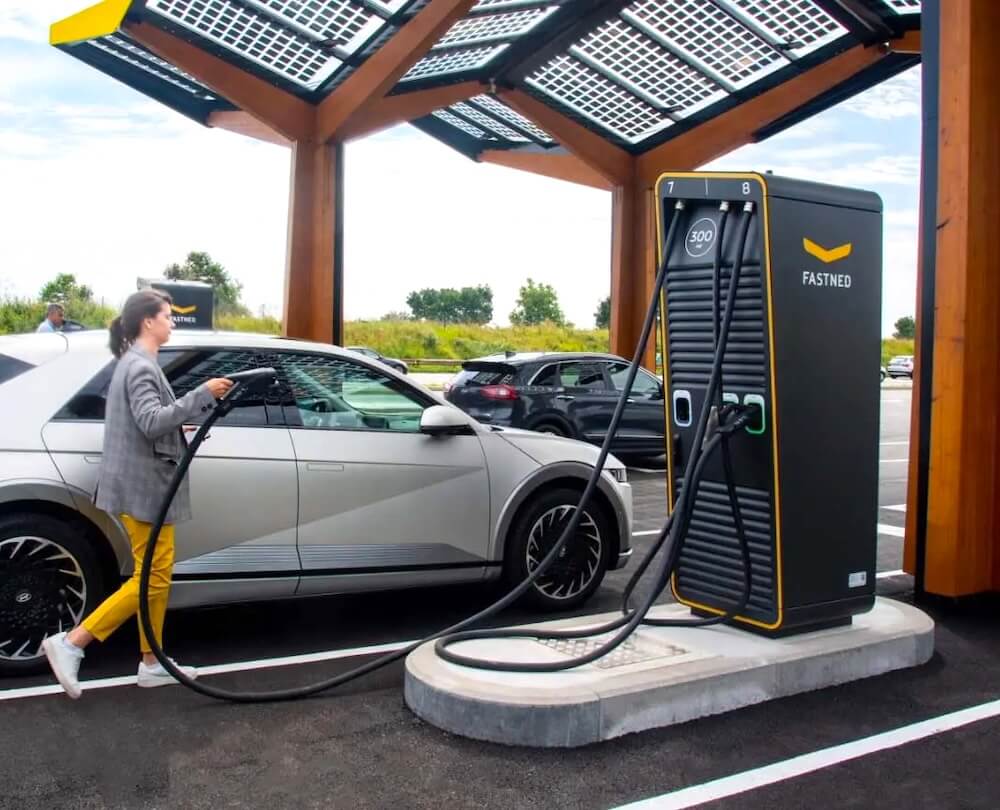
The Home Charging Imperative
The single biggest financial shock for new EV drivers is discovering that public charging is not cheap. While convenient on a long journey, relying on the public network on a regular basis can cost as much as running a petrol or diesel car.
The only way to unlock the true savings of EV ownership – and what our customers find can be up to 10 times cheaper – is to charge at home.
A specialist home EV charger installation is not just an accessory; it’s a portal to radically different “fuel” prices. The data is stark, as shown by both market analysis and the government’s own advisory rates:
CHARGING METHOD | AVERAGE COST (PENCE / KWH) | ESTIMATED COST PER MILE | ANNUAL COST (8,000 MILES) |
Public Ultra-Rapid | 76p | 22p | £1,760 |
HMRC Public Rate | 49p | 14p | £1,120 |
Home (Standard Tariff) | 27p | 7.7p | £616 |
Home (Smart EV Tariff) | 7p | 2p | £160 |
TABLE ABOVE: Assumes EV efficiency of 3.5 miles/kWh.
HMRC row shows HMRC’s 14p / mile but expressed as 49p / kWh for comparison.
The real secret is that Row 4 saving. A modern smart charger is the “key” that unlocks specialist EV energy tariffs, such as Intelligent Octopus Go. These tariffs communicate with your charger and automatically charge your car during a night-time off-peak window.
Ultra-cheap EV tariff rates can bring your driving costs down to just 2p per mile.
Crucially, that cheap 7p / kWh rate doesn’t just apply to your car. It applies to your entire home during that window. Suddenly, you can run your washing machine, dishwasher, and other high-energy appliances for a fraction of the normal cost.
Beyond the Plug: The Whole-Home Energy Ecosystem
Once you get an EV, you start to think differently about how you manage energy in the home. Your car and charger become part of a whole-home energy system.
FUELLING YOUR EV WITH SUNSHINE
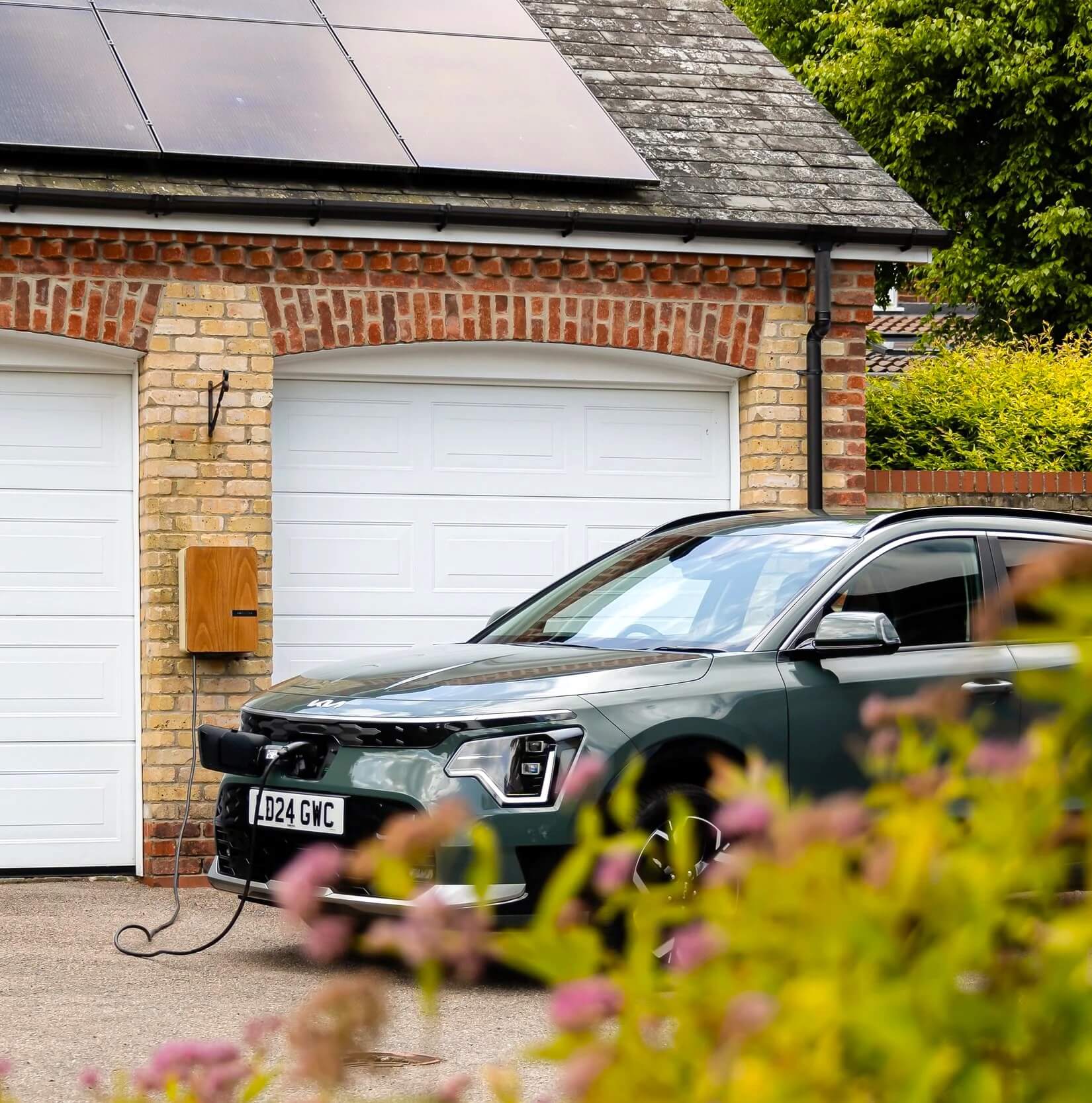
Why pay even 7p / kWh for grid energy when you can generate your own for 0p / kWh? Installing solar panels allows you to drive on sunshine.
Modern smart chargers, like the Myenergi Zappi which we install, have an “ECO” mode that is perfect for this. It intelligently detects when your solar panels are generating more electricity than your house is using. It then diverts only that free, surplus, zero-carbon energy straight into your car’s battery.
MASTERING THE GRID WITH BATTERY STORAGE
The obvious challenge is that solar generates power during the day, but you may wish to charge at night. This is where battery storage becomes a useful optimiser for your home.
A home battery, like a Tesla Powerwall or Sigenergy SigenStor, solves this problem with a powerful two-pronged strategy:
- Store free solar: The battery stores your unused, surplus solar energy from the day. When you get home and plug in your car, you charge it from your battery, using 100% self-generated, zero-cost energy. This is the key to cutting grid reliance by up to 91%. You can also choose to have your battery cover your home energy needs more than your EV – ask us about different strategies depending on your situation.
- Tariff arbitrage: Even if you don’t have solar panels, a battery can be a remarkable investment. Paired with your smart EV tariff, you can set the battery to charge itself from the grid during the same off-peak window at the super-cheap 7p / kWh rate. Then, during the day, your house can run potentially entirely from the battery, saving you moneyby avoiding peak costs.

The Future-Proofed Home: From Smart Charging to V2G
The journey that starts with a car grant is, in fact, the first step towards a fully independent home “microgrid”.
The next frontier, which is arriving in the UK right now, is Vehicle-to-Grid (V2G) technology. This allows for a bi-directional flow of energy. Your EV doesn’t just take power; it can give it back to your house or even sell it to the grid during peak times for a profit.
Until now, this has been limited to a few car models. However, the industry is on the cusp of a breakthrough, with CCS-compatible V2G technology (the standard for most new EVs) expected to roll out from 2026. Analysts predict this will turn your car into a mobile asset that could earn you over £1,500 a year.
The decision to buy an EV in 2025/2026 is the catalyst for re-evaluating your entire home’s relationship with energy. The landscape of grants, tariffs, and technology is complex. Investing in a future-proofed, OZEV-authorised smart charger is the critical first step to ensuring you are ready to benefit from the solar, battery, and V2G solutions that are defining the next generation of home energy.