Do You Need Planning Permission for Solar Panels? The Ultimate 2026 UK Guide

Most UK homes do not need planning permission for solar panels. Thanks to permitted development rights, the majority of residential solar installations can proceed without a formal planning application – saving you time, money, and paperwork.
However, there are important exceptions. If you own a listed building, live in a conservation area, want to install ground-mounted panels, or your property has had its permitted development rights removed, you may need to apply for planning permission or listed building consent before your installation can proceed.

This comprehensive guide covers everything you need to know about solar panel planning requirements across England, Wales, Scotland, and Northern Ireland. Whether you’re a homeowner considering rooftop panels, a business owner planning a commercial solar installation, or a farmer exploring ground-mounted solar, you’ll find clear, authoritative guidance to help you understand exactly what permissions – if any – your project requires.
published 4 February 2026
– TABLE OF CONTENTS –
• What Are Permitted Development Rights for Solar Panels?
• Planning Permission for Residential Solar Panels
• Planning Permission for Commercial Solar Panels
• Solar Panels on Listed Buildings
• Solar Panels in Conservation Areas
• Planning Permission Across the UK: Regional Differences
• How to Apply for Planning Permission for Solar Panels

What Are Permitted Development Rights
for Solar Panels?
Permitted development rights allow homeowners and property owners to make certain improvements without needing to apply for planning permission. Think of them as pre-approved categories of work that the government has decided are generally acceptable.
For solar panels, permitted development rights were introduced to encourage the uptake of renewable energy by removing bureaucratic barriers. The principle is straightforward: if your installation meets specific conditions regarding size, position, and visual impact, you can proceed without submitting a planning application.
In England, these rights are set out in The Town and Country Planning (General Permitted Development) (England) Order 2015, commonly known as the GPDO. Similar – though not identical – legislation exists in Wales, Scotland, and Northern Ireland.
It’s important to understand that permitted development rights can be removed. Your local planning authority may have issued an Article 4 direction covering your area, which withdraws specific permitted development rights. Alternatively, conditions attached to your property’s original planning permission may have restricted these rights. If you’re unsure whether your property has full permitted development rights, contact your local planning authority before proceeding.

Planning Permission for Residential Solar Panels
The vast majority of residential solar installations in the UK proceed without any planning application. Here’s what you need to know for different installation types.
Roof-Mounted Solar Panels on Houses
Installing solar panels on the roof of your house is almost always permitted development, provided you meet the following conditions:
For pitched roofs, panels must not protrude more than 200mm from the roof slope. In practice, this is rarely an issue – most modern panel and mounting systems sit well within this limit when installed parallel to the roof surface. The panels must also not extend above the highest part of the roof, excluding features like chimneys that project above the main ridge line.
For flat roofs, the rules were relaxed significantly in December 2023. Previously, panels could protrude no more than 200mm above the roof surface – a restriction that made many flat roof installations impractical, as the mounting frames needed to angle panels towards the sun often exceeded this limit. The new rules allow panels to protrude up to 600mm above the flat roof surface, opening up flat roof installations to far more properties. However, panels must still be positioned at least one metre from any external edge of the roof.
Beyond these dimensional requirements, the regulations stipulate that equipment should be sited – so far as is practicable – to minimise its effect on the external appearance of the building and the amenity of the area. This doesn’t mean panels must be invisible, but installers should consider positioning where it causes least visual impact.
Finally, when panels are no longer needed for generating electricity, they must be removed as soon as reasonably practicable. This condition exists to prevent derelict equipment being left indefinitely on rooftops.

Solar Panels on Flats
If you live in a flat, the situation is more complex and depends on your ownership arrangement and the flat’s position within the building.
If you own the freehold of a block of flats, you have the same permitted development rights as any other property owner and can install solar panels on the roof, subject to the standard conditions.
If you own a top-floor flat with access to the roof above your property, you may be able to install panels, but you’ll almost certainly need permission from the freeholder or management company first. Even if the installation qualifies as permitted development from a planning perspective, you cannot make alterations to communal areas or the building’s exterior without the appropriate consent from whomever owns or manages those elements.
For leaseholders, check your lease carefully. Some leases explicitly prohibit alterations to the roof or external appearance of the building. Others may require you to seek formal consent, which may or may not be granted.
If you rent your flat, you’ll need your landlord’s permission before considering any installation – and even then, the practical challenges of installing on a property you don’t own usually make this unfeasible.
Ground-floor flat residents generally have no realistic route to rooftop solar, as they have no access to or rights over the roof. Portable solar panels placed on balconies or in windows offer a limited alternative, though their output is typically modest.
Ground-Mounted (Standalone) Solar Panels
Ground-mounted solar installations face stricter permitted development conditions than roof-mounted systems. If you’re considering panels in your garden rather than on your roof, pay close attention to these limits.
Under permitted development, only one standalone solar installation is permitted per property. If you already have a ground-mounted array and want to add another, the second installation will require planning permission.
The installation must not exceed four metres in height at any point. No single dimension – length, width, or depth – can exceed three metres. The total surface area of the panels themselves must not exceed nine square metres.
The installation must also be positioned at least five metres from any boundary of the property. This setback requirement often proves the most challenging constraint for smaller gardens.
In conservation areas and World Heritage Sites, additional restrictions apply: the installation must not be visible from a highway. A highway, in planning terms, includes not just roads but also footpaths and public rights of way.
If your proposed ground-mounted installation exceeds any of these limits, you’ll need to apply for planning permission. This is common for larger domestic arrays and virtually universal for agricultural or commercial ground-mounted systems.
Planning Permission for Commercial Solar Panels
Businesses and commercial property owners can also benefit from permitted development rights, though the rules differ from residential installations. Recent changes have made commercial solar significantly easier to install without planning permission.
Solar Panels on Non-Domestic Buildings
Commercial rooftop solar installations fall under Class J of the permitted development rules in England. A significant change in November 2023 removed the previous one-megawatt (1 MW) generation limit for rooftop solar on non-domestic buildings. This means businesses can now install much larger arrays without planning permission, provided they meet the other conditions.
For pitched roofs and walls, panels must project no more than 200mm from the surface – the same as residential installations.
For flat roofs, the rules are slightly different from residential properties. The highest part of the solar equipment must not be more than one metre above the highest part of the roof (excluding chimneys). Additionally, equipment must be positioned at least one metre from any external edge of the roof, and at least one metre from any junction between walls or between a wall and the roof.
As with residential installations, panels cannot be installed on listed buildings or buildings within the grounds of a listed building, or on scheduled monuments. These always require consent.
For larger commercial installations – specifically those that are not classed as microgeneration – the local planning authority may require prior approval. This is a lighter-touch process than full planning permission, with a 56-day determination period. The authority will assess the design and external appearance of the installation, particularly regarding potential glare impact on neighbouring properties.

Ground-Mounted Commercial Solar
Standalone solar installations within the grounds of non-domestic buildings are covered by Class K permitted development rights in England. The conditions mirror those for residential ground-mounted systems: maximum four metres height, no dimension exceeding three metres, maximum nine square metres of panel surface area, and at least five metres from any boundary.
In conservation areas and World Heritage Sites, the installation must not be visible from a highway.
For larger ground-mounted arrays – the kind typically described as solar farms – permitted development rights do not apply. These projects require full planning permission from the local planning authority. Very large schemes exceeding 50 MW may be classified as Nationally Significant Infrastructure Projects, requiring a Development Consent Order rather than conventional planning permission.
Solar Car Park Canopies
December 2023 also introduced specific permitted development rights for solar canopies installed over non-domestic off-street parking areas. These structures – sometimes called solar carports – combine covered parking with electricity generation.
To qualify as permitted development, solar canopies must be positioned at least 10 metres from any boundary with residential property. Height restrictions apply, and the canopy must not be the principal means of enclosing land.
Prior approval from the local planning authority may be required in some circumstances. If you’re considering a solar car park canopy for your business premises, we’d recommend discussing the specifics with your local planning authority before proceeding.
Solar Panels on Listed Buildings
If your property is a listed building, the rules change significantly. Listed building consent is always required for solar panel installation – regardless of whether the installation would otherwise qualify as permitted development.
This requirement applies to all grades of listing: Grade I, Grade II*, and Grade II. It also extends to buildings within the curtilage of a listed building – that is, within the grounds or garden of a listed property, even if the building you’re installing panels on isn’t itself the principal listed structure.
The good news is that listed building consent is typically free to apply for. The process usually takes six to eight weeks, though more complex cases – particularly those involving Grade I or Grade II* buildings – may take longer and require additional consultation with Historic England or the equivalent body in your nation.
Historic England’s position has evolved significantly in recent years. Their 2024 Advice Note explicitly encourages local planning authorities to approve solar installations on listed buildings where the harm to the building’s significance is minimised. The National Planning Policy Framework now includes paragraph 164, which requires decision-makers to weigh the benefits of energy efficiency retrofits against any heritage impact – a notable shift towards enabling rather than preventing solar on historic buildings.
Practical strategies for securing listed building consent include:
- Prioritising less visible locations. Rear roof slopes, outbuildings, and garages are typically easier to get approved than prominent front-facing roof planes.
- Considering ground-mounted alternatives. If rooftop installation would cause unacceptable harm to a listed building’s character, a discreetly positioned ground-mounted array in the garden – properly screened with landscaping – may be more acceptable.
- Exploring solar roof tiles. Products like GB-SOL tiles integrate photovoltaic cells into tiles that closely resemble traditional slate or clay. These can be significantly less visually intrusive than standard panels, though they typically cost more.
- Engaging early with conservation officers. Before investing in detailed designs, speak informally with your local authority’s conservation team. They can indicate likely concerns and help you develop a proposal with a better chance of approval.
- Documenting the benefits. Make a clear case for how the installation supports the building’s ongoing viability and use, contributes to carbon reduction targets, and can be reversed if needed in future.
Remember that installing solar panels on a listed building without consent is a criminal offence. The planning authority can require removal of unauthorised installations, and prosecution is possible in serious cases. Always secure the necessary consents before work begins.

Solar Panels in Conservation Areas
Living in a conservation area does not automatically mean you need planning permission for solar panels. In most cases, permitted development rights still apply – though with some additional restrictions.
The December 2023 changes to permitted development rules in England specifically relaxed requirements for conservation areas. Previously, installing solar panels on a flat roof in a conservation area required planning permission. This is no longer the case, provided the installation meets the standard conditions for flat roof installations.
However, wall-mounted solar panels on a wall that fronts a highway do require planning permission in conservation areas. Similarly, ground-mounted installations must not be visible from a highway if the property is in a conservation area or World Heritage Site.
It’s worth noting that some local planning authorities have used Article 4 directions to remove permitted development rights in specific conservation areas where they consider uncontrolled development would harm the area’s character. If an Article 4 direction applies to your property, you may need planning permission even for installations that would otherwise be permitted development. Your local planning authority can confirm whether any such direction affects your property.
Approximately 2,000,000 homes across the UK are located in conservation areas. Combined with the roughly 465,000 listed buildings (not all of which are residential), this means fewer than 9% of UK households face additional planning requirements for solar panels due to heritage designations. The vast majority of homes can proceed under permitted development.

Planning Permission Across the UK:
Regional Differences
Planning is a devolved matter, which means rules differ between England, Wales, Scotland, and Northern Ireland. If you live outside England, don’t assume the guidance above applies to your situation without checking the specifics.
England
The rules outlined throughout this guide apply to England. Key points to remember:
- Roof-mounted domestic installations are permitted development if panels don’t protrude more than 200mm from pitched roofs or 600mm from flat roofs, and don’t exceed the highest part of the roof.
- Ground-mounted domestic installations are permitted development if limited to one installation per property, maximum nine square metres, maximum four metres height, and at least five metres from boundaries.
- Commercial rooftop installations have no generation limit following November 2023 changes.
- Listed buildings always require listed building consent.
- Conservation areas permit most installations, but require planning permission for highway-facing wall-mounted panels.
- The Planning Portal is the authoritative source for detailed guidance on English planning requirements.
Wales
Welsh planning rules are similar to England’s but administered separately by the Welsh Government:
- For roof-mounted installations, the same 200mm protrusion limit applies to pitched roofs and walls. Flat roof installations must not protrude more than one metre above the roof plane and must be at least one metre from any external edge.
- Ground-mounted installations follow the same limits as England: one installation only, maximum nine square metres, maximum four metres height, five metres from boundaries.
- Listed buildings require listed building consent, and conservation area rules mirror those in England regarding highway-facing installations.
You can find guidance at the Welsh Government services and information page on Building and Planning, and we’d recommend consulting this directly if your property is in Wales.
Scotland
Scotland has recently made significant changes to its permitted development rights for solar panels, making it considerably easier to install solar without planning permission:
- In May 2024, the Scottish Government removed the previous 50-kilowatt generation limit for rooftop solar on both domestic and non-domestic buildings. This means most rooftop installations in Scotland – regardless of system size – now qualify as permitted development.
- Notably, Scotland has also relaxed rules for conservation areas. Solar panels can be permitted development in Scottish conservation areas provided they are not installed on a principal elevation or a side elevation facing a road. This is more permissive than the English rules.
- The main exceptions remain World Heritage Sites and listed buildings, where consent is still required.
- For free-standing solar within the grounds of non-domestic buildings, Scotland allows up to 12 square metres of panel surface area under permitted development – more generous than the nine square metre limit elsewhere in the UK.
The Scottish Government’s official page on getting planning permission provides authoritative guidance for Scottish installations.
Northern Ireland
Northern Ireland has a separate planning system administered by the Northern Ireland Executive, and its permitted development framework for solar panels is less developed than in Great Britain:
- Planning permission may be required for PV installations in Northern Ireland, particularly in conservation areas or on listed buildings. The rules are not as clearly codified as in England, Wales, or Scotland.
- Our strong recommendation for anyone considering solar installation in Northern Ireland is to contact your divisional planning office before proceeding. Do not assume that permitted development rights applying elsewhere in the UK automatically apply in Northern Ireland.
The nidirect website provides guidance, though it is less detailed than equivalent resources for other UK nations.
Quick Comparison Table
Below is a handy table summarising the main differences in planning regulations across the UK.
PD = Permitted Development
LPA = Local Planning Authority
LBC = Listed Building Consent
REQUIREMENT | ENGLAND | WALES | SCOTLAND | NORTHERN IRELAND |
Domestic rooftop PD | Yes – conditions apply | Yes – conditions apply | Yes – no kW limit | Consult LPA |
Flat roof protrusion limit | 600mm | 1m | 1m from edge | Consult LPA |
Ground-mount limit | 9m², one installation | 9m², one installation | 9m² domestic, 12m² commercial | Consult LPA |
Conservation areas | PD with restrictions | PD with restrictions | PD – more permissive | Usually requires permission |
Listed buildings | LBC required | LBC required | Consent required | Consent required |
Commercial rooftop | PD – no MW limit | PD with conditions | PD – no kW limit | Consult LPA |

How to Apply for Planning Permission
for Solar Panels
If your installation doesn’t qualify as permitted development, you’ll need to submit a planning application. Here’s how the process works.
When You Need to Apply
You’ll need planning permission if:
- Your property is a listed building (listed building consent required, and possibly planning permission too).
- You live in a conservation area and want wall-mounted panels on a highway-facing wall.
- Your ground-mounted installation exceeds the permitted development limits.
- Your property has had permitted development rights removed through an Article 4 direction or planning condition.
- You live in a flat and the installation affects communal areas (freeholder consent also needed).
- Your proposed installation doesn’t meet the dimensional conditions for permitted development.

The Application Process
Planning applications are typically submitted through the Planning Portal for properties in England, or through equivalent portals and local authority websites in other UK nations.
For a residential solar installation requiring permission, you’ll usually submit a householder planning application. You’ll need to provide:
- A completed application form.
- A location plan showing the property’s position, typically at 1:1250 or 1:2500 scale, with the site outlined in red.
- A site plan showing the proposed installation location, typically at 1:200 or 1:500 scale.
- Elevation drawings showing how the panels will appear on the building.
- A supporting statement explaining the proposal.
The application fee for a householder planning application in England is currently £258. Listed building consent applications are free.
Once submitted, the local planning authority has eight weeks to determine a straightforward householder application. More complex applications may take up to 13 weeks. The authority will consult neighbours and relevant bodies, assess the proposal against planning policies, and issue a decision.
If your application is refused, you have the right to appeal. However, appeals take several months and the outcome is uncertain. Often it’s more practical to discuss the refusal reasons with the planning authority and submit a revised application addressing their concerns.
Why Applications Get Refused
Understanding common reasons for refusal can help you submit a stronger application:
- Incomplete or inaccurate drawings. Ensure your plans are to scale, clearly labelled, and show all relevant details.
- Visual impact. If the planning authority considers the installation would harm the character of the building or area, they may refuse. This is particularly relevant for heritage settings.
- Harm to neighbour amenity. Concerns about glare affecting neighbouring properties can lead to refusal, though this is relatively rare for standard domestic installations.
- Policy conflicts. The proposal must accord with local planning policies. If there are specific policies restricting development in your area, ensure your application addresses them.
Pre-application advice – where available – can help identify likely concerns before you invest in a full application. Many local authorities charge for this service, but it can save time and money in the long run.
Other Permissions and Consents
Planning permission isn’t the only regulatory requirement to consider. Here are other consents and notifications that may apply to your solar installation.
Building Regulations
All solar panel installations must comply with Building Regulations, which ensure structural and electrical safety.
The good news is that if you use an MCS-certified installer who is also a member of a Competent Person Scheme – such as NAPIT, NICEIC, or ELECSA – they can self-certify compliance with Building Regulations. This means no separate Building Control application or inspection is needed. The installer will notify Building Control on your behalf and provide you with the necessary certificates.
If you use an installer who isn’t part of a Competent Person Scheme, you’ll need to notify your local authority’s Building Control department separately, and they may require an inspection. This adds cost and complexity, which is one of several reasons we always recommend using an MCS-certified installer like Infinity Energy Services.
DNO Notification and G98/G99 Applications
Connecting a solar panel system to the electricity grid requires notification to – and in some cases approval from – your local Distribution Network Operator (DNO).
For smaller systems, a G98 notification is sufficient. This applies to systems with an inverter capacity up to 3.68 kW per phase for single-phase connections, or up to 11.04 kW for 3-phase connections. G98 is a simple notification process: you inform the DNO of the installation, but no approval is required before commissioning.
For larger systems, a G99 application is required. This involves submitting technical details of the installation to the DNO, who will assess whether the local network can accommodate the additional generation. G99 approval must be received before the system is commissioned. The process typically takes two to four weeks for straightforward applications, though complex cases or areas with constrained networks may take longer.
Your MCS-certified installer will handle DNO notifications and applications on your behalf. This is entirely separate from planning permission; they are different regulatory processes serving different purposes.
Frequently Asked Questions
How many solar panels can I have without planning permission?
There is no limit on the number of panels under permitted development. The restrictions relate to how far panels protrude from the roof (200mm for pitched roofs, 600mm for flat roofs in England), not exceeding the roof’s highest point, and positioning requirements – not panel quantity. For ground-mounted installations, the limit is on surface area (nine square metres) rather than panel count.
Do I need planning permission for solar panels on a flat roof?
In England, since December 2023, flat roof solar panels can protrude up to 600mm above the roof surface without planning permission – a significant relaxation from the previous 200mm limit. Panels must be at least one metre from any external edge. In conservation areas on designated land, prior approval from the local planning authority may be required. Rules differ slightly in Wales, Scotland, and Northern Ireland.
Can my neighbours object to my solar panels?
If your installation qualifies as permitted development, neighbours have no legal means to prevent it. If you need planning permission, neighbours can submit comments during the consultation period, and the planning authority will consider these; but neighbours don’t have a veto. Common concerns include visual impact and glare, but planning authorities generally view domestic solar
How long does planning permission for solar panels take?
A straightforward householder planning application typically takes eight weeks to determine. More complex applications or those involving listed buildings may take up to 13 weeks. Listed building consent alone usually takes six to eight weeks. If you’re applying in a sensitive heritage setting, allow extra time for potential revisions and consultation.
What happens if I install solar panels without planning permission?
If permission was required, but not obtained, the local planning authority can take enforcement action requiring removal of the installation. For listed buildings, installing without consent is a criminal offence and can result in prosecution. We strongly advise confirming permission requirements before any installation begins.
Do I need planning permission for a battery storage system?
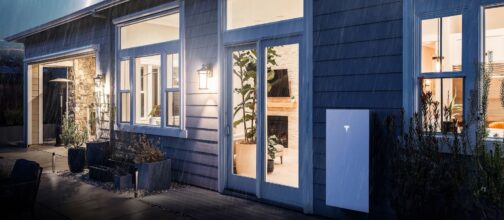
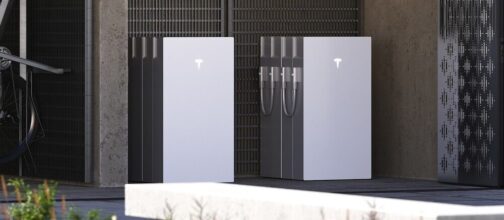
Battery storage systems – such as a Tesla Powerwall or Sigenergy SigenStor – are generally considered permitted development when installed alongside or independent of solar panels, provided they meet the same principles regarding visual impact. Internal installations (in a garage, utility room, or loft) typically raise no planning issues. External battery installations should be positioned to minimise visual impact.
Do I need planning permission for solar panels on a garage or outbuilding?
Solar panels on outbuildings within the grounds of a house – such as garages, sheds, or garden rooms – are generally permitted development, subject to the same conditions as panels on the main house. The key requirements are that panels don’t protrude excessively from the roof surface and don’t exceed the building’s highest point.

Conclusion: Your Next Steps
For the vast majority of UK homes, solar panels can be installed without planning permission. Permitted development rights mean that most roof-mounted installations – and many smaller ground-mounted systems – can proceed with minimal bureaucracy.
The main exceptions are listed buildings (which always require listed building consent), certain installations in conservation areas (specifically highway-facing wall-mounted panels), ground-mounted systems exceeding size and position limits, and properties where permitted development rights have been removed.
If you’re in Scotland, recent reforms have made solar installation even more straightforward, with no generation limit for rooftop systems and more permissive rules for conservation areas. If you’re in Northern Ireland, we’d recommend confirming requirements with your local planning office before proceeding.
Whatever your situation, an experienced, MCS-certified installer can advise on the specific requirements for your property. At Infinity Energy Services, we assess planning and consent requirements as part of our free, no-obligation site survey. We’ll tell you whether your installation qualifies as permitted development – and if it doesn’t, we can guide you through the application process.
Ready to find out what solar could do for your property in Hampshire, Dorset, Wiltshire, Berkshire, Surrey, West Sussex? Contact Infinity Energy Services today for a free assessment. Our team will evaluate your roof, calculate your potential savings, and confirm exactly what permissions – if any – your installation requires.
LATEST NEWS & GUIDES

SERVICE THAT’S FULLY SUPPORTED, ACCREDITED AND GUARANTEED