
Hampshire businesses are paying more for electricity than ever before. Energy costs for UK companies have risen by over 70% since 2012, squeezing margins and making long-term planning increasingly difficult. Commercial solar panels offer a proven solution: generate your own electricity, slash your energy bills, and protect your business from future price rises.
Hampshire is one of the best locations in mainland Britain for solar energy. The county enjoys between 1,700 and 1,900 hours of sunshine annually – significantly above the UK average of 1,350 hours. This means faster payback periods and stronger returns on your investment.
Infinity Energy Services is Hampshire’s trusted commercial solar installer. We’re MCS-certified, award-winning (2024 Solar PV Contractor of the Year), and have been helping local businesses cut costs since 2011. From initial survey to ongoing support, we handle everything in-house. Discover how commercial solar can transform your Hampshire business.

Ready to talk? Call our Hampshire commercial experts today on 0800 909 8882 for a free, no-obligation survey, or request your quote online.
– TABLE OF CONTENTS –
Why Hampshire Businesses Are Investing in Commercial Solar
Commercial Solar Costs and ROI in Hampshire
Financing Options for Hampshire Businesses
Which Hampshire Businesses Benefit Most from Solar?
The Commercial Solar Installation Process
Planning Permission for Commercial Solar in Hampshire
What Happens to Excess Solar Electricity?
Why Choose Infinity Energy for Commercial Solar in Hampshire?
Hampshire Commercial Solar Case Studies
Frequently Asked Questions About Commercial Solar in Hampshire
by David Lewis | published 16 December 2025 | updated 16 January 2026
Why Hampshire Businesses Are Investing in Commercial Solar
The business case for commercial solar in Hampshire has never been stronger. A combination of exceptional local conditions, volatile energy markets, and attractive financial incentives is driving record levels of adoption across the county.
Hampshire’s Solar Advantage
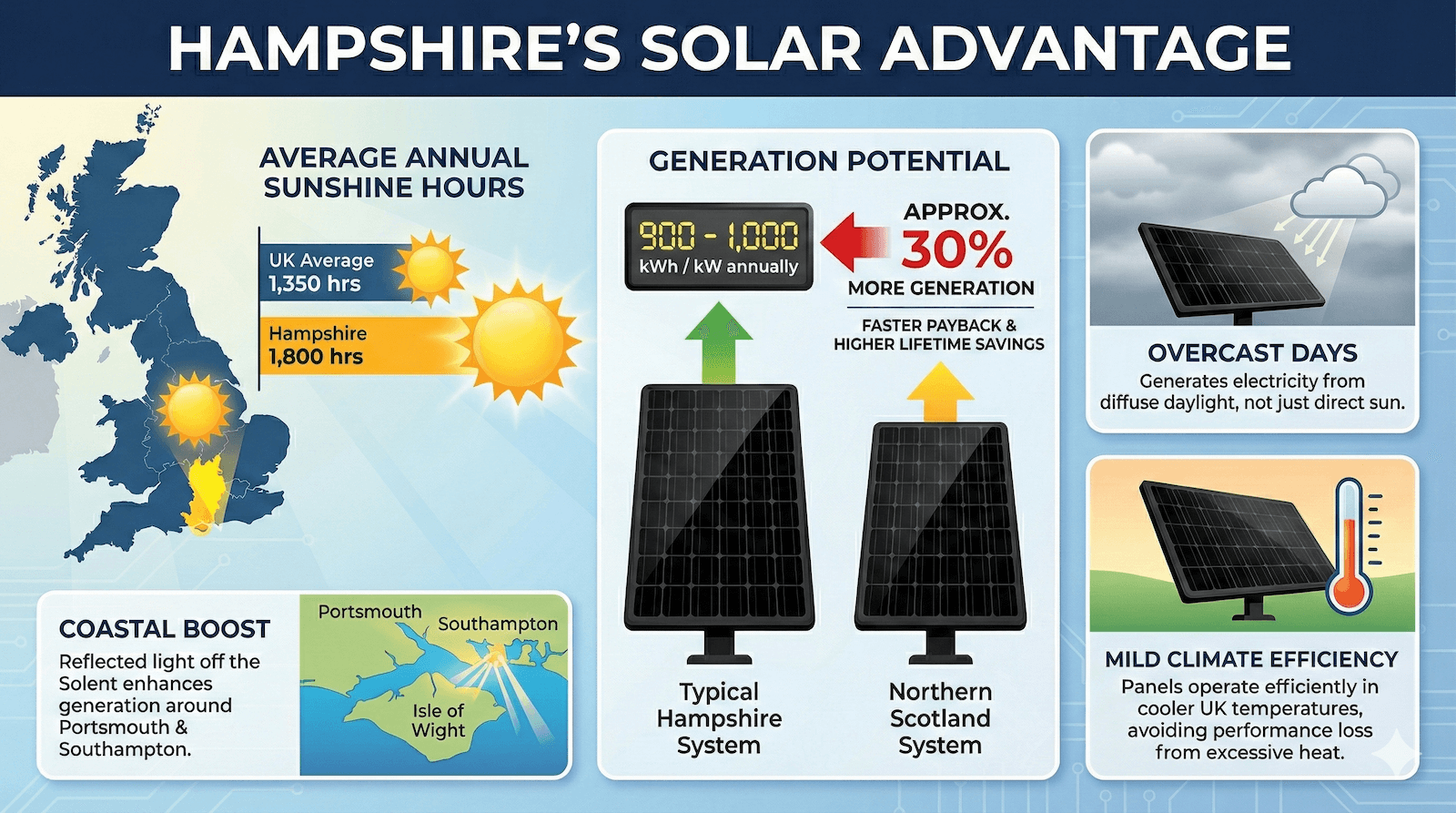
Hampshire sits in one of the sunniest parts of Britain. The county receives on average 1,800 hours of sunshine per year, compared to a UK average of just 1,350 hours. Coastal areas around Portsmouth and Southampton benefit further from reflected light off the Solent, boosting generation potential.
What does this mean in practice? A typical commercial solar system in Hampshire will generate around 900 to 1,000 kWh (units of electricity) per installed kW of solar annually. That’s roughly 30% more than systems installed in northern Scotland, translating directly into faster payback and higher lifetime savings.
Modern solar panels work effectively even on overcast days, generating electricity from diffuse daylight rather than requiring direct sunshine. Hampshire’s mild climate also helps – panels operate more efficiently in cooler temperatures, avoiding the performance losses seen in very hot climates.
The Business Case for Solar in 2026
Commercial electricity prices have increased dramatically since 2021, with many businesses seeing their energy costs double or triple. Even as wholesale prices have stabilised somewhat, the unit rates businesses pay remain historically high: typically 20p to 28p per kWh depending on contract terms and consumption.
Commercial solar panels fundamentally change this equation. Once installed, your system generates electricity at an effective cost of just 4p to 6p per kWh over its lifetime – a fraction of grid prices. This creates immediate savings from day one, with the gap widening every time energy prices rise.
Beyond cost savings, commercial solar helps Hampshire businesses meet growing sustainability expectations. Major retailers and manufacturers increasingly require supply chain partners to demonstrate environmental credentials. Installing solar is one of the most visible and effective ways to reduce your carbon footprint while improving your bottom line.
Commercial Solar Costs and ROI in Hampshire
Understanding the investment required – and the returns you can expect – is essential for making an informed decision. We believe in complete transparency on costs, so you know exactly what you’re committing to.
What Does Commercial Solar Cost?
Commercial solar panel costs vary based on system size, roof type, the technology selected, and installation complexity. As a guide, here are typical price ranges for Hampshire businesses:
SYSTEM SIZE | TYPICAL COST RANGE | SUITABLE FOR |
20 kWp | £16,000 – £25,000 | Small offices, retail units |
50 kWp | £35,000 – £55,000 | Medium warehouses, factories |
100 kWp | £60,000 – £100,000 | Large industrial premises |
250 kWp+ | £140,000+ | Distribution centres, large farms |
These figures include all equipment (panels, inverters, mounting systems, cabling) and installation. Costs per kWp typically decrease as system size increases, making larger installations more cost-effective on a unit basis.
Understanding Your Payback Period
For most Hampshire businesses, commercial solar systems pay for themselves within three to five years. This is significantly faster than in many other parts of the UK, thanks to Hampshire’s superior sunshine hours and higher electricity yields.
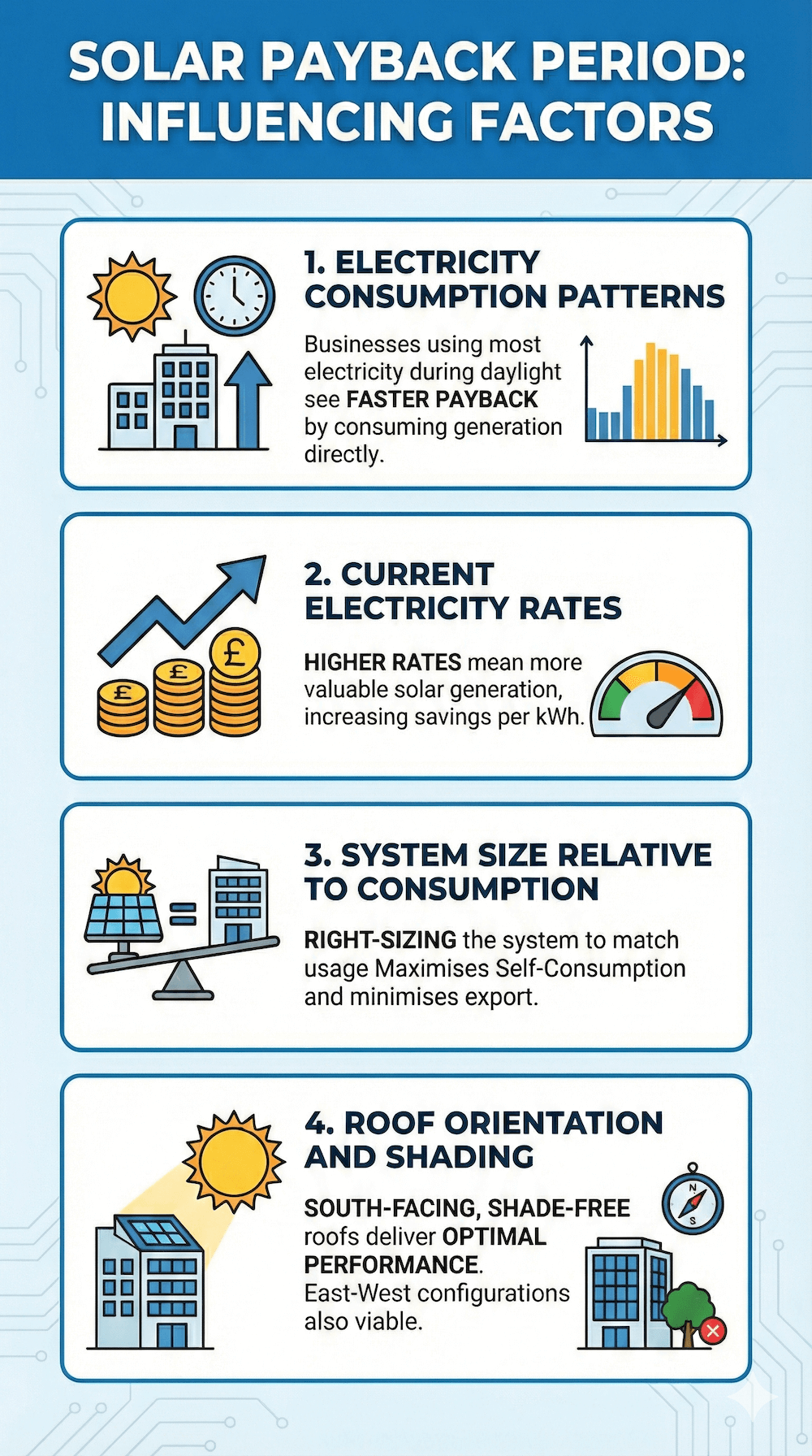
Several factors influence your specific payback period:
- Electricity consumption patterns: Businesses that use most of their electricity during daylight hours see faster payback, as they consume more solar generation directly.
- Current electricity rates: The higher your current rates, the more valuable each kWh of solar generation becomes.
- System size relative to consumption: Right-sizing your system to match your usage maximises self-consumption and minimises export.
- Roof orientation and shading: South-facing roofs without shading deliver optimal performance, though east-west configurations also work well. In addition, the effects of shading can be mitigated very successfully with SolarEdge monitoring and optimising technology.
Maximising Your Return on Investment
A well-designed commercial solar panel system can deliver simple ROIs of between 14% and 33%, or more, outperforming most traditional investments. With system lifespans of 25 to 40 years, with warranties to match, you’re looking at decades of essentially free electricity after the initial payback period.
Consider a typical example: a 50 kWp system on a Hampshire warehouse, costing around £45,000. Generating approximately 47,500 kWh annually, with 80% consumed on-site at 24p / kWh and 20% exported at 15p / kWh, the system saves roughly £10,500 per year. That’s a payback of just over four years, followed by 20+ years of near-zero electricity costs.
For a detailed analysis of commercial solar returns, visit our Commercial Solar ROI and Payback guide.
Financing Options for Hampshire Businesses
We understand that capital expenditure decisions require careful consideration. That’s why multiple financing routes exist for commercial solar, each with distinct advantages depending on your business circumstances.
Direct Purchase
Purchasing your system outright delivers the maximum financial benefit over time. You own the equipment from day one, receive all the electricity savings, and benefit fully from any export income. This approach suits businesses with available capital reserves seeking the strongest long-term returns.
Direct purchase also allows you to claim Full Capital Allowances, writing off 100% of the system cost against taxable profits in year one. For a company paying corporation tax at 25%, this effectively reduces the net cost of a £50,000 system to £37,500.
Asset Finance
Asset finance typically allows you to spread the cost over three to seven years whilst still benefiting from energy savings immediately. Monthly repayments are generally structured so that the energy savings exceed the finance costs, creating positive cash flow from the start.
This approach preserves working capital and existing credit facilities. The solar system itself often serves as security for the finance, meaning no additional collateral is required. At the end of the term, you own the system outright and continue enjoying free electricity.
Power Purchase Agreements (PPAs)
A Power Purchase Agreement involves a third-party funding, installing, and maintaining the solar system on your premises at no upfront cost to you. In return, you agree to purchase the electricity generated at a fixed rate, usualy 15% to 25% below current grid prices.
PPAs work well for organisations that want immediate savings without capital outlay or finance commitments. The downside is that you don’t own the system and won’t benefit from the full savings after payback. PPA contracts typically run for 15 to 25 years, after which you may have the option to purchase the system or have it removed.
Tax Benefits and Incentives
Beyond the financing options themselves, commercial solar benefits from several tax incentives that improve the investment case:
- Full capital allowances: Claim 100% of the system cost as a tax-deductible expense in year one, accelerating your tax relief.
- Business rates exemption: Rooftop solar installations are exempt from business rates increases for the first three years, protecting your rateable value.
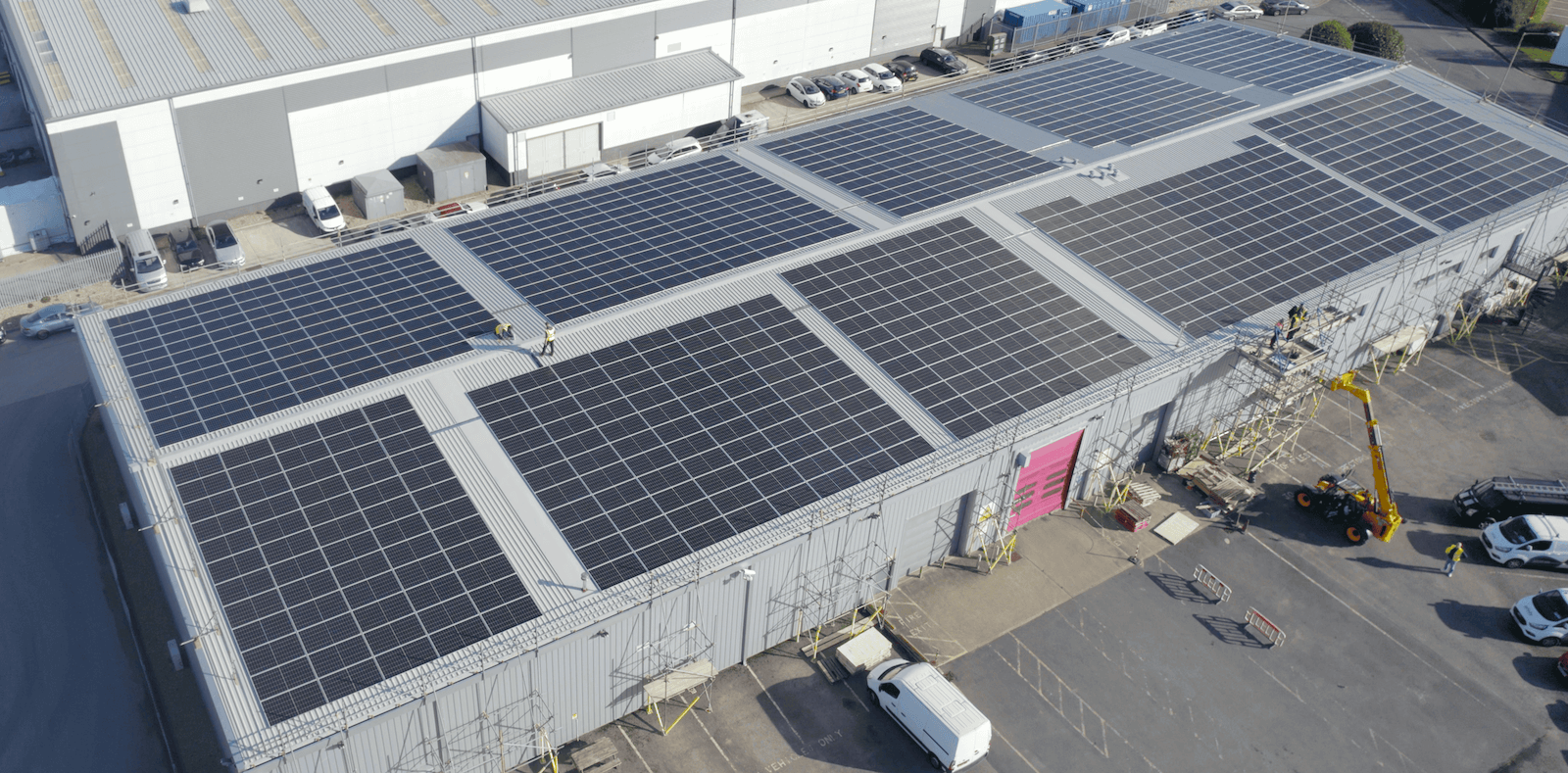
Which Hampshire Businesses Benefit Most from Solar?
Commercial solar panel installations make financial sense for a wide range of Hampshire businesses. However, certain sectors are particularly well-suited to solar investment due to their energy consumption patterns, available roof space, or operational characteristics.
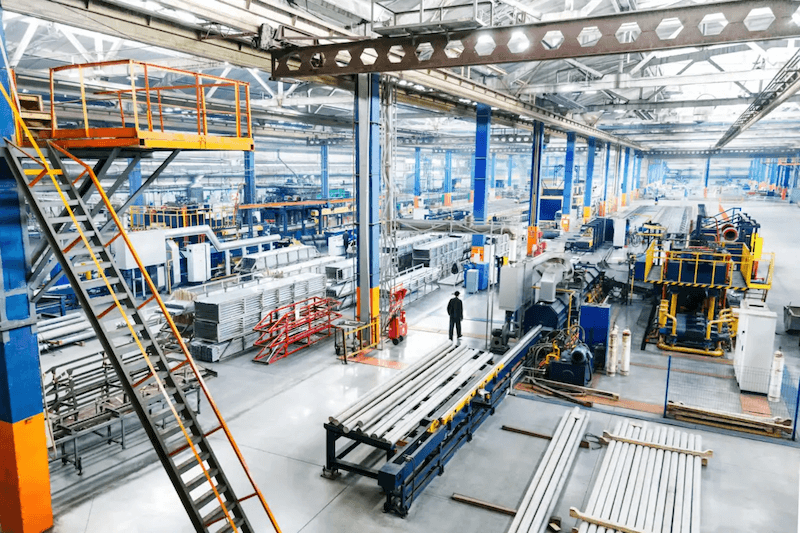
Manufacturing and Industrial
Hampshire’s manufacturing sector – particularly around Basingstoke and the M3 corridor – is ideally positioned for commercial solar. Factories typically operate during daylight hours when solar generation peaks, ensuring maximum self-consumption. Large roof areas accommodate substantial systems, while high energy demands mean significant savings. Production machinery, compressed air systems, and climate control all benefit from solar-generated electricity.
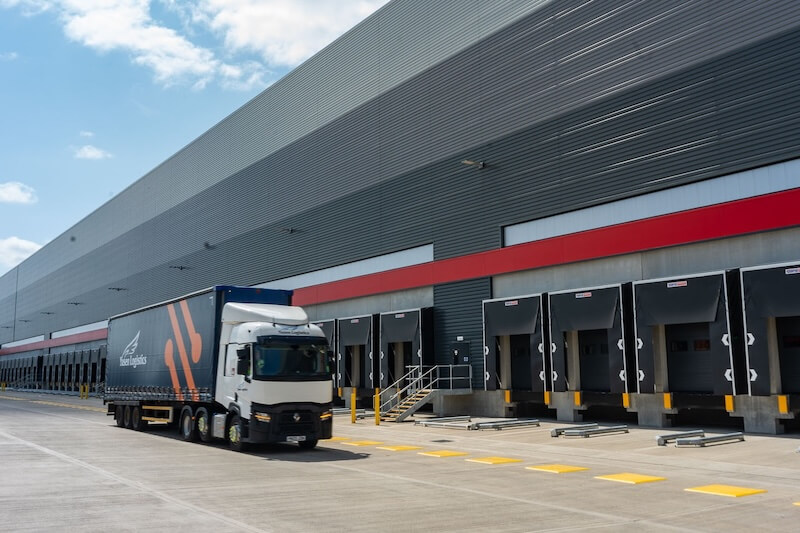
Warehousing and Logistics
The Southampton port zone and surrounding logistics parks contain thousands of square metres of flat warehouse roofing – perfect for solar installation. Modern distribution centres require substantial electricity for lighting, materials handling equipment, and increasingly, electric vehicle charging. Solar reduces operating costs per pallet handled, improving competitiveness in a margin-sensitive industry.
Agriculture and Farming
Hampshire’s agricultural sector, from arable farms in the Test Valley to livestock operations across the county, offers excellent solar potential. Large barn roofs and available land provide installation options, while grain drying, refrigerated storage, milking parlours, and irrigation all consume significant electricity. Farms also benefit from the option to install ground-mounted systems on less productive land. We have extensive experience installing solar panels on farms across Hampshire.

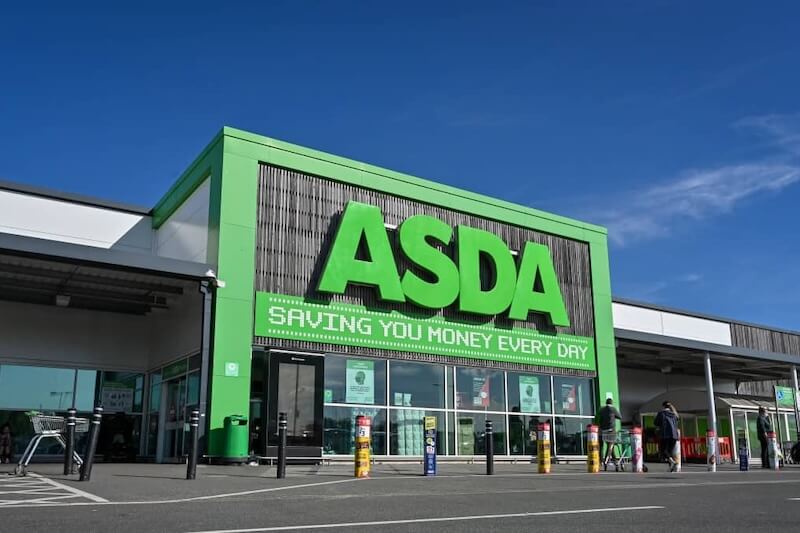
Retail and Hospitality
Supermarkets, hotels, restaurants, and leisure facilities face constant pressure on energy costs from refrigeration, air conditioning, lighting, and kitchen equipment. Solar panels offset these demands while demonstrating environmental commitment to increasingly eco-conscious customers. For hospitality businesses, solar-powered EV charging can attract customers while generating additional revenue.
Education and Healthcare
Hampshire schools, academies, colleges, and healthcare facilities face tight budgets and high energy demands. Solar installations free up funds for core services and teach the next generation about renewable energy at the same time. Many educational institutions have successfully combined solar investment with curriculum integration, creating hands-on learning opportunities.

Offices and Business Parks
Modern office buildings consume substantial electricity for computing equipment, air conditioning, and lighting. Solar installations help landlords attract environmentally-conscious tenants, reduce service charges, and future-proof assets against rising energy costs. Business parks with multiple buildings can benefit from portfolio-wide solar strategies, optimising system design across the estate.
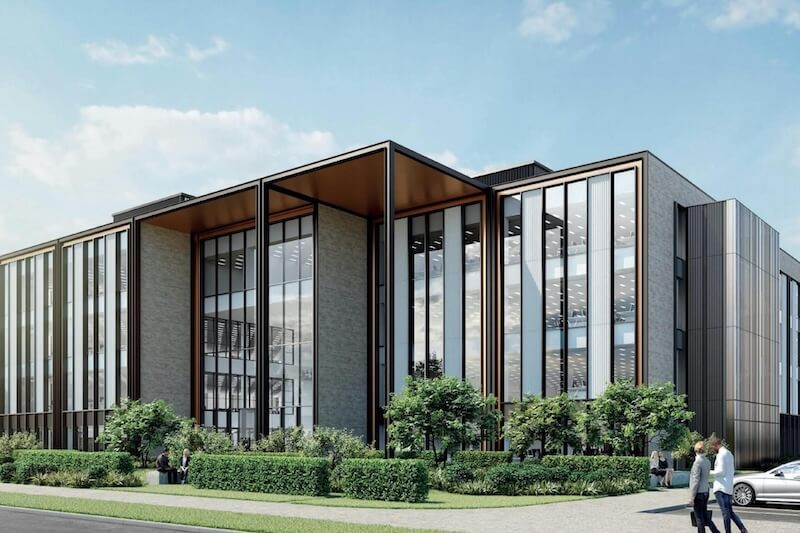
The Commercial Solar Installation Process
Installing commercial solar panels is a significant project, but with the right partner, it’s straightforward and minimally disruptive. Here’s exactly what to expect when you work with Infinity Energy Services.

We begin with an initial discussion to understand your business, energy consumption, and objectives. This can take place over the phone, via video call, or at your premises. We’ll review your recent electricity bills to analyse consumption patterns and identify the optimal system size. Our team then conducts a comprehensive site survey, assessing roof structure, orientation, shading, electrical infrastructure, and access requirements.
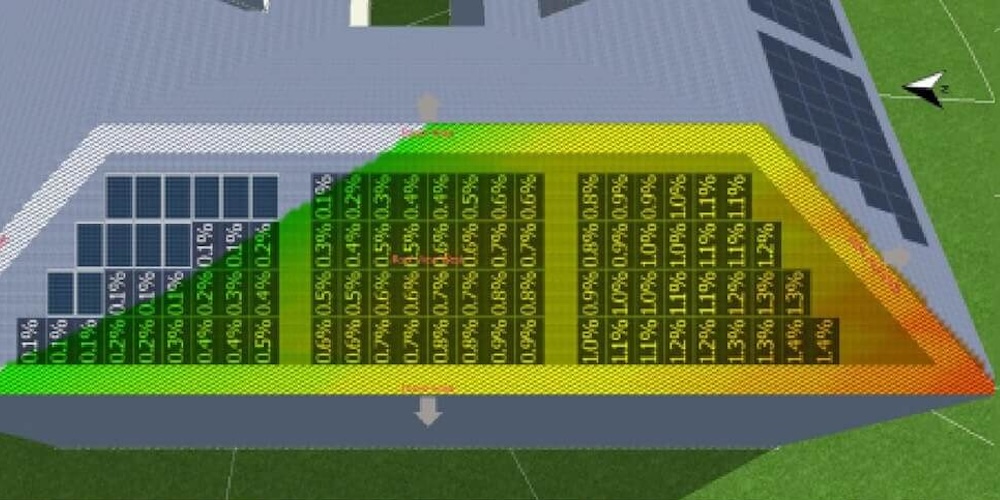
Using specialist solar design software (PV*SOL), we create a bespoke system tailored to your building and energy profile. This includes detailed modelling of expected generation throughout the year, accounting for roof pitch, orientation, and any shading from nearby structures or vegetation. We present a comprehensive proposal including system specifications, projected savings, ROI analysis, and financing options.
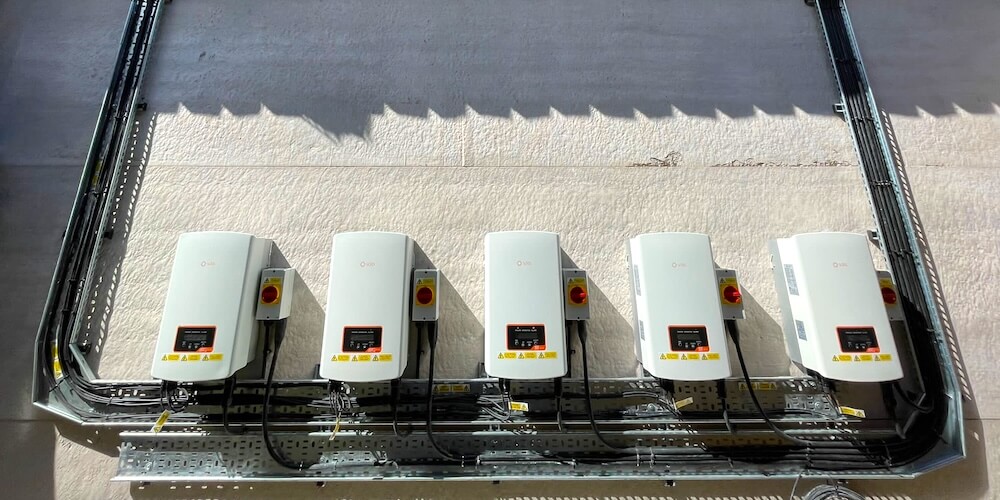
Before installation can proceed, we handle two essential administrative processes:
- DNO application: Hampshire is served by Scottish and Southern Electricity Networks (SSEN). We submit a G99 application for systems over 16A per phase, which typically takes 45 to 65 working days for approval. This grants permission to connect your system to the grid.
- Planning permission: Most commercial roof-mounted installations fall under permitted development and don’t require planning permission. Where permission is needed (listed buildings, conservation areas, ground-mounted systems, systems over a certain size), we can manage the application process or you can handle it in-house.
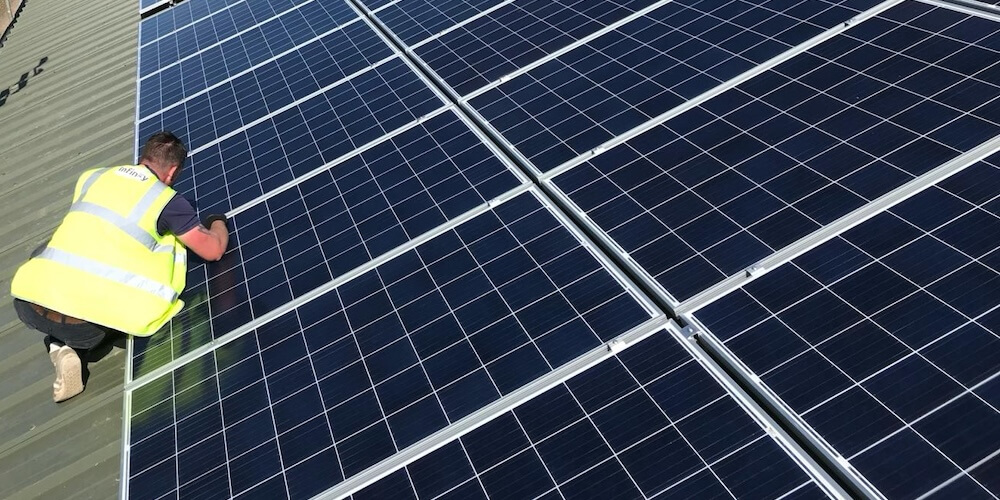
Once permissions are in place, our in-house installation teams carry out the work. We don’t use subcontractors – every installer is directly employed by Infinity Energy Services and trained to our exacting standards. Installation typically takes anywhere from 1-8 weeks, depending on the system size, with minimal disruption to your daily operations. We coordinate timing to suit your business requirements and maintain clean, safe working practices throughout.
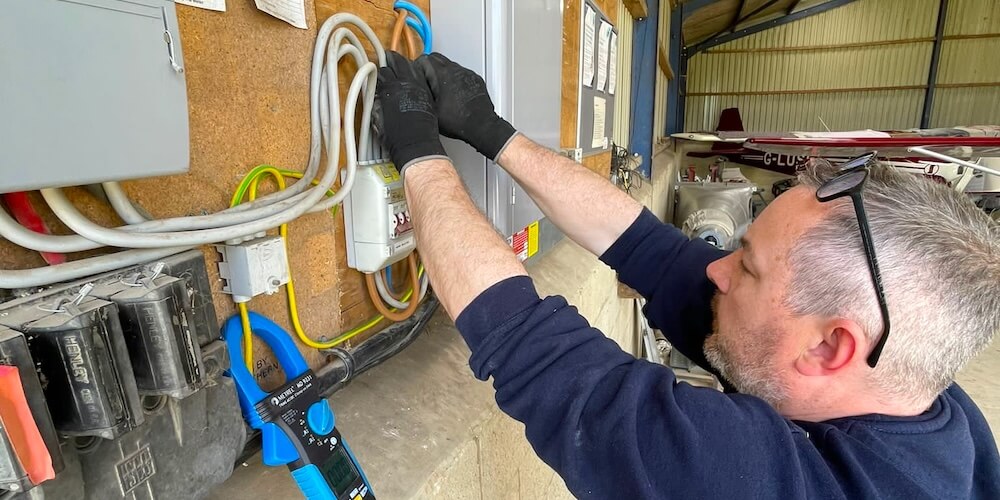
After installation, we thoroughly test every component to ensure optimal performance. Your system is registered with the MCS (if required), enabling access to the Smart Export Guarantee for any electricity you export. We provide comprehensive training on system operation, emergency procedures, and monitoring, along with a complete documentation pack including warranties, certificates, and maintenance guidance.
From initial enquiry to generating electricity typically takes 8 to 16 weeks, depending on DNO response times and any planning requirements.
Planning Permission for Commercial Solar in Hampshire
One of the most common questions we hear concerns planning requirements. The good news is that most commercial solar installations don’t require planning permission, though some situations do need formal consent.
Permitted Development Rights
Many commercial solar installations in England benefit from permitted development rights, meaning planning permission isn’t required provided certain conditions are met:
- Panels must not project more than 200mm from the roof surface (on pitched roofs)
- On flat roofs, panels can project up to 600mm and must be at least 1 metre from the roof edge
- Panels must not extend above the ridge-line of a pitched roof
- Equipment must be positioned to minimise visual impact
- The building must not be a listed building or within a listed building’s curtilage
For most standard commercial buildings with roof-mounted systems, these conditions are easily satisfied, and installation can proceed without planning applications. However, if you’re in any doubt, please read our comprehensive guide on planning permission for solar panel systems.
Prior Approval for Larger Systems (over 50 kWp)
For larger commercial rooftop systems above 50 kWp, permitted development rights may still apply, but the local planning authority can require a prior approval application.
This is not full planning permission, but a formal process where the council assesses specific factors such as visual impact, design, and potential effects on the surrounding area.
In Hampshire, this is most commonly triggered on larger industrial roofs, prominent buildings, or sites close to residential areas. We routinely advise clients on whether prior approval is likely to be required and manage the submission where necessary to avoid delays.
Listed Buildings and Conservation Areas
If your premises are a listed building, you’ll need listed building consent regardless of panel position. This involves a more detailed application assessing the impact on the building’s character and significance.
Hampshire has numerous listed commercial buildings, particularly in historic centres like Winchester. In conservation areas, panels visible from a highway on a roof or wall facing the highway require planning permission. We can advise on the likelihood of consent and handle applications where needed.
Ground-Mounted Systems
Ground-mounted solar arrays face stricter rules under permitted development:
- Maximum height of 4 metres
- Maximum area of 9 square metres
- Minimum 5 metres from property boundaries
- Only one ground-mounted installation per site
- Must not be visible from a highway in conservation areas
Larger ground-mounted systems, common on farms and industrial land, typically require full planning permission. Hampshire councils generally view solar favourably.
What Happens to Excess Solar Electricity?
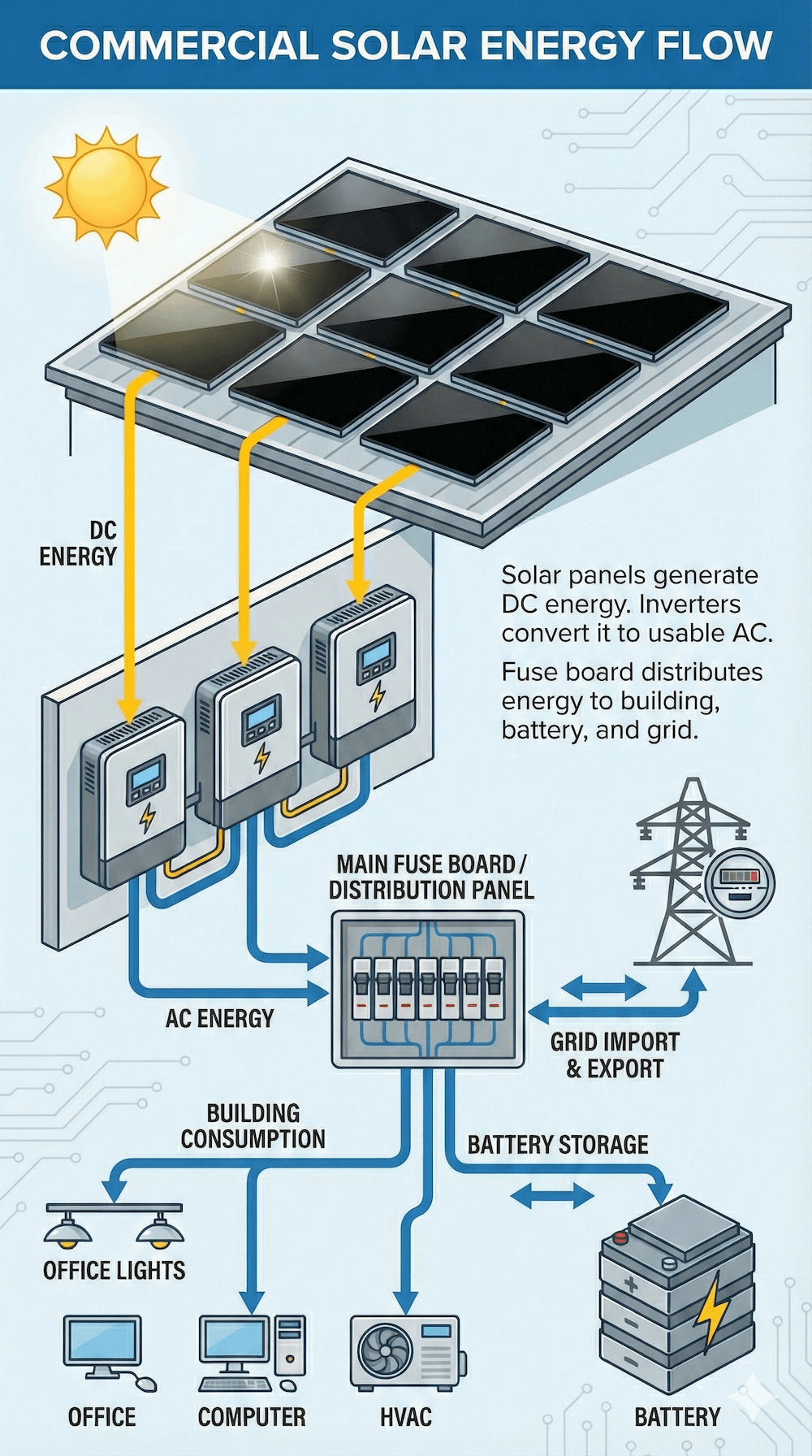
Solar panels generate electricity whenever daylight hits them, regardless of whether your business needs it at that moment. Understanding your options for excess generation helps maximise the value of your investment.
The Smart Export Guarantee
The Smart Export Guarantee (SEG) is a government-backed scheme requiring licensed electricity suppliers to pay for exported renewable electricity. Any electricity your solar panels generate that you don’t use on-site flows to the national grid, and you receive payment for every kilowatt-hour exported.
SEG rates vary between suppliers and tariff types. As of late 2025, typical rates range from 3p to 16.5p per kWh for standard fixed-rate tariffs. Contact your supplier to find out what rate they offer. To access SEG payments, you’ll need a smart meter capable of recording exports.
While SEG income is welcome, it’s worth noting that electricity used on-site is worth far more than exported electricity – typically 24p per kWh avoided versus 10-15p per kWh exported. This is why right-sizing your system and maximising self-consumption is so important.
Commercial Battery Storage
Commercial battery storage systems capture excess solar generation for use later, dramatically increasing the proportion of solar electricity you consume on-site rather than exporting. Stored energy can power your operations during the evening, overnight, or during demand peaks, whenever solar generation is low.
Modern commercial batteries, depending on the model, offer additional benefits beyond solar storage:
- Peak shaving: Discharge stored energy during high-demand periods to reduce maximum demand charges.
- Tariff arbitrage: Charge from the grid during cheap off-peak periods, discharge during expensive peak periods.
- Backup power: Maintain critical operations during grid outages.
- Enhanced export income: Store solar electricity and export during high-value SEG periods.
As Tesla Premium Partners, we specialise in commercial battery installations including the Tesla Powerwall 3. Visit our Commercial Battery Storage page to learn more.
Why Choose Infinity Energy for Commercial Solar in Hampshire?
Choosing the right installer is the single most important decision you’ll make. The solar industry has its share of companies that over-promise, under-deliver, or simply disappear after installation. Infinity Energy Services is different.
Our Hampshire Track Record
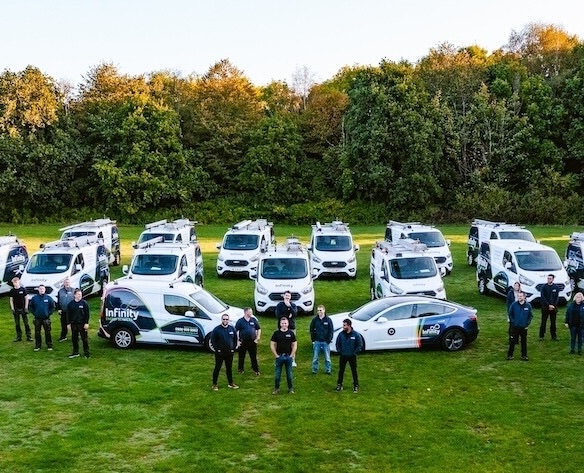
We’ve been installing solar panel systems across Hampshire since 2011. Our head office in Swanwick, Southampton, means we’re genuinely local – not a national company with distant headquarters and subcontracted installers. We know Hampshire’s businesses, buildings, and unique requirements.
Over 13 years, we’ve completed many commercial installations for Hampshire businesses ranging from small retail units to major industrial facilities. Our clients include manufacturers in Portsmouth, IT companies near Fareham, farms across the Test Valley, schools throughout the county, and everything in between.
Accreditations and Awards
Quality and professionalism are backed by independent accreditation:
- MCS Certified: A mark of installation quality and excellent admimistration.
- NAPIT Approved: Electrical competence verified by a UKAS-accredited body.
- NICEIC Registered: Meeting the highest standards for electrical installation.
- RECC Member: Committed to the Renewable Energy Consumer Code.
- TrustMark Registered: Government-endorsed quality standard.
- SunPower Elite Partner: The highest certification for SunPower’s record-breaking panels.
- Tesla Premium Partner: Certified at the top level for Powerwall battery installations.
In 2024, we were named Solar PV Contractor of the Year, recognising our commitment to installation excellence and customer service. Tesla also awarded us a Performance Excellence Award for our high installation standards.
Our 6-Step Installation Process
We manage every stage in-house, ensuring consistent quality and clear accountability:
- Initial Consultation and Desktop Survey: Understanding your needs and assessing initial feasibility.
- Custom System Design and Proposal: Detailed system specification with projected returns.
- On-Site Technical Survey: Comprehensive assessment of your building and infrastructure.
- Professional Installation: In-house teams delivering quality workmanship.
- System Commissioning and Handover: Thorough testing, training, and documentation.
- Ongoing Aftercare and Monitoring: Long-term support and performance tracking.
Hampshire Commercial Solar Case Studies
Real results from real Hampshire businesses demonstrate what commercial solar can achieve.
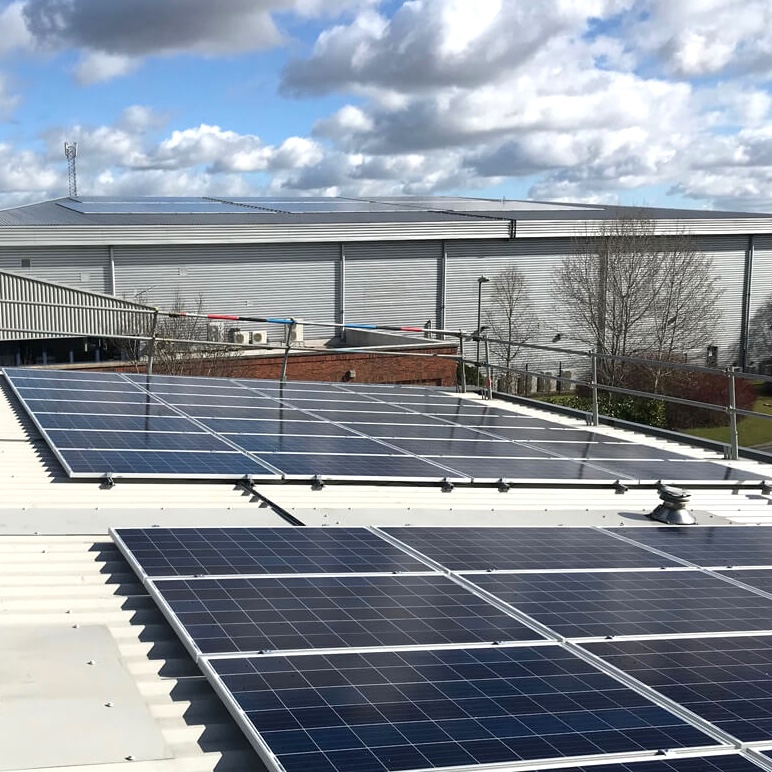
Ahmarra Doors, Portsmouth
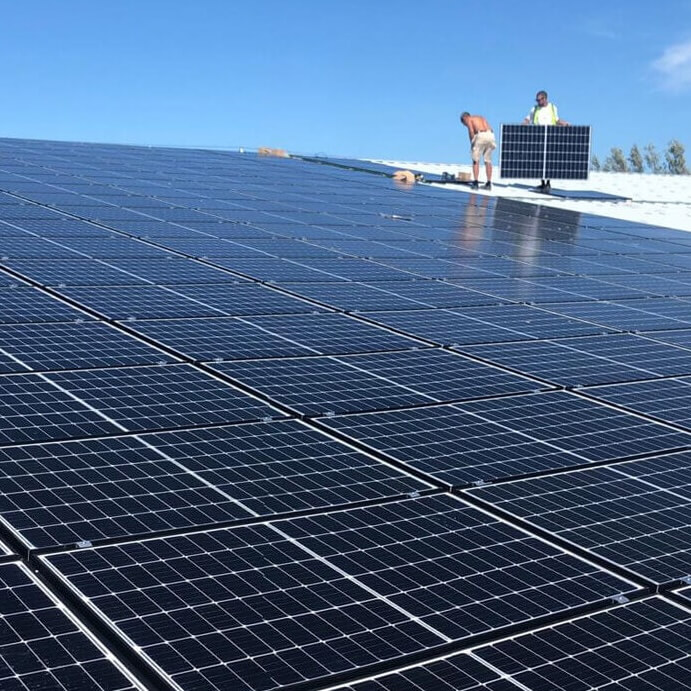
Ahmarra Doors’ new Portsmouth factory marked a major expansion, housing advanced manufacturing equipment that uses significant electricity, making energy efficiency and reliable power supply critical to daily operations.
We installed a high-tech solar panel system for them, as follows:
- System size: 239.4 kWp
- Annual electricity bill saving: £26,694
- Projected 20-year profit: £655,790
- Payback period: 5.0 years
Medhurst Communications, Fareham
Medhurst Communications’ facility supports specialist communications and engineering activities that rely heavily on electrical equipment, making consistent, efficient power essential to day-to-day operations.
We installed a high-performance commercial solar panel system for them, as follows:
- System size 29.7 kWp
- Annual electricity bill saving: £4,419
- Projected 20-year profit: £147,675
- Payback period: 6.0 years
For more examples of our work across Hampshire and the surrounding region, visit our Commercial Solar Case Studies page.
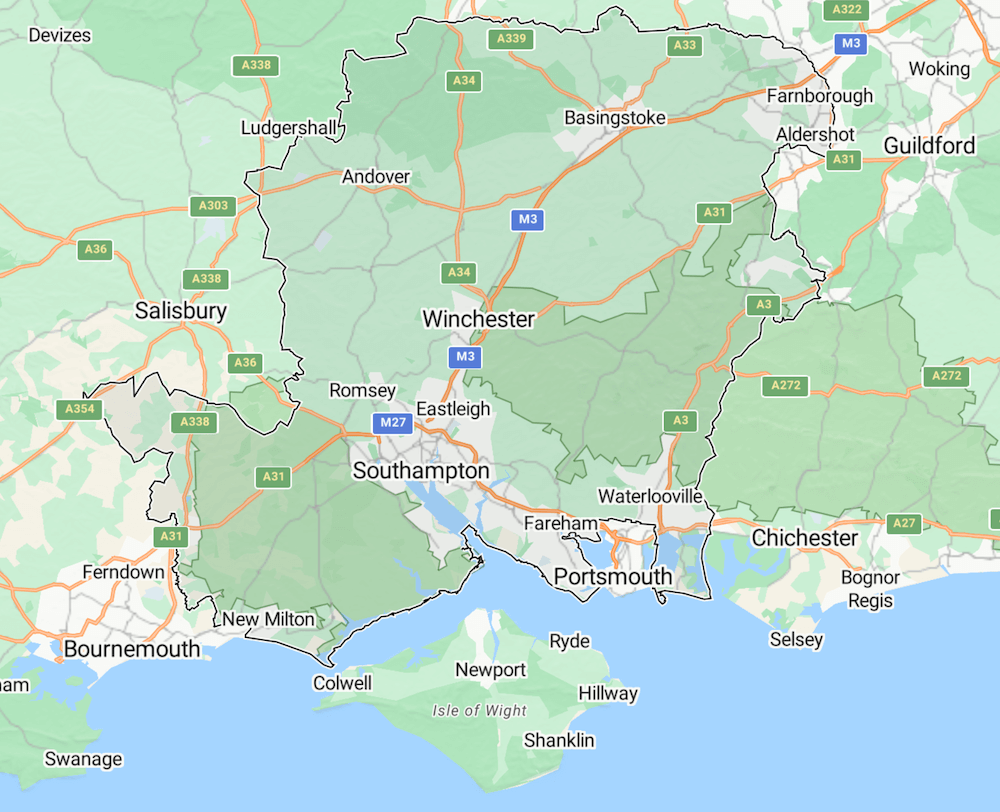
Serving All of Hampshire
From our base in Swanwick, we serve the entire county of Hampshire, as well as surrounding areas. Our expert teams design and install systems for businesses in:
- Southampton
- Portsmouth
- Basingstoke
- Eastleigh
- Aldershot
- Farnborough
- Havant
- Winchester
- Andover
- Fleet
- Fareham
- Gosport
- Totton
- Waterlooville
- Chandler’s Ford
- Lymington
- Petersfield
- Alton
- Ringwood
- New Milton
Frequently Asked Questions
About Commercial Solar in Hampshire
How much do commercial solar panels cost in Hampshire?
Commercial solar costs typically range from £16,000 for a 20 kWp system suitable for small offices up to £100,000 or more for large 100 kWp industrial installations. The cost per kWp decreases as system size increases, typically ranging from £700 to £1,200 per kWp depending on installation complexity. All our quotes include equipment, installation, DNO applications, and commissioning.
What is the payback period for commercial solar?
Most Hampshire businesses achieve payback within three to five years. This is faster than the UK average due to Hampshire’s superior sunshine hours (1,700-1,900 annually versus the UK average of 1,350). After payback, your system generates essentially free electricity for its remaining 20+ year lifespan, with typical lifetime savings exceeding £500,000 for medium-sized systems.
Do I need planning permission for commercial solar panels in Hampshire?
Most roof-mounted commercial solar installations qualify as permitted development and don’t require planning permission. Exceptions include listed buildings (which need listed building consent), panels visible from highways in conservation areas, and ground-mounted systems exceeding specific size limits. We assess planning requirements during our initial survey and handle any applications needed.
Is Hampshire a good location for solar panels?
Hampshire is one of the best locations for solar in mainland Britain. The county receives around 30% more sunshine annually than the UK average. Coastal areas around Portsmouth and Southampton benefit from additional reflected light from the sea. A solar system in Hampshire will generate significantly more electricity than an identical system in northern England or Scotland.
How long does commercial solar installation take?
From initial enquiry to generating electricity typically takes 8 to 16 weeks. The physical installation usually completes within 1-6 weeks depending on system size. The main variable is DNO approval, which typically takes 45 to 65 working days. We manage this process to minimise delays and coordinate installation dates to suit your business operations.
What size solar system does my business need?
System size depends on your electricity consumption, available roof space, and budget. As a rough guide, 1 kWp of solar capacity requires approximately 5 square metres of roof space and generates around 900-1,000 kWh annually in Hampshire. We analyse your electricity bills to recommend a system that maximises self-consumption while fitting your physical and financial constraints.
Can I sell excess solar electricity back to the grid?
Yes, through the Smart Export Guarantee (SEG). Energy suppliers must offer tariffs for exported renewable electricity, with current rates ranging from 3p to 16.5p per kWh for standard tariffs.
What financing options are available for commercial solar?
Three main options exist: direct purchase (maximum long-term savings, Full Capital Allowances available), asset finance (spread costs over 3-7 years, typically cash-flow positive from day one), and Power Purchase Agreements (zero upfront cost, buy electricity at below-grid rates). We can introduce you to finance partners and help determine which approach suits your business circumstances.
Take the Next Step
Commercial solar represents one of the most straightforward investments a Hampshire business can make: proven technology, predictable returns, and decades of savings. With Hampshire’s exceptional sunshine, typical paybacks of three to five years, and multiple financing options available, the question isn’t whether solar makes sense – it’s why you’d wait.
Infinity Energy Services has been helping Hampshire businesses cut their energy costs since 2011. We’re MCS-certified, award-winning, and genuinely local. We don’t use subcontractors. We don’t do high-pressure sales. We simply provide honest advice and quality installations that perform for decades.
Ready to discover how much your Hampshire business could save?
Contact our commercial solar team today for a free, no-obligation consultation and site survey.
- Call: 0800 909 8882
- Email: [email protected]
- Visit our offices at Unit 6 Swanwick Business Centre, Bridge Road, Southampton, Hampshire SO31 7GB