
Solar Grazing: The “Triple Win”
Transforming UK Farming
Sheep Under Panels Offer Fresh Answer to the Solar vs Farmland Debate
by David Lewis | published 19 January 2026
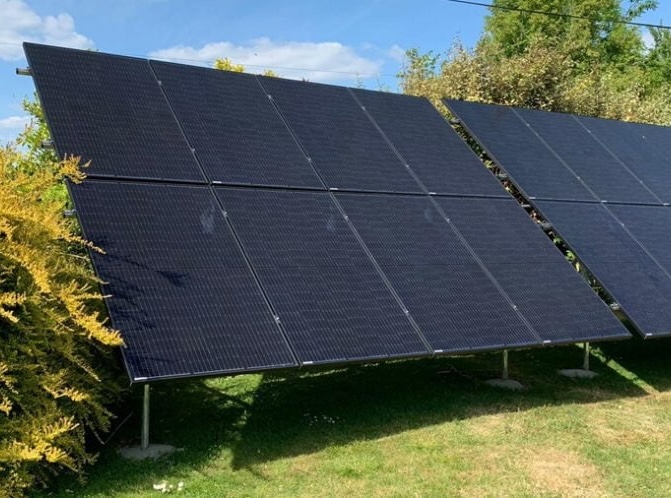
A recent feature in The Guardian has highlighted solar grazing as an increasingly popular practice that’s delivering benefits for struggling sheep farmers, renewable energy targets, and food production simultaneously. The practice – which sees farmers grazing sheep beneath solar panel arrays – is being hailed as a “triple win” that counters the narrative that solar farms necessarily compete with agricultural land use.
For Hampshire farms considering solar installations, this development demonstrates how renewable energy infrastructure can complement, rather than compete with, traditional farming operations. Infinity Energy Services has been helping Hampshire farms install commercial solar systems since 2011, and we’re seeing growing interest in how solar can integrate with wider farm operations.
From 20 Sheep to 200: The Reality of Solar Grazing
The Guardian’s feature focused on Hannah Thorogood, a first-generation Lincolnshire farmer who has dramatically expanded her operation through solar grazing opportunities. Starting with just 18 acres and 20 sheep – as much as she could afford – Thorogood has grown to 250 acres and over 200 sheep by accessing free grazing land beneath solar arrays.
“Solar grazing has given me a massive leg-up,” Thorogood told The Guardian. For new entrants to farming facing prohibitive land costs and slim margins, solar sites offer a pathway to viability that wouldn’t otherwise exist.
The financial impact can be transformative. Dr. Liz Genever, who farms in southeastern Lincolnshire, told The Guardian that full access to nearby solar sites could potentially increase her sheep income from £20,000 to £60,000 annually. “It’s a really important opportunity for sheep farmers,” she emphasised.
Why Solar Grazing Works
The arrangement creates genuine mutual benefits. Solar site operators need vegetation management to prevent grass growth from shading panels or creating fire risks. Traditional solutions – mechanical mowing or chemical treatment – are costly, fossil-fuel-intensive, and require regular intervention.
Sheep provide natural, sustainable vegetation control whilst benefiting from shelter provided by the panels. Studies have shown that sheep preferentially graze beneath panels rather than between rows, and the shade creates more consistent moisture levels, encouraging healthier pasture growth. Some sites have even reported improved wool production due to better grass quality.
For solar developers, sheep grazing reduces maintenance costs whilst enhancing biodiversity and public perception of projects. For farmers, it provides access to land at minimal cost during a period when UK sheep populations have hit record lows due to rising input costs, volatile markets, and shrinking margins.
Addressing the “Solar vs Farmland” Narrative
The solar grazing model directly challenges one of the most persistent criticisms of ground-mounted solar farms – that they remove productive agricultural land from food production. Whilst roof-mounted systems (like those Infinity Energy Services typically installs on Hampshire farm buildings) avoid this concern entirely by utilising existing structures, solar grazing demonstrates that even ground-mounted installations can maintain agricultural productivity.
This matters particularly as the UK accelerates renewable energy deployment to meet net-zero targets. Solar generation must expand substantially, but land is finite and valuable. Solutions that allow dual use – electricity generation and food production – reduce conflicts between climate action and food security.
For Hampshire farms with extensive roof space on barns, grain stores, and livestock housing, roof-mounted solar installations remain the most economical option, avoiding planning requirements whilst generating 15-20% annual returns with typical payback periods of 3-6 years. However, for farms with limited roof capacity or marginal land, solar grazing arrangements offer an alternative pathway to benefit from renewable energy whilst maintaining agricultural income.
The Wider Context: British Farming Under Pressure
The Guardian’s coverage arrives as UK agriculture faces a uniquely challenging period. Sheep farming has been particularly affected, with producers confronting rising input costs, labour shortages, and post-Brexit policy changes. Many upland and marginal areas that traditionally supported sheep enterprises are struggling to remain economically viable.
Solar grazing provides a practical response. By eliminating land rental costs – often £100-150 per acre annually – and providing secure, fenced grazing with predator protection, solar sites can tip the economics of sheep farming back towards viability. For first-generation farmers like Hannah Thorogood, or those seeking to expand without enormous capital investment, these opportunities can be transformative.
Taking the Next Step
Whether you’re interested in traditional roof-mounted solar for your Hampshire farm buildings, or exploring how solar grazing partnerships might complement your livestock operation, Infinity Energy Services can provide expert guidance tailored to your specific circumstances.
Solar technology has matured into a proven, bankable investment with predictable performance and strong returns, both in terms of ROI and payback. Combined with capital allowances, Smart Export Guarantee payments, and various agricultural grant programmes, there has never been a better time for Hampshire farms to investigate solar.
To discover what solar could save your farm, or to discuss how renewable energy integration can support your agricultural operation whilst contributing to wider environmental goals, contact our team today on 0800 909 8882 or visit our agricultural solar page for comprehensive information on costs, returns, and installation processes.
The “triple win” of solar grazing demonstrates that renewable energy and farming can genuinely complement each other. For Hampshire’s agricultural sector, solar represents not just an environmental contribution, but a practical pathway to improved farm economics and long-term resilience.