
Heat pump grant to rise to £9,000
for oil and LPG homes from July

Extra help for rural homes
off the gas grid
published 29 April 2026
The Department for Energy Security and Net Zero (DESNZ) has confirmed plans to increase the Boiler Upgrade Scheme (BUS) grant from £7,500 to £9,000 for homeowners whose properties are currently heated by oil or liquefied petroleum gas (LPG).
The uplift is expected to open for applications in July 2026 and will apply to air-to-water (another way of saying air source heat pumps) and ground-source heat pump installations in England and Wales.
The announcement forms part of a wider package of measures set out by the government this week aimed at breaking the link between international gas prices and UK electricity bills.
However, for the roughly 1.7 million households in England and Wales that rely on oil or LPG for heating – most of them in rural, off-gas-grid areas – the headline change is the bigger grant. It is the clearest signal yet that ministers intend to make low-carbon heating the default replacement for oil and LPG systems, not just gas boilers.
What is changing and when
The existing BUS grant – currently £7,500 towards the cost of an air-source or ground-source heat pump – will be topped up by an additional £1,500 for eligible off-gas-grid properties, taking the total grant value to £9,000.
The uplift applies only to homes and small businesses currently heated by oil or LPG. Properties on the mains gas network will continue to receive the standard £7,500 grant.
Ofgem, which administers the scheme on behalf of DESNZ, has written to installers to confirm the following details:
- Total grant value: £9,000 for eligible off-gas-grid homes on oil or LPG
- Eligible technologies: air-to-water heat pumps and ground-source heat pumps only
- Not eligible for the uplift: biomass boilers and air-to-air heat pumps
- Coverage: England and Wales
- Expected application opening: July 2026, subject to a formal grant change notice being published by DESNZ
- Duration: the uplift will only be available for this financial year
Until the uplift goes live, Ofgem will continue to process BUS applications at the current £7,500 grant level and under the existing eligibility rules. Installers have been told to continue using BUS guidance version 4.2 for all current and active applications.
It is also worth noting that the £9,000 uplift is separate from the wider set of BUS scheme changes coming into force on 28 April 2026, which are covered by the draft BUS guidance version 5. Those changes affect the scheme more broadly and apply regardless of fuel type.
Why the government is acting now
The rationale set out by DESNZ is straightforward: households on heating oil and LPG have been hit hardest by recent price volatility, and the government wants to help them move away from fossil fuels entirely. Oil and LPG prices are set on international markets and are directly exposed to global events. Unlike mains gas or electricity, they are not protected by Ofgem’s price cap.
For a typical rural household, replacing an oil boiler with a heat pump removes that exposure. Instead of buying fuel by the tank and watching the price rise whenever there is a supply shock, homeowners draw heat from the air or ground using electricity, increasingly from British wind and solar. The government’s view is that a larger grant is the quickest way to make that switch affordable for the households who need it most.
What a £9,000 grant means in practice
An air-source heat pump installation for a typical four-bedroom detached home – the kind of property most likely to be off the gas grid – generally falls in the £13,000 to £14,000 range, depending on the scale of the system, radiator upgrades, and hot water cylinder requirements. A £9,000 grant covers a substantial proportion of that cost, bringing the actual price to pay for the homeowner down to roughly £4,000 to £5,000.
For households currently running an oil boiler, the ROI picture also improves. Oil is one of the most expensive ways to heat a home in the UK today, and a well-specified heat pump running on a dedicated heat pump electricity tariff will typically deliver significantly lower running costs. With a larger grant reducing the upfront outlay, the time to break even on the investment shortens accordingly.
Residential heat pump installations also continue to benefit from 0% VAT, a relief that is in place until at least 31 March 2027.
The wider energy announcement in brief
The BUS uplift was announced alongside a broader set of measures aimed at protecting households from energy price shocks and accelerating the move to clean, homegrown power. The key points for homeowners are:
- Breaking the gas–electricity link: new voluntary long-term fixed-price contracts (known as ‘Wholesale Contracts for Difference’) will be offered to existing renewable generators that sit outside the current CfD framework, with the aim of reducing the share of UK electricity whose price is set by gas.
- Electricity Generator Levy: the windfall tax rate on electricity generators rises from 45% to 55%, with revenue directed to supporting households and businesses with the cost of living.
- Easier installation of low-carbon tech: the government will consult this summer on extending permitted development rights to make it easier to install EV chargers, solar panels and air-source heat pumps – particularly for renters, flat-dwellers and homes without a driveway.
- UK heat pump manufacturing: £90 million in new funding to expand UK heat pump factories, alongside further investment in the £30 million Heat Pump Ready programme to develop smaller, cheaper and easier-to-install units.
- Rooftop solar on public buildings: Great British Energy’s rooftop solar scheme will be extended to a further 100 schools and colleges this year, backed by up to £40 million of government investment subject to final approvals.
Taken together, these measures are intended to shift more of the UK’s electricity supply onto stable, domestic sources and to give households more ways to escape the volatility of international fossil fuel markets, whether that is by installing solar and battery storage, moving to an EV, or replacing an oil or LPG boiler with a heat pump.
What to do if you are on oil or LPG
If your home is currently heated by oil or LPG and you have been considering a heat pump, the announcement creates a clear planning question: do you apply now at £7,500, or wait until the £9,000 uplift opens in July?
There is no simple answer, and the right choice will depend on the condition of your existing system, your installation timeline, and installer availability in your area. A few points worth noting:
- The uplift is not yet in effect. DESNZ has announced the plan, but a formal grant change notice is still required before Ofgem can accept applications at the new level. The July 2026 date is a target, not a guarantee.
- It is time-limited. The uplift is only confirmed for the current financial year, so applications made after it closes will revert to the standard £7,500 grant.
- Applications in progress will be processed under current rules. If you have already started a BUS application, Ofgem will continue to handle it under the £7,500 grant and BUS guidance version 4.2.
- Demand is likely to rise. A higher grant for a well-defined group of households tends to increase installer demand in exactly the areas – rural, off-gas-grid regions – where installer capacity is already stretched. Booking an early survey is sensible even if the installation itself falls on the other side of July.
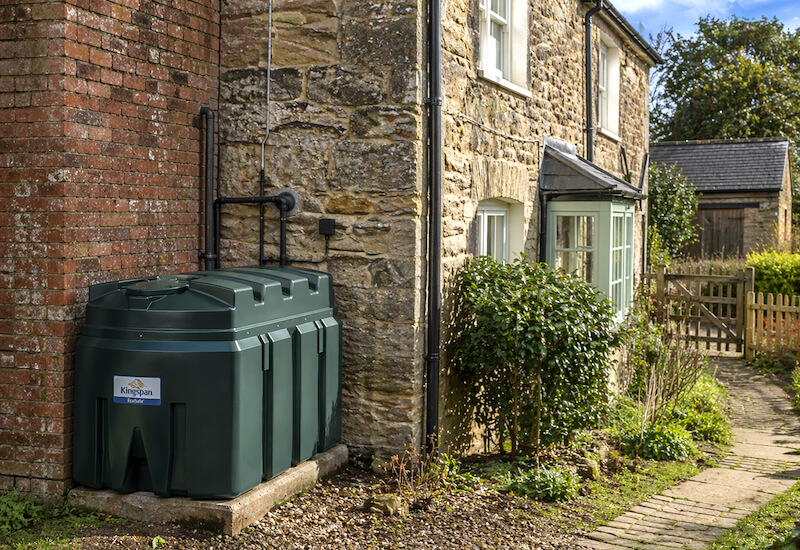
Infinity Energy Services installs air-source heat pumps across the South of England and is an approved installer under the Boiler Upgrade Scheme.
If your home is currently on oil or LPG and you would like to understand how the £9,000 grant could apply to your property, our team can walk you through the design, cost, and timing options, including whether it makes sense to apply under the current scheme or wait for the July uplift.
Get in touch with us now.
Sources and further reading
• Department for Energy Security and Net Zero: “Decisive action to break influence of gas on electricity prices”
• Ofgem Boiler Upgrade Scheme (BUS) page
• BUS guidance version 4.2 (current) and draft version 5 (in force from 28 April 2026)