
Infinity Energy Services is an MCS-certified renewable energy installer covering the whole of Dorset.
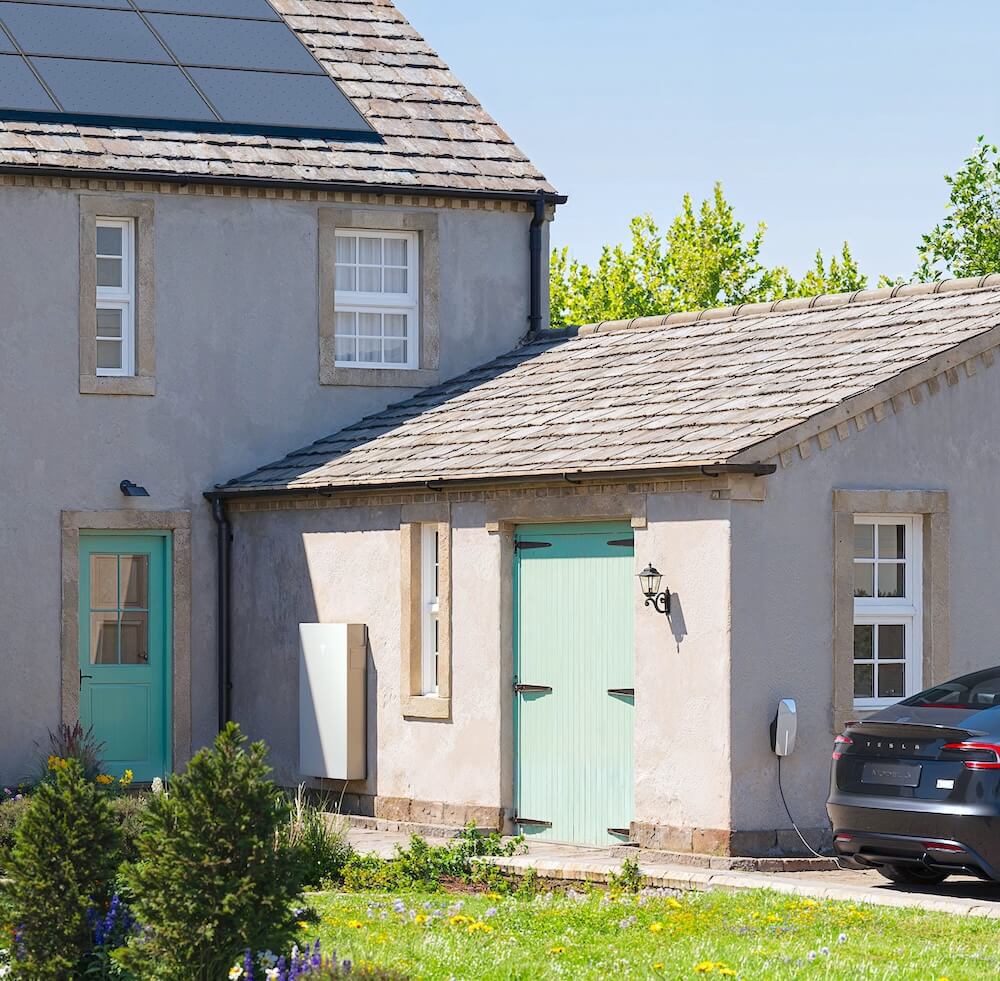
As Tesla Powerwall Premium Installers, we design and fit solar battery systems – including the Tesla Powerwall 3, Sigenergy SigenStor and Fox ESS – for Dorset homes, retrofitted to existing panels or installed alongside a new system.
Whether you are in Bournemouth, Poole, Dorchester, Sherborne or the rural reaches of West and North Dorset, our installation teams cover the whole county from our Hampshire headquarters.
This guide explains how to choose between the three battery brands we install, what each one costs in Dorset, how the SSEN grid connection process works, and what you can expect from our survey and installation team.
– Last updated 26 May 2026 –
TABLE OF CONTENTS
• A Dorset-Wide Installer with National Credentials
• Is Solar Battery Storage Worth It for a Dorset Home?
• Tesla Powerwall 3, Sigenergy SigenStor or Fox ESS?
• How Much Does a Solar Battery Cost in Dorset?
• 0% VAT, the Smart Export Guarantee and More
• Sizing a Battery for a Dorset Household
• The Dorset Grid: SSEN, G98 and G99 Explained
• Dorset-Specific Considerations
• Our Survey, Design and Installation Process
• Warranties, Aftercare and What Happens Next
• Areas We Cover in Dorset
• May 2026 Update
• Frequently Asked Questions
• Speak to Dorset’s Infinity Team
A Dorset-Wide Solar Battery Installer with National-Grade Credentials
Infinity Energy Services covers the whole of Dorset from our Hampshire headquarters at Unit 6 Swanwick Business Centre, a short drive from the county border.
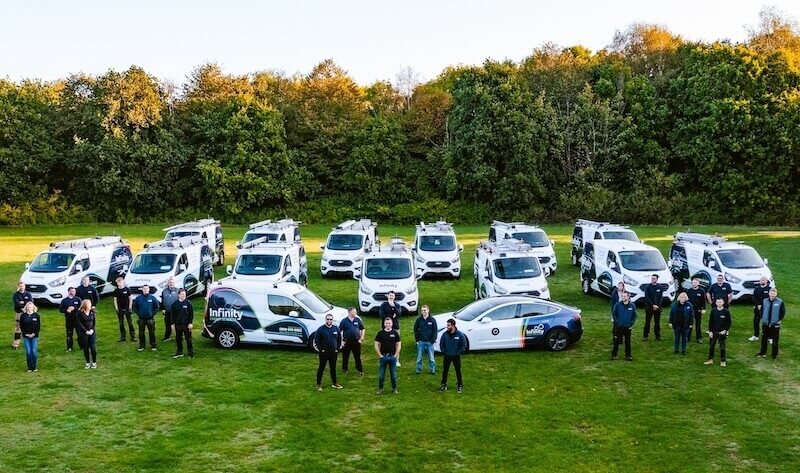
Our team is structured the way a high-volume battery installer needs to be: dedicated surveyors, dedicated designers, a dedicated DNO and commissioning team, and engineers who fit solar batteries every working day.
That depth of specialism is the reason customers across Bournemouth, Poole, Dorchester, Sherborne and the rural reaches of West and North Dorset choose us for a system they expect to rely on for the years to come.
Our Full List of Accreditations
- MCS-certified installer for solar PV and battery storage – the standard that makes your system eligible for the Smart Export Guarantee.
- RECC member – consumer-code protection for renewable energy contracts.
- NICEIC and NAPIT registered – electrical competence in domestic and commercial settings.
- TrustMark registered – the government-endorsed quality scheme.
- CHAS accredited – health and safety standards for site work.
- Tesla Powerwall Premium Installer – Tesla’s highest installer tier, awarded to us after passing 1,000 Powerwall installations.
- SunPower Elite Partner – top-tier installer accreditation with SunPower for premium solar PV.
We are also three-time winners of the regional Solar PV Installer and Contractor of the Year award at the Energy Efficiency Awards, taking the title in 2023, 2024 and 2026. Independent industry recognition across three judging years is something we are genuinely proud of, and a useful third-party signal when you are choosing who to trust with a 15-year investment.
Call 0800 909 882
with any questions or for expert advice
Is Solar Battery Storage Worth It for a Dorset Home?
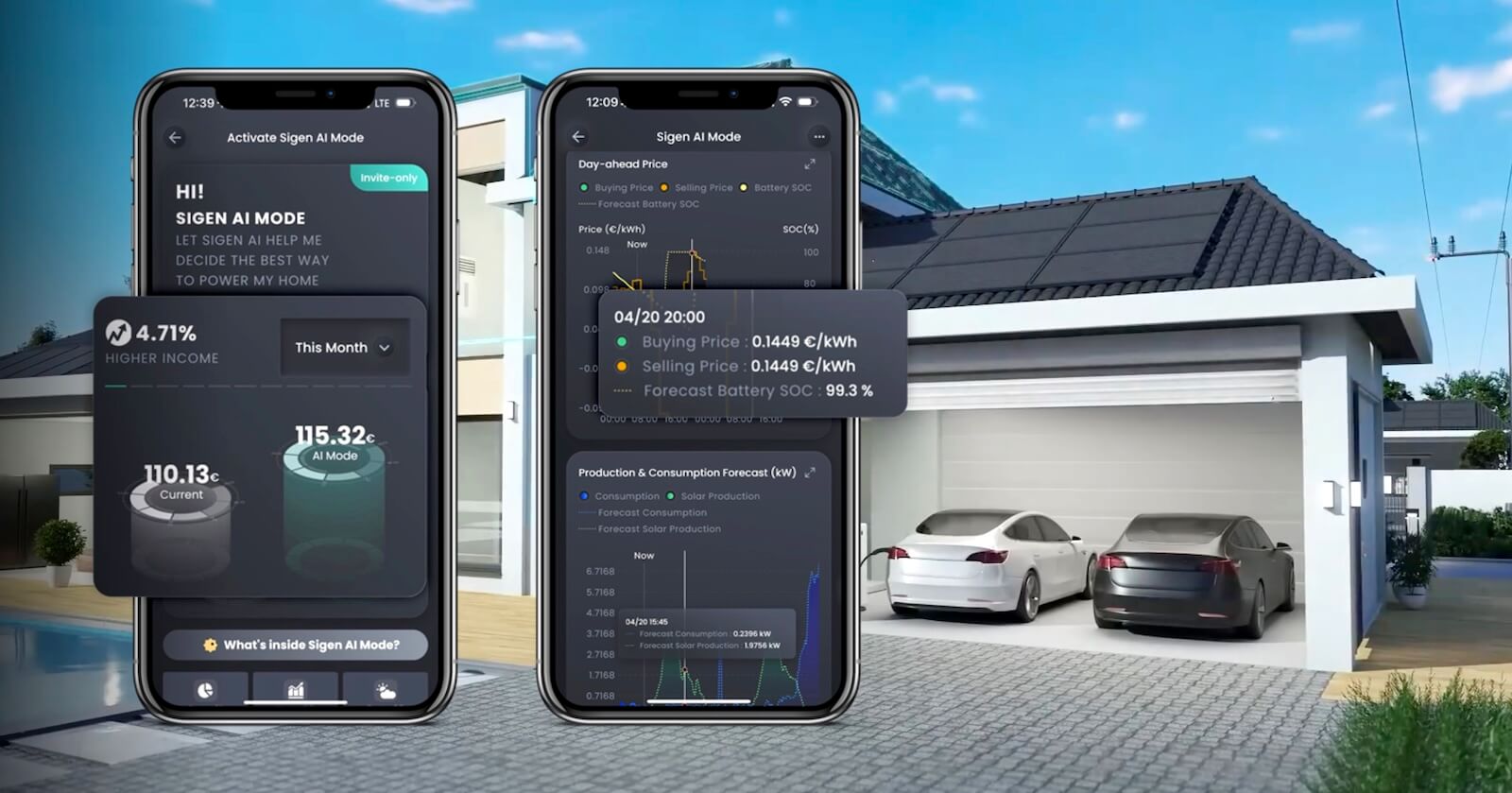
The honest answer in 2026 is: usually yes, but the reason has shifted. A solar battery used to be sold on the strength of export earnings; today its main job is to keep your own solar power at home, where each kilowatt-hour is worth roughly three times what the grid will pay you for it on a typical export tariff.
Three scenarios where a battery comfortably earns its keep in Dorset:
- You already have solar panels installed a few years ago, and most of your generation is being exported at the cheap end of the day when nobody is home.
- You are a Dorset homeowner and interested in getting solar panels installed now and want the system designed properly from the start, with the battery sized to your evening usage.
- You are on a time-of-use import tariff (Octopus Go, Octopus Cosy, etc.) and want to charge the battery overnight when the grid is cheapest, then run the house off it during the expensive evening peak.
Rural Dorset has a fourth case worth naming: resilience.
SSEN, the local network operator, does a good job, but properties on long rural overhead lines in West Dorset, Purbeck and the chalk downland north of Dorchester do experience more outages than the urban Bournemouth-Poole conurbation. A battery with a backup gateway keeps the lights, fridge and broadband on through most power cuts.
The right way to measure the financial case for a solar battery is return on investment: the share of your electricity bill you displace each year, set against the installed cost. Most Dorset homeowners we install for see a meaningful return from year one, growing as import unit rates rise and the battery’s role expands into off-peak charging and resilience.
Which Solar Battery Is Right for Your Home:
Tesla Powerwall 3, Sigenergy SigenStor or Fox ESS?
Most Dorset homeowners who ask us about a battery are choosing between three brands. We install all three because no single product is the right answer for every home. Here is how we think about them, in plain English.
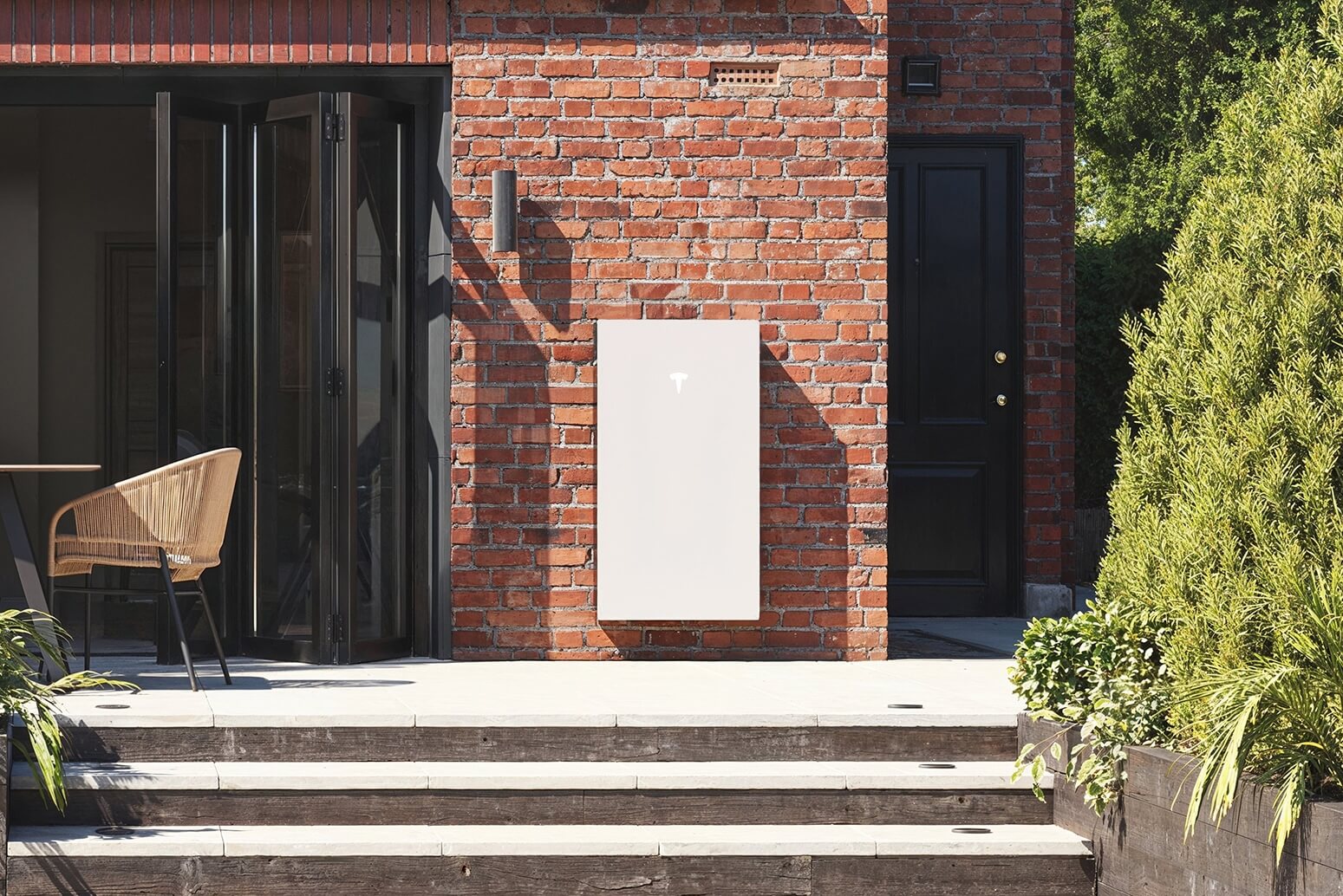
Tesla Powerwall 3
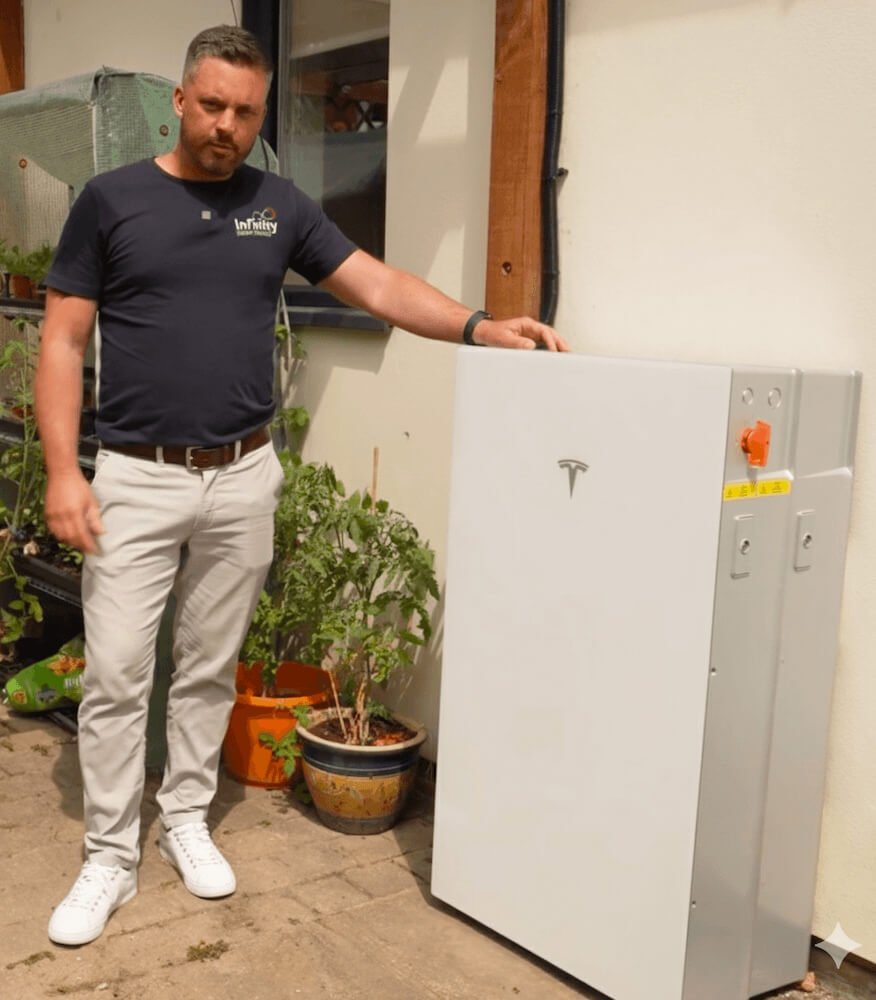
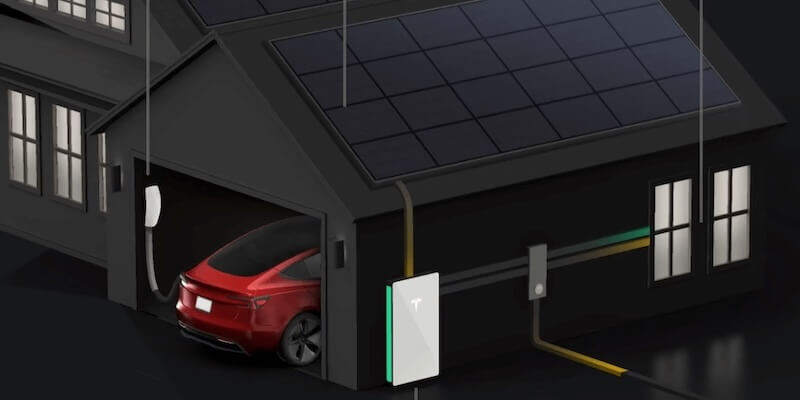
Powerwall 3 is Tesla’s third-generation home battery and the one to beat in the UK market.
It is an all-in-one unit: the battery and the solar inverter are inside the same enclosure, which keeps the install tidy and reduces the number of points of failure.
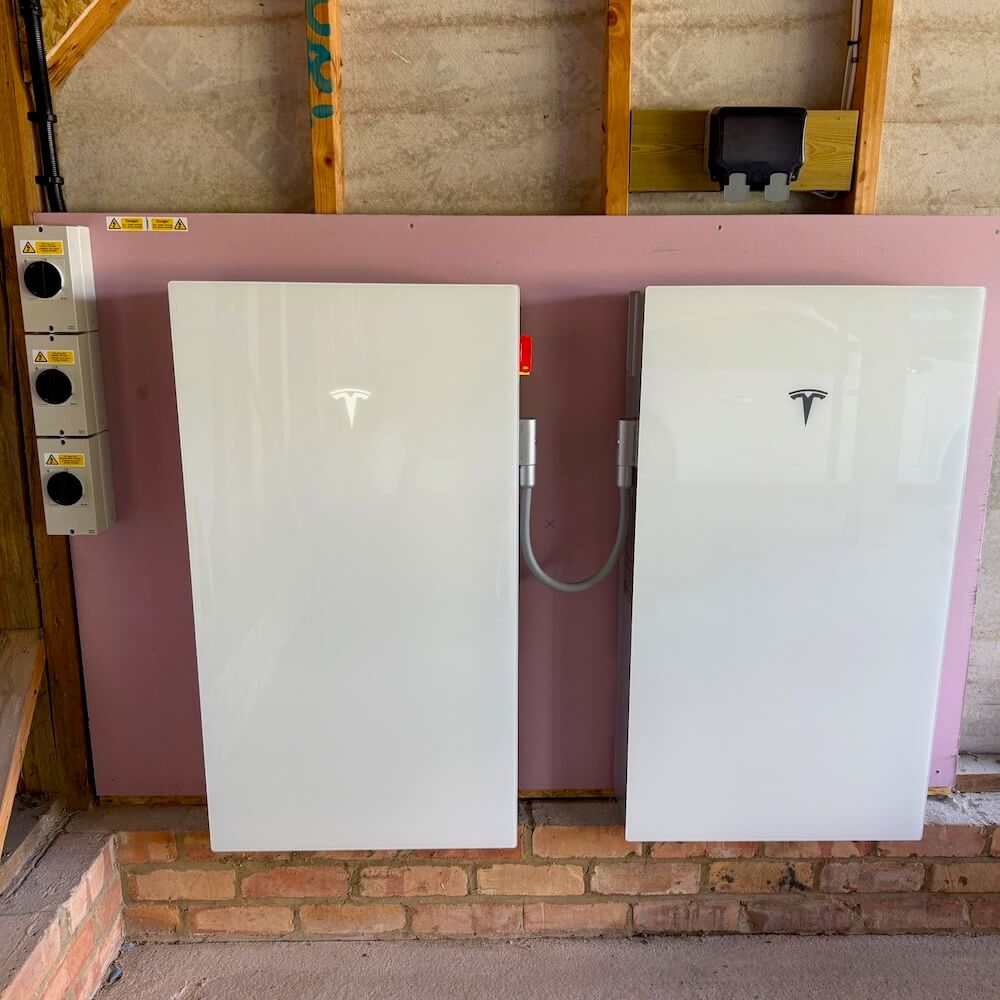
Headline specifications are 13.5 kWh of usable storage and a continuous output of up to 11.04 kW, with peak output well above that – enough to run heavy loads like an electric oven, an EV charger and a heat pump at the same time, even during a power cut if a Backup Gateway is fitted.
Powerwall 3 expansion packs let you stack additional storage in single units of 13.5 kWh each. We install Powerwall 3 most often in three configurations:
- Standard Powerwall 3 on its own (13.5 kWh usable) for a typical 3-4 bed home.
- Powerwall 3 plus one expansion pack (27 kWh usable) for high-usage homes, heat pump households, or families with two EVs.
- Powerwall 3 plus two or three expansion packs (40.5 to 54 kWh usable) for larger detached properties and small estates, particularly where off-grid resilience is part of the brief.
Tesla’s UK Powerwall warranty covers the battery for 10 years and guarantees 80% energy retention at year ten, subject to the warranty terms. To qualify for the full 10-year warranty, the Powerwall must be registered with Tesla and remain connected to the internet so Tesla can provide remote firmware updates and monitoring. If the system is offline for an extended period, the full 10-year warranty may be affected.
Who Powerwall 3 suits: anyone who wants a well-known brand, a clean install, a mature app, an excellent warranty, and the option to grow capacity later in 13.5 kWh blocks. See our dedicated guide on installing the Tesla Powerwall for Dorset homeowners for more details.
Sigenergy SigenStor
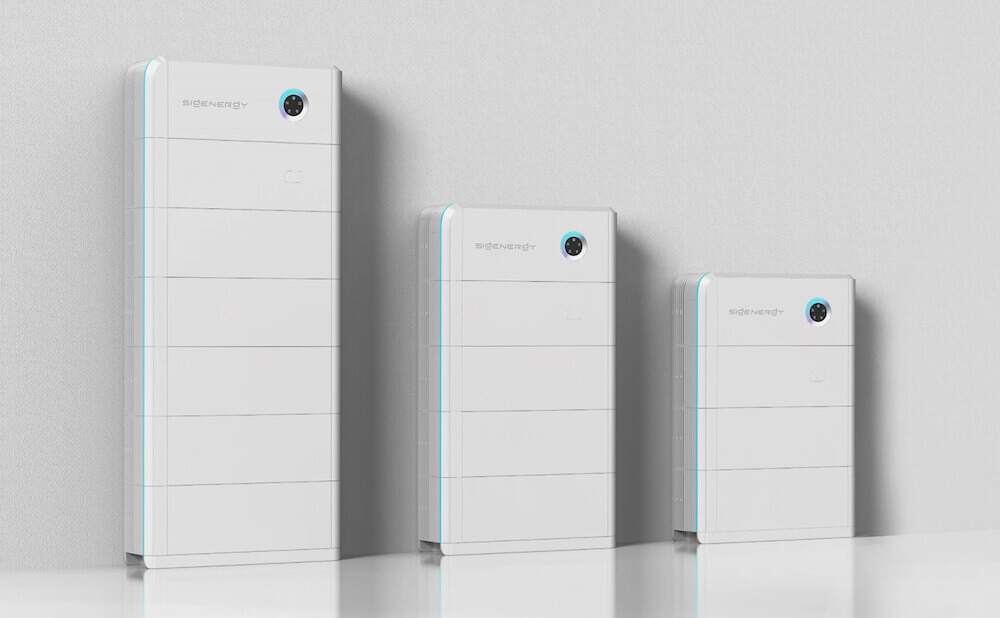
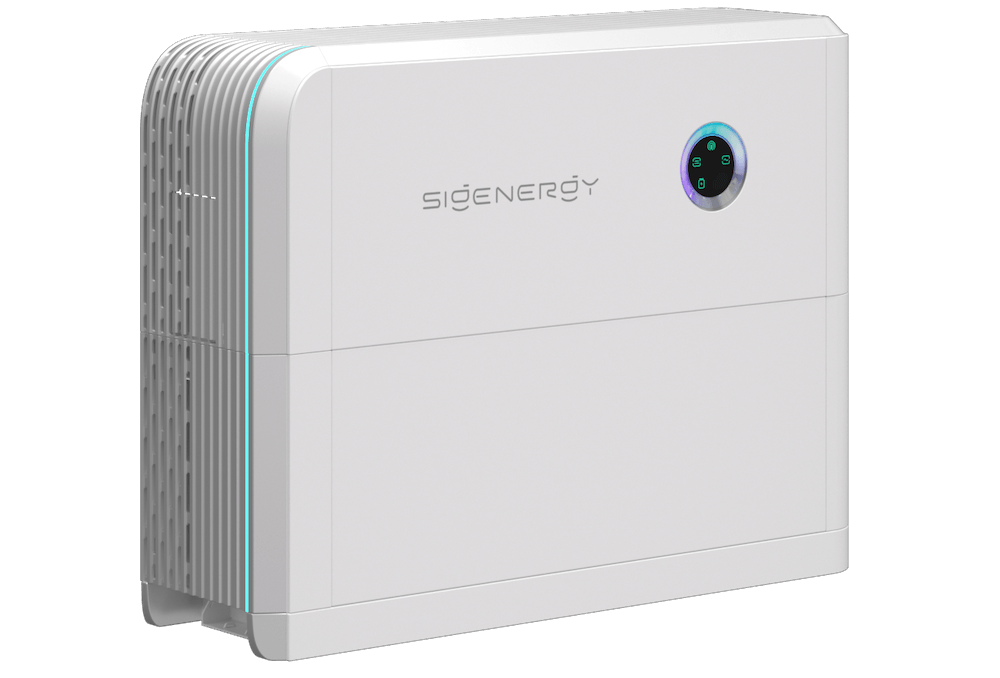
SigenStor is the most flexible product in this trio and the one we recommend most often when a Dorset homeowner wants to start small and add capacity later.
It is a stackable system – a base unit holds the inverter, gateway and control electronics, and you bolt battery modules on top in 6, 10, 16 or 20 kWh increments (with the inverter sized accordingly – 5 kW as standard, other sizes available).
It can also accept an optional DC EV-charging module in place of one battery position, which is unique in the home-battery market and a strong fit for EV-heavy households.
A note on usable capacity that matters when you compare quotes: the kWh figures quoted by Sigenergy are nominal, and usable capacity is around 96-97% of that. The four most popular configurations we install in Dorset are:
- 6 kWh nominal – approximately 5.8 kWh usable
- 10 kWh nominal – approximately 9.7 kWh usable
- 16 kWh nominal – approximately 15.5 kWh usable
- 20 kWh nominal – approximately 19.4 kWh usable
SigenStor’s standard 10-year battery warranty guarantees 60% usable capacity at year ten, subject to the warranty terms and throughput limits, with an optional extension to 15 years if purchased and registered within the required window. Three-phase SigenStor Energy Controller variants are available up to 25 kW, making the system suitable for larger homes and rural properties with three-phase supplies – such as farmhouses, barn conversions and high-demand homes where a standard single-phase battery setup may not make full use of the available electrical infrastructure. To learn more, check out our guide on Sigenergy battery installations in Dorset.
Who SigenStor suits: homeowners who want to start with a smaller battery and grow it; households who want faster EV charging via DC (or one in the next 12 months); three-phase properties; and anyone who wants their solar inverter, battery, EMS and EV charging in one ecosystem. If you are interested in the detailed differences against the Powerwall, see our Sigenergy SigenStor vs Tesla Powerwall 3 comparison.
Fox ESS
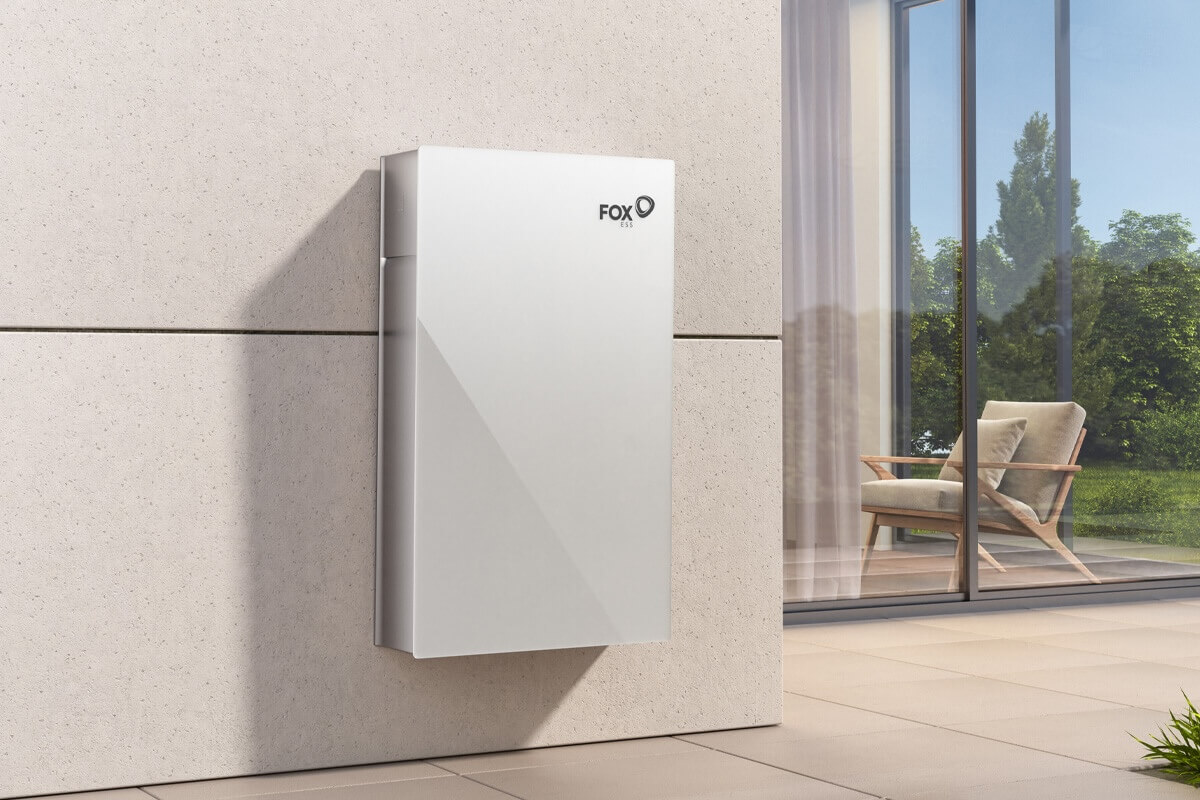
Fox ESS is the option for homeowners who want a sensible, well-warrantied battery at a lower entry price than Tesla or Sigenergy. The EP6 and EP12 modules sit on either side of the typical retrofit decision.
- Fox EP6 – 5.76 kWh nominal, approximately 5.18 kWh usable. Suits smaller homes, flats with appropriate consent, and households that simply want to round out an existing solar system.
- Fox EP12 – 11.52 kWh nominal, approximately 10.36 kWh usable. Suits an average Dorset 3-4 bed home with moderate evening usage.
- Two Fox EP12 modules in parallel – 23.04 kWh nominal, approximately 20.72 kWh usable. Suits larger households or homes preparing for a heat pump.
Fox ESS uses lithium iron phosphate (LFP) chemistry, like the other two brands, with built-in battery warming for cold-weather performance, which matters more in the inland market towns of North Dorset than it does on the coast. The 10-year warranty is contingent on registering the install.
Who Fox ESS suits: budget-led retrofits, smaller homes, and households who want a straightforward AC-coupled battery alongside an existing solar inverter.
At-a-Glance Comparison
ATTRIBUTE | TESLA POWERWALL 3 | SIGENERGY SIGENSTOR | FOX ESS |
Usable capacity (single unit) | 13.5 kWh | 5.8-19.4 kWh (modular) | 5.8 kWh (EP6) or 10.36 kWh (EP12) |
Max usable capacity (one home) | Up to 54 kWh (3 expansion packs) | Up to 46 kWh per stack (further units in parallel | Up to 41 kWh (4xEP12) |
Inverter | Integrated (hybrid) | Intergrated (hybrid, 5kW standard) | Seperate Fox hybrid or AC-coupled |
DC EV-charging module | No | Yes (optional) | No |
Three-phase option | No (single-phase only) | Yes, up to 25 kW | Yes, via Fox three-phase inverter |
Warranty | 10 years to 70% capacity | 10 years to 60% (15-year extension availalble) | 10 years (registration required) |
Best fit | One-and-done install premium brand | Expandable, EV-heavy, three-phase | Cost-led retrofits, AC-coupled options |
How Much Does a Solar Battery Cost in Dorset?

Battery prices have stabilised in 2026 after several years of movement. The figures below are our current Dorset installed prices, valid in May 2026, for the most common configurations. They include design, installation, commissioning and the MCS certificate.
They assume a standard installation (no unusual cable runs, no scaffolding requirements over the standard allowance) and 0% VAT under the current residential energy-saving materials relief, which is in place until 31 March 2027.
Tesla Powerwall 3 installed prices
CONFIGURATION | USABLE CAPACITY | INSTALLED PRICE |
Powerwall 3 | 13.5 kWh | £7,000 |
Powerwall 3 + 1 expansion pack | 27 kWh | £10,450 |
Powerwall 3 + 2 expansion packs | 40.5 kWh | £14,200 |
Powerwall 3 + 3 expansion packs | 54 kWh | £18,000 |
Sigenergy SigenStor installed prices
CONFIGURATION | USABLE CAPACITY | INSTALLED PRICE |
SigenStor 6 kWh | 5.8 kWh | £4,360 |
SigenStor 10 kWh | 9.7 kWh | £5,020 |
SigenStor 16 kWh | 15.5 kWh | £7,300 |
SigenStor 20 kWh | 19.4 kWh | £7,970 |
Fox ESS installed prices
CONFIGURATION | USABLE CAPACITY | INSTALLED PRICE |
Fox EP6 | 5.18 kWh | £3,000 |
Fox EP12 | 10.36 kWh | £4,180 |
Fox EP12 x 2 | 20.72 kWh | £7,000 |
Call 0800 909 882
0% VAT, the Smart Export Guarantee and Other Ways the Figures Stack Up
There are three financial reliefs and schemes that change the picture for a Dorset homeowner buying a solar battery in 2026.
- 0% VAT until 31 March 2027. Residential solar batteries currently attract 0% VAT in the UK, including standalone retrofit batteries fitted to an existing solar system. This is HMRC’s Energy-Saving Materials VAT relief, and it applies until 31 March 2027, after which it is scheduled to revert to 5%. Commercial installations remain at 20% VAT.
- The Smart Export Guarantee (SEG). Run by Ofgem, the Smart Export Guarantee requires every electricity supplier with more than 150,000 customers to offer at least one tariff that pays you for solar power exported to the grid. You need an MCS certificate and a smart meter that records half-hourly export to qualify. Rates change frequently and we do not recommend a specific supplier, but for planning purposes assume 12p per kWh as a reasonable middle-of-the-market 2026 rate. Always compare current tariffs on Ofgem’s register before you register your system.
- Self-consumption is worth more than export. This is the single most important financial point on this page. Standard residential import prices in 2026 sit around three times the level of typical SEG export tariffs, which means every kWh your battery stores and uses at home is worth roughly three times what the same kWh would earn you flowing back to the grid. The arithmetic is the reason batteries make sense for most solar households, and the reason we now design systems around evening usage rather than around export earnings.
Sizing a Battery for a Dorset Household
The wrong-sized battery is the most common avoidable mistake in this market. Oversized, and you have spent capital on capacity you cannot fill; undersized, and you will still be importing expensive evening electricity even on a sunny day.
Five variables drive the answer:
- Your annual electricity import in kWh – the figure on your most recent bill, not an estimate.
- Your evening usage profile – the share of import that lands between 4pm and 11pm.
- Whether you have, or plan to install, a heat pump.
- Whether you have, or plan to install, an electric vehicle.
- Whether you intend to use an off-peak import tariff to charge the battery overnight, in addition to charging it from solar.
A Worked Dorset Example
A 4-bed detached home in Wimborne using 4,500 kWh a year with a 4.5 kWp south-facing solar array typically lands in the 10-13 kWh usable battery range. That covers most evening consumption in summer entirely from stored solar, and meaningfully reduces evening grid import in winter when the battery is being topped up off-peak.
If the same household adds an EV and an off-peak tariff, the answer moves up to 15-20 kWh; if they add a heat pump as well, we are usually looking at 20 kWh and above, or a SigenStor stack that can grow in stages.
The cleanest way to translate this into a number for your own home is the Infinity battery sizing calculator. It walks through usage, solar size, EV assumptions, and gives a range rather than a single answer.
The Dorset Grid: SSEN, G98 and G99 Explained
Scottish and Southern Electricity Networks (SSEN) is the Distribution Network Operator for the whole of Dorset. SSEN owns the cables, transformers and overhead lines between the national grid and your meter, and it is SSEN that decides whether a proposed battery system can connect. Two engineering recommendations matter:
- G98 – the notify-after-install regime for systems with an inverter output of up to 3.68 kW per phase. SSEN are informed once the system is commissioned.
- G99 – the prior-approval regime for systems above that threshold. SSEN must approve the design before installation, and may impose an export limit on the system.
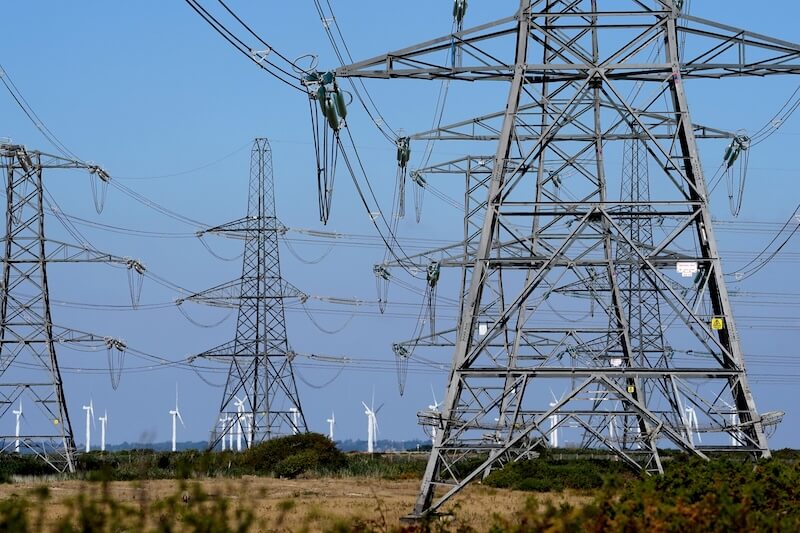
In practice, this means that a standalone Powerwall 3, most SigenStor configurations and any twin-EP12 Fox ESS install will trigger a G99 application. We complete the paperwork on your behalf, including any export-limiting settings that may be needed for properties on constrained parts of the SSEN network. Turnaround in Dorset is normally 4-6 weeks, sometimes longer in rural areas where the local feeder is already running close to capacity.
Dorset-Specific Considerations: Coast, Conservation and Off-Gas-Grid
Three factors come up often enough in Dorset surveys to deserve their own section.
Coastal Properties
Anywhere within about a mile of the sea – Sandbanks, central Bournemouth, Boscombe, Mudeford, Swanage, Weymouth, West Bay, Bridport and Lyme Regis – salt-laden air accelerates corrosion of unprotected electrical cabinets and roof-mounted hardware.
The fix is straightforward: marine-grade enclosures, sealed cable entries, stainless fixings, and (for outdoor batteries) a wall position that is sheltered from prevailing southwesterlies. None of this is exotic, but it has to be specified at survey rather than retrofitted after a year of weathering.
Conservation Areas, AONB and the Jurassic Coast
Large parts of Dorset sit within the Dorset National Landscape (formerly the Dorset AONB), and the entire south coast forms part of the Jurassic Coast World Heritage Site.
Batteries themselves rarely create a planning issue – they are usually installed in a garage, utility room or outhouse and are not visible from outside. The sensitivity is around any externally visible solar or DNO equipment that goes in with the battery: panel positioning on principal elevations, ground-mount arrays, and meter-cabinet enlargements may all need attention in a conservation area. We flag this at survey rather than discover it at install.
Off-Gas-Grid Rural Dorset
Large parts of West Dorset, Purbeck and North Dorset are off the gas grid and run on oil, LPG or electric heating.
In those properties, a solar battery installation often makes most sense paired with an air source heat pump, paid for in part by the Boiler Upgrade Scheme. The expected July 2026 BUS grant uplift to £9,000 for off-gas-grid oil and LPG homes will sharpen the case further.
Battery storage in these households does two jobs: it shifts evening usage off-peak, and it carries the heating load through more of the day.
Our Survey, Design and Installation Process
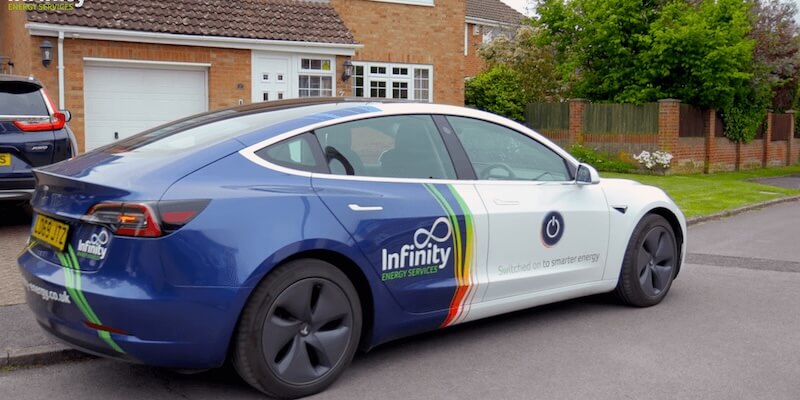
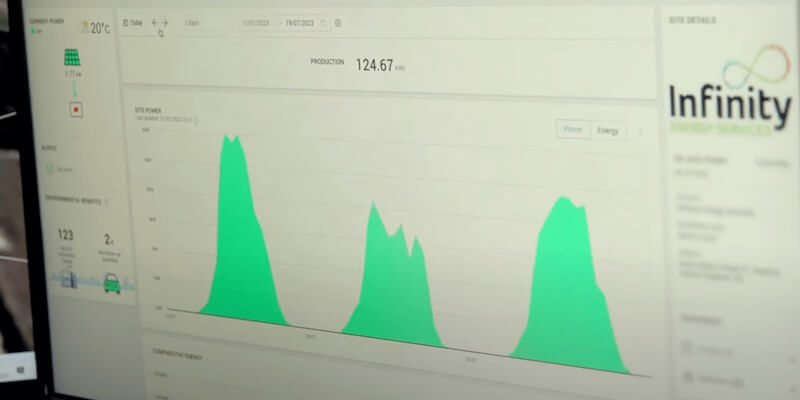
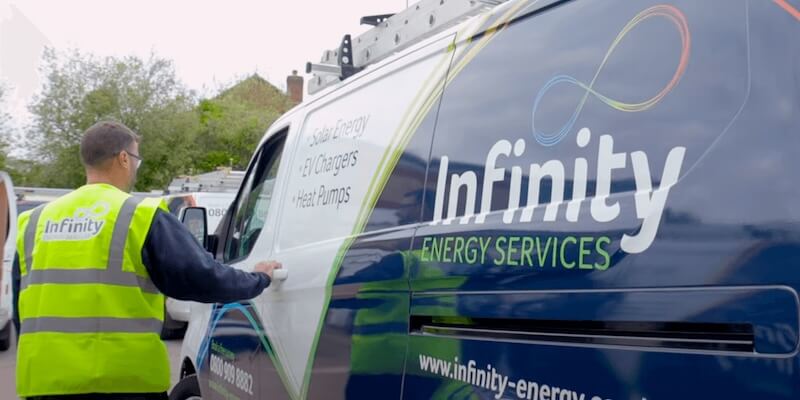
Every Infinity Energy Services battery installation follows the same five-step process.

“Battery storage only earns its keep when it is the right size for the household and the right brand for the property. The honest part of this job is being willing to tell a customer when the answer is a smaller battery than they were expecting, or no battery at all. That is the standard we hold ourselves to.”
– Daniel Hanslip, Managing Director, Infinity Energy Services

Warranties, Aftercare and What Happens Next
Each of the three brands we install carries its own manufacturer warranty:
- Tesla Powerwall 3 – 10 years to 80% of original capacity, conditional on the system remaining internet-connected for firmware and monitoring.
- Sigenergy SigenStor – 10 years to 60% of original capacity, with an optional extension to 15 years.
- Fox ESS EP6 and EP12 – 10 years, with online registration required after install.
On top of the manufacturer warranty, Infinity Energy Services provides a workmanship warranty covering the installation. If anything ever needs attention – a firmware update that did not apply cleanly, an alarm on the app, a question about a tariff – your point of contact is our in-house aftercare team, not a queue at a manufacturer support line.
Solar Battery Installation Areas We Cover in Dorset
We install across the whole of Dorset, including all BH, DT and SP postcodes inside the county boundary, from our Hampshire headquarters. The 16 towns below are the ones we are asked about most often:
- Bournemouth
- Poole
- Weymouth
- Christchurch
- Ferndown
- Dorchester
- Wimborne Minster
- Bridport
- Verwood
- Blandford Forum
- Gillingham
- Swanage
- Sherborne
- Shaftesbury
- Wareham
- Lyme Regis
Two notes that matter for Dorset specifically. First, the BCP unitary authority area – Bournemouth, Christchurch and Poole – sits inside the ceremonial county of Dorset, so a Bournemouth address is still a Dorset install for the purposes of this page and the SSEN connection process. Second, rural addresses outside the named towns above are not a problem; if you are inside the county boundary, we cover you.
This Month in Dorset Battery Storage
– May 2026 Update
Updated monthly with relevant changes for Dorset homeowners.
- SEG rates: assume around 12p per kWh as a sensible 2026 planning figure; the best fixed rates currently available on the market move month-to-month and are worth checking before you register.
- VAT: 0% on residential battery storage remains in place until 31 March 2027.
- Bank of England base rate: pace of further cuts uncertain – relevant if you are weighing a battery installation against leaving cash on deposit.
- SSEN G99 turnaround in Dorset: running at approximately 4-6 weeks for standard residential connections.
Frequently Asked Questions About Solar Batteries in Dorset
Yes. We retrofit batteries to existing solar PV systems regularly. Older systems usually need an AC-coupled battery like the Fox EP6 or EP12; newer systems with compatible inverters can take a DC-coupled SigenStor. Powerwall 3 is itself a hybrid solution and is the cleanest answer where the existing solar inverter is approaching the end of its life.
Most 3-4 bed Dorset homes with a 4-5 kWp solar array land in the 10-13 kWh usable range. Households with an EV, a heat pump or an off-peak tariff in mind usually need more – often 15-20 kWh, or a stacked SigenStor that can grow in stages. The Infinity battery sizing calculator gives a property-specific range.
All three brands we install use lithium iron phosphate chemistry and carry a 10-year warranty (Sigenergy can be extended to 15 years). Real-world life expectancy is typically 12-15 years for a well-installed, well-maintained battery; firmware support and internet connectivity matter more than people expect over that timescale.
It can be, on a time-of-use tariff. A battery charged overnight on a cheap off-peak rate and discharged during the expensive evening peak can save money on its own – particularly for households with high evening usage or an EV. The economics are tighter than for a solar-plus-battery installation, but the case is real and getting stronger as more time-of-use tariffs come to market.
Residential installations currently pay 0% VAT under HMRC’s Energy-Saving Materials relief. This applies to standalone retrofit batteries as well as new solar-plus-battery installs. The relief is scheduled to run until 31 March 2027. Commercial installations pay 20% VAT.
In almost all cases, no. Indoor batteries are not visible from outside the property and do not engage planning rules. Externally mounted batteries are usually treated as ancillary domestic equipment. Conservation areas and listed buildings need a closer look, particularly where solar panels are being installed at the same time on a principal elevation.
A retrofit battery typically takes 1-2 days on site. Solar plus battery together is usually 2-3 days. Expansion packs and stacked modules add half a day at most. The bigger time variable is SSEN G99 approval – currently 4-6 weeks in Dorset – which we apply for as soon as your design is signed off.
There is no single best answer. Powerwall 3 is the simplest one-and-done install with a strong brand. SigenStor is the most flexible if you want to start small and grow. Fox ESS is the most cost-effective for a sensible retrofit. We will recommend the one that fits your usage, your existing solar (if any) and your budget – not the one we have most stock of.
Speak to Dorset’s Infinity Team
If you would like a free survey, a no-obligation quote, or a second opinion on a quote you already have, we are easy to reach.
- Phone: 0800 909 882
- Online enquiry: complete the form on this page
- Calculator: try the battery sizing calculator
We cover the whole of Dorset from our Hampshire headquarters at Unit 6 Swanwick Business Centre, Bridge Road, Southampton SO31 7GB. Surveys are free, and quotes are valid for 30 day.