New £30m Community Energy Funding:
Infinity Energy Services Sets Out 5 Steps for a Successful Solar Project

published 17 September 2026
A new package of government funding could help communities across the UK develop and own local renewable energy projects, including solar panels on public and community buildings.
Great British Energy announced the funding on 17 September 2026 as the first wave of its new “People’s Power” programme.
The Government says the wider Local Power Plan aims to support more than 1,000 local and community-led clean energy projects.

The package includes a £20 million Community Fund for organisations in England, Wales and Northern Ireland, a £5 million Partnerships Grant for English local authorities working with community energy partners, £1.8 million for Scotland’s existing community energy programme and up to £2.9 million for advice services.
Projects supported through the Community Fund must give the local community a defined legal and financial interest, with an agreed share of the benefits retained locally.
It is a potentially important opportunity for councils, community energy organisations and local groups. But securing funding is only one part of creating a successful solar project.
Infinity Energy Services has therefore set out 5 practical steps that organisations should consider before moving from an initial idea to a detailed proposal.
1. Define the Community Benefit
The first question is not how many solar panels will fit on the roof. It is what the project is intended to achieve for the community.
That might mean lowering the running costs of a community building, protecting a local service from rising electricity prices, generating income for neighbourhood projects or reducing local carbon emissions.
A strong proposal needs a clear explanation of who will benefit, how those benefits will be measured and how they will remain within the community.
The ownership structure matters, too. The Government has said that Community Fund projects must give the community a defined legal and financial interest in the energy asset.
Groups should therefore establish who will own the solar installation, who will be responsible for it and how any savings or income will be used. These questions should be addressed at the beginning, rather than left until the system is ready to install.
2. Start with the Building’s Electricity Use
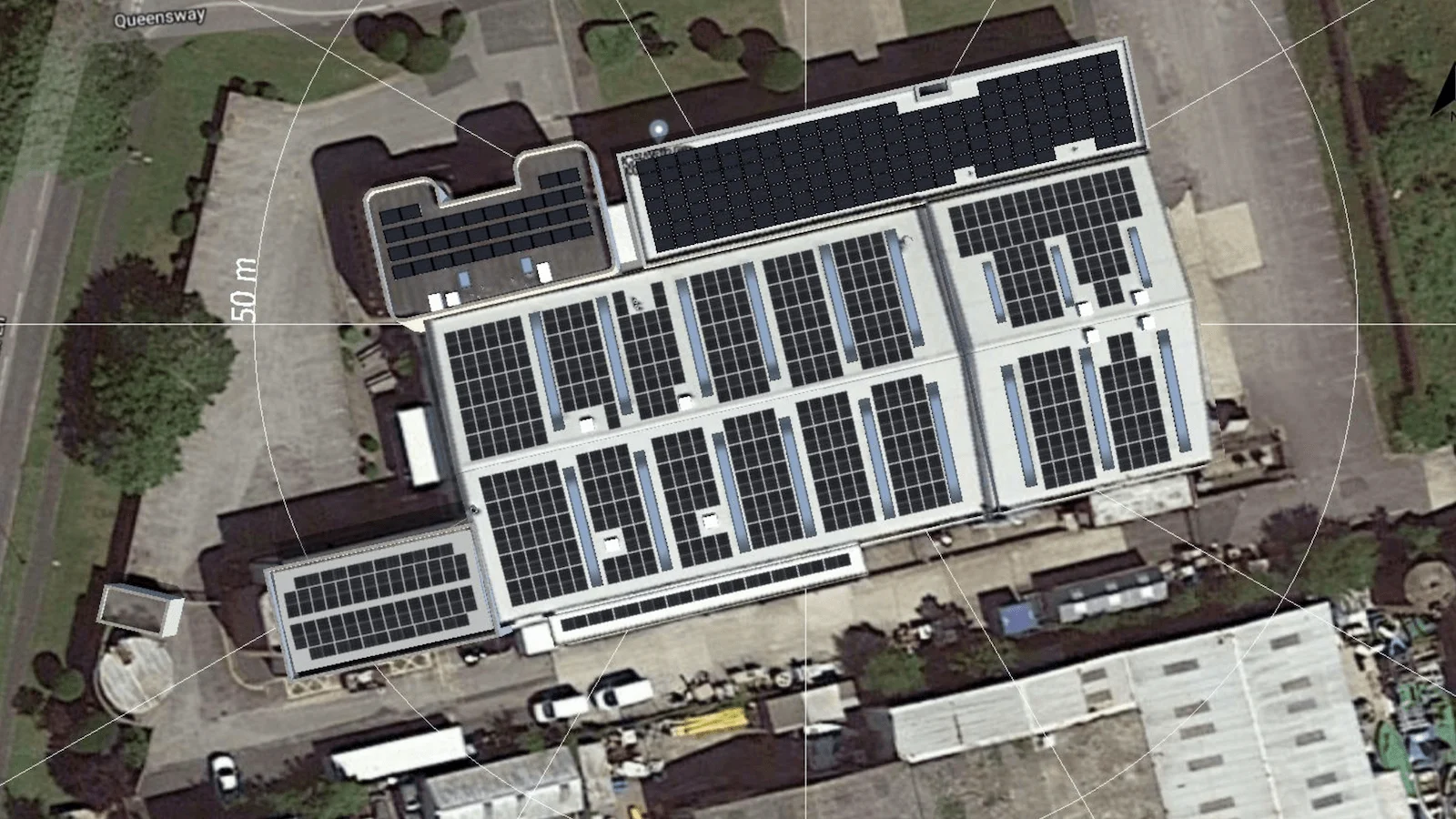
A solar installation should be designed around the building and how it consumes electricity.
Community centres, schools, sports clubs, libraries and other shared buildings can have very different patterns of energy use. Some may consume most of their electricity during daylight hours, while others are busiest in the evening or at weekends.
Recent electricity bills provide a useful starting point. For larger buildings, half-hourly consumption data can give a much clearer picture of when electricity is being used.
The roof or proposed installation site must also be assessed. Its size, orientation, pitch, condition, available space and level of shading will all affect what can be installed and how much electricity the system is likely to generate.
At Infinity Energy Services, our commercial solar process begins with an energy audit and a detailed site survey. This prevents a project from being designed around an assumed system size that may not suit the building’s actual needs.
3. Build a Realistic Financial Case
The largest possible solar array is not automatically the best option.
A good system design should consider how much solar electricity the building can use directly, how much may be exported and whether battery storage could improve the project.
A battery can store electricity generated during the day for use later. This may be particularly valuable for buildings used in the evening, or where keeping more solar electricity on site produces a stronger financial return than exporting it.
Future plans should also be considered. A building may later add electric vehicle chargers, electric heating or other equipment that increases its electricity demand.
Financial projections should include estimated generation, on-site consumption, electricity savings, export income, maintenance costs and equipment replacement. They should also show the assumptions behind the figures rather than relying on a single headline saving.
Grant funding can help a project get started, but the underlying system should still make technical and financial sense over its working life.
4. Address Permissions and Grid Connection Early
Even an apparently straightforward rooftop solar project can involve several organisations and approvals.
Depending on the location and scale of the installation, the project may require planning permission, structural assessments, landlord or freeholder consent and approval from the local Distribution Network Operator to connect to the electricity network.
There may also be legal questions surrounding leases, access rights, insurance and long-term ownership of the equipment.
These issues should be investigated while the project is being developed. Discovering a grid limitation, roof problem or ownership restriction late in the process can result in delays, additional expense or a complete redesign.
Community organisations and councils should also establish how contractors will be selected and what evidence of competence, accreditation, insurance and previous experience will be required.
5. Plan for the Entire Life of the System
Solar panels are long-term assets. The project should therefore cover what happens after installation as carefully as it covers the initial design.
Organisations should know who will monitor the system, respond to faults and arrange any necessary maintenance. Someone should also receive training in how to use the monitoring platform and recognise unexpected changes in performance.
Equipment warranties, workmanship guarantees, insurance and ongoing technical support should be documented clearly.
The project should also have a simple way to report its results. Electricity generation, financial savings, carbon reductions and community benefits can all help demonstrate whether the project is delivering what was promised.
Good monitoring also creates evidence that can strengthen applications for future projects at other local buildings.

Funding Should Support Good Design
The new community energy funding is welcome because many promising projects struggle to move beyond the initial idea. Feasibility work, surveys, professional advice, planning and grid applications all need time and resources before installation can begin.
However, funding alone does not guarantee a successful outcome. The strongest projects will combine genuine community ownership with careful technical design, realistic financial assumptions and a clear plan for long-term operation.
The Government’s announcement says applications have opened for new grants in England, Wales and Northern Ireland. Application arrangements and eligibility can vary, so organisations should check the current official guidance and speak to their regional Net Zero Hub before committing expenditure.
Planning a Community Solar Project?
Infinity Energy Services designs and installs solar panel and battery storage systems for businesses, public-sector organisations and other non-domestic buildings across the south of England.
Our service can cover the initial energy assessment, site survey, system design, grid and planning applications, installation, commissioning, monitoring and aftercare.
Find out more about our commercial solar panel installations or call 0800 909 8882 to discuss a potential project with our energy team.
The availability of grant funding is subject to the relevant scheme’s eligibility rules and application process. Infinity Energy Services is not affiliated with Great British Energy and cannot guarantee that a project will receive funding.