
Electricity VAT Cut: Will It Really Lower Your Energy Bills?

published 28 July 2026
VAT on domestic electricity bills will be temporarily reduced from 5% to 0% from 1 October 2026. However, forecasts suggest that rising wholesale energy costs could absorb much, or potentially all, of the saving.
The Government has announced that VAT will be removed from domestic electricity bills for six months, from 1 October 2026 until 31 March 2027.
The measure is intended to provide households with some financial relief during the winter, when energy consumption normally increases. It will apply to electricity supplied to homes in England, Scotland and Wales.
However, the reduction will not apply to natural gas. Households with a dual-fuel tariff will therefore only receive the VAT saving on the electricity part of their bill.
While the announcement is welcome, households should not necessarily expect their total energy bills to fall in October. Rising wholesale electricity and gas costs could result in a simultaneous increase in the Ofgem Energy Price Cap.

What is changing on 1 October 2026?
Domestic electricity is normally charged at a reduced VAT rate of 5%.
From 1 October 2026, that rate will temporarily fall to 0%. The Government expects the reduction to be passed on to customers on all domestic electricity tariffs, including:
- Standard variable tariffs covered by the Energy Price Cap
- Fixed-rate energy tariffs
- Electricity-only tariffs
- Dual-fuel tariffs, although only the electricity element will qualify
- Prepayment electricity tariffs
The Government estimates that removing VAT could reduce the annualised Ofgem price-cap figure by approximately £45 for a typical household.
This does not mean every household will receive a £45 payment or account credit. The Energy Price Cap limits the unit rates and standing charges suppliers can apply – it does not set a maximum total bill.
The amount each household saves will depend on its electricity consumption, tariff, payment method and regional energy rates.
The Government has also said that eligible charities, residential care homes and certain small organisations receiving domestic-rate electricity may benefit.
Northern Ireland operates under different VAT arrangements. The Northern Ireland Executive is expected to receive comparable funding so that it can provide similar cost-of-living support.
Could the VAT saving be cancelled out by a higher Energy Price Cap?
The VAT reduction will make electricity cheaper than it would otherwise have been. However, that does not guarantee that the price households actually pay will fall.
Ofgem’s Energy Price Cap for 1 July to 30 September 2026 is £1,862 a year for a household using the previous typical consumption assumptions and paying by Direct Debit. This was a 13% increase from the preceding cap period.
The regulator will announce the cap applying from 1 October to 31 December 2026 on 26 August.
Early forecasts indicate that underlying energy costs are likely to rise again.
Cornwall Insight estimated on 21 July that the October price cap could increase by approximately 2%, despite the VAT reduction.
Its forecast placed the cap at approximately £1,700 using Ofgem’s new lower typical consumption figures. The equivalent figure using the previous consumption assumptions would be approximately £1,906.
MoneySavingExpert subsequently reported that an average of three forecasts suggested a possible increase of around 5.1%, equivalent to approximately £93 a year for a typical household.
These remain forecasts rather than confirmed prices. Wholesale market conditions can change before Ofgem completes its calculations.
Nevertheless, they demonstrate why the VAT cut may not translate into a visibly lower monthly payment. The tax reduction could simply prevent bills from rising by as much as they otherwise would have done.
MoneySavingExpert founder Martin Lewis described the announcement as a “good totemic step”, but warned that most households may not feel a significant benefit if the wider price cap rises at the same time.

Why are electricity and gas prices rising?
Wholesale energy prices remain a major influence on the Energy Price Cap.
Electricity prices in Great Britain are also closely connected to gas prices because gas-fired power stations are frequently needed to meet demand and balance the electricity network.
This means international disruption to gas production, shipping routes or energy supplies can feed through to UK household electricity bills – even as more renewable electricity is generated domestically.
The price cap also includes network charges, supplier operating costs, policy costs, standing charges and other regulated allowances.
Removing VAT reduces one component of the bill. It does not remove the UK’s exposure to volatile international energy markets.
Who is likely to benefit most from the electricity VAT cut?
Because the VAT reduction only applies to electricity, households that consume more electricity will receive a larger cash saving.
This could include homes with:
- Electric heating
- An air source heat pump
- An electric vehicle charged at home
- Electric cooking and hot water
- Air conditioning
- Higher-than-average electricity requirements
The policy therefore slightly narrows the cost difference between electricity and gas.
Cornwall Insight has highlighted the importance of reducing this gap if households are to be encouraged to switch from fossil-fuelled heating and transport to lower-carbon electric alternatives.
For households considering an air source heat pump or an electric vehicle home charger, the VAT cut will marginally reduce running costs during the six-month period.
However, the effect is likely to be modest compared with factors such as the household’s tariff, the efficiency of the technology, off-peak electricity rates and the amount of energy consumed.

A temporary tax reduction is not a long-term energy strategy
Any reduction in household electricity costs is positive, particularly during the winter.
However, the VAT cut is currently scheduled to last for only six months. Unless it is extended, the 5% rate will return after 31 March 2027.
The measure also does not resolve the underlying causes of high and unpredictable energy bills.
For homeowners, one way to reduce exposure to grid electricity prices is to generate more electricity at the property.
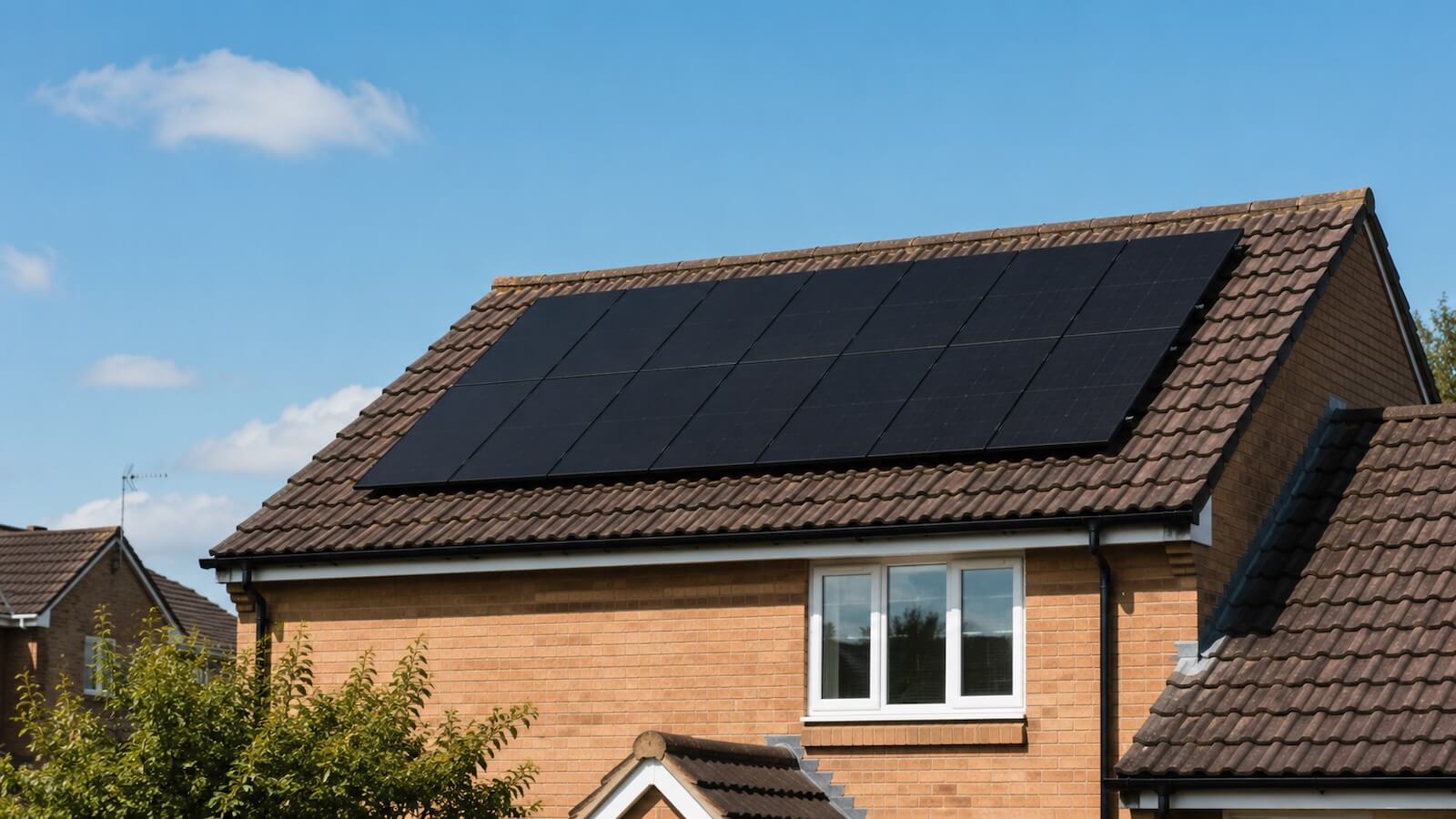
Professionally installed solar panels can provide renewable electricity directly to the home, reducing the amount that needs to be purchased from an energy supplier.
A home battery storage system can store surplus solar electricity so that it can be used later in the day or during the evening.
Depending on the system and energy tariff, a battery can also be charged using cheaper off-peak electricity and discharged when grid prices are higher.
These technologies cannot remove every energy cost. Households may still need to import electricity, pay standing charges and purchase gas where it remains in use.
However, solar and battery storage can give homeowners greater control over where their electricity comes from, when they buy it and how much grid electricity they need.
What should households do before October?
Households should avoid making decisions based only on the headline £45 figure.
Before the October Energy Price Cap is announced, it may be helpful to:
- Check whether the current tariff is fixed or variable
- Review recent electricity and gas consumption
- Compare available fixed and variable tariffs
- Check whether a time-of-use tariff could reduce costs
- Consider whether electricity use could be moved to cheaper off-peak periods
- Submit accurate meter readings where required
- Review longer-term options for improving household energy efficiency
The confirmed October price cap will be announced by Ofgem on 26 August 2026.
Customers considering a fixed tariff should compare the complete tariff – including electricity rates, gas rates, standing charges, exit fees and the duration of the agreement – rather than looking only at the headline annual estimate.

Our view
Removing VAT from electricity is a positive step, particularly because the UK is encouraging households to move towards electric vehicles, heat pumps and other forms of electrification.
It is also important to be realistic about the likely impact.
A temporary 5% VAT reduction cannot fully protect households from movements in wholesale energy prices. If the October Energy Price Cap rises as forecast, many people may see little or no reduction in their monthly payments.
The VAT cut makes electricity slightly less expensive than it would otherwise have been. The more fundamental challenge is giving households lasting protection from volatile energy markets.
Generating electricity through solar panels, storing it in a home battery and using smart tariffs can all form part of a longer-term approach to reducing dependence on expensive grid electricity.
Take greater control of your home energy costs
Infinity Energy Services designs and installs bespoke solar panel, battery storage, air source heat pump and EV charging systems.
Our experienced team will assess your property, electricity consumption and future energy requirements before recommending an appropriately sized system.
Contact Infinity Energy Services or call 0800 909 8882 to arrange an initial consultation.