
Warm Homes Loan Scheme: the complete guide to loans for solar panels, batteries and heat pumps

Low-interest, government-backed loans of up to £15,000 for solar panels, £15,000 for a battery and £20,000 for a heat pump. What the scheme is, what it will really cost you, when it’s worth using and how to use it with the installer you choose.
Thinking about solar panels, a home battery or a heat pump, but not keen on paying the whole bill in one go? Since 27 October 2026 there’s a government-backed way to spread the cost.
In this guide, we explain how the Warm Homes Loan Scheme works, what a loan will cost you, when borrowing makes sense and when it doesn’t, and how to get one with the installer of your choice. We’ll keep it updated as the scheme changes.

TABLE OF CONTENTS
- The Short Version
- What Is the Warm Homes Loan Scheme?
- How Much Can You Borrow?
- Who Can Apply?
- What Can You Use a Warm Homes Loan For?
- Should You Take Out a Loan at All?
- What Will a Warm Homes Loan Cost You?
- Installer First, Lender Second
- Combining It with the Boiler Upgrade Scheme and 0% VAT
- How to Apply, Step by Step
- Audits and Paperwork
- Using a Warm Homes Loan with Infinity Energy Services
- Pitfalls to Avoid
- Frequently Asked Questions

published 6 November 2026
The short version
A Warm Homes Loan is a low-interest loan from a bank or finance company, backed by the government, for solar panels, batteries and heat pumps. It makes borrowing cheaper. It doesn’t make it free.
- What it is: a loan from a lender, with the government paying the lender a grant so it can charge you less interest. You repay the lender, not the government.
- How much: up to £15,000 for solar panels, £15,000 for a battery and £20,000 for an air source heat pump, before any Boiler Upgrade Scheme grant is taken off.
- Who: homeowners (with or without a mortgage) and private landlords, anywhere in the UK. There’s no income limit and no minimum EPC rating.
- The catch: it’s still a loan. Unless you land a 0% deal, you’ll pay interest, and some scheme loans are secured on your home.
- Our advice: choose your installer and get a proper quote first, then the loan. And if you can pay outright, you’ll pay less.
Read on for the detail, or use the contents list above to jump to the section you need.
What is the Warm Homes Loan Scheme?
The Warm Homes Loan Scheme is part of the government’s Warm Homes Plan. It launched on 27 October 2026 and is run by the Department for Energy Security and Net Zero (DESNZ). You can read the official overview on GOV.UK.
The idea is simple. The government doesn’t lend you the money. Instead, it pays approved lenders a grant worth up to 20% of each loan, and in return the lender charges you a lower interest rate than it would on a normal loan.
How much lower are the rates?
The scheme is designed to cut the interest rate by up to five percentage points compared with the lender’s normal rate for the same loan, but never below 0%.
The government’s own example is a £10,000 loan over seven years. On a normal loan at 8%, you’d pay about £155 a month. Through the scheme, the same loan could save you up to £285 a year on the repayments.
Two things to know before you get too excited:
- The reduction depends on the length of the loan. The grant is only paid on loans of three years or more, and because it’s capped at 20% of the loan, it can’t always deliver the full five-point cut on a long loan. Shorter loans get the biggest reduction.
- Each lender sets its own rate. The scheme sets the rules, not the price. Rates, fees and terms vary from lender to lender, so compare the total you’d repay, not just the headline rate.
Please note: the scheme isn’t a grant. The government money goes to the lender to lower your interest rate; you still repay every penny you borrow.
How much can you borrow?
Each technology has its own maximum. These are the limits for the technologies we install:
Other technologies have their own limits, from £7,500 for a heat network connection up to £35,000 for a ground source heat pump. Air-to-air heat pumps (the kind that can also cool your home) have a £10,000 limit on paper, but they can’t be funded until an MCS standard is available for them.
You can borrow for more than one improvement. A solar and battery system, for example, can be funded under both the solar and battery limits, as long as each part stays within its own cap.
Your lender will also run its own affordability and credit checks, so the amount you’re offered may be lower than the scheme maximum.
Who can apply?
The scheme is open to:
- Homeowners who live in the property, whether or not they have a mortgage.
- Private landlords, borrowing personally for a property they let out. If you own more than one property, you can apply for a loan for each one.
The property must be in the UK and must be residential. A home that’s partly used for business can still qualify if the installation mainly serves the household.
There’s no income limit and no minimum EPC rating in the scheme rules, though individual lenders can set their own conditions. Tenants, social landlords and businesses can’t apply. The full eligibility rules are on GOV.UK.
If you’re on a low income, check first whether you qualify for free improvements through the Warm Homes: Local Grant. You can’t use a Warm Homes Loan and another government grant to pay for the same improvement.
What can you use a Warm Homes Loan for?
The loans are for low-carbon heating and electricity, not general home improvements. Every installation (apart from a heat network connection) must be carried out by an installer certified under the Microgeneration Certification Scheme, or ‘MCS’, for that technology. You can’t do the work yourself.
Solar panels
A new rooftop solar system, or extra panels added to a system you already have. Our solar panel installation page explains what’s involved; a typical 4 kWp system is supplied and installed from £5,000.
Home batteries
A battery on its own, charged from a cheap overnight tariff, or a battery installed alongside solar panels. Battery storage is installed from £4,200, and a typical solar panel and battery system is about £10,000.
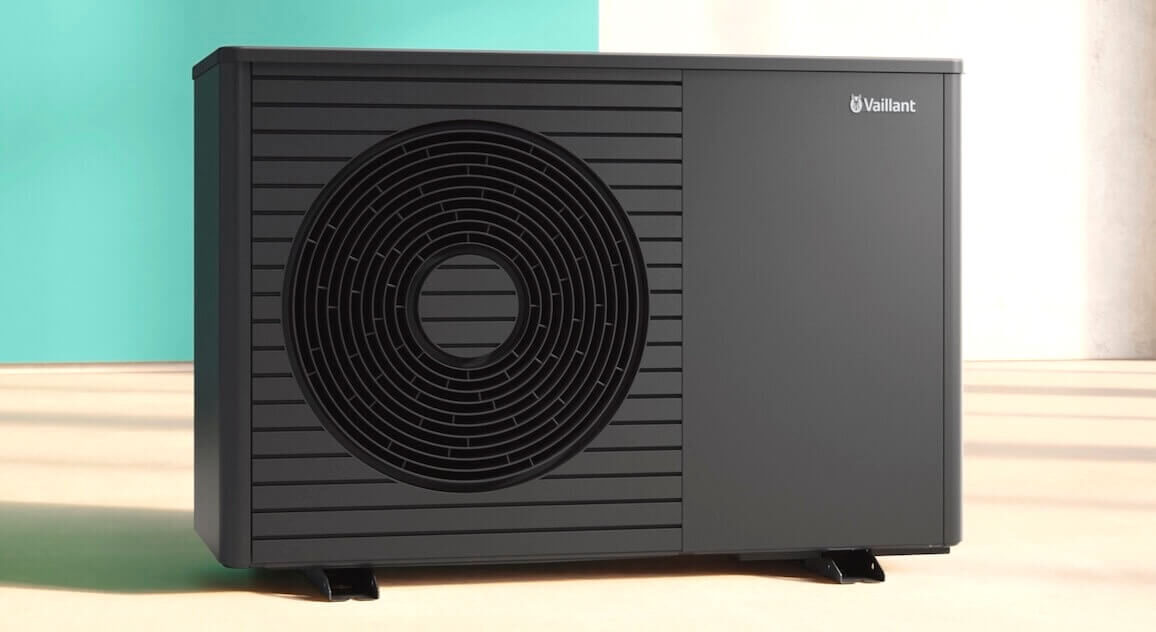
Air source heat pumps
An air-to-water heat pump, which replaces your boiler and heats your radiators and hot water. You can use the loan for the whole cost, or for what’s left after a Boiler Upgrade Scheme grant (more on that below). The one restriction is that it can’t replace an existing low-carbon heating system, such as an older heat pump. See our air source heat pumps page.
EV chargers
Only as part of a solar or battery installation, not on their own, and only if you haven’t already had a government EV charger grant for the same property.
What it won’t pay for
- Insulation, windows or doors (some lenders offer separate products for these).
- Roof repairs or structural work needed before solar panels can go on.
- Air conditioning or air-to-air heat pumps, for now.
- Anything already paid for by another government grant.
Should you take out a loan at all?
Here’s the part most guides skip. A Warm Homes Loan makes borrowing cheaper. It doesn’t make it free.
Unless you land a 0% deal, every pound you borrow costs you more than a pound by the time you’ve repaid it. The longer the loan, the more interest you pay, even at a low rate.
As a guide, borrowing £10,000 at around 5% over five years costs about £189 a month, and roughly £1,300 in interest over the life of the loan. Stretch it to seven years and the monthly payment drops to about £141, but the interest rises to around £1,900. (Those are our own illustrative calculations; actual rates depend on the lender.)
That’s why most of our customers choose to pay outright. If you have the savings, paying in full is the cheapest way to buy solar panels, a battery or a heat pump. No interest, no credit check, no paperwork.
So when is a loan worth it? In our view, in three situations:
- When it gets you in before a deadline. The 0% VAT on home solar panels, batteries and heat pumps ends on 31 March 2027, and the £9,000 heat pump grant for oil and LPG homes ends the same day. On a £10,000 solar and battery system, waiting until April adds £500 in VAT. A short loan that lets you install this winter can cost less in interest than you’d lose by waiting.
- When the savings cover the repayments. If your energy bill savings are close to the monthly payment, the system is paying for itself from day one and you keep the savings once the loan is cleared.
- When paying outright would leave you without a safety net. Emptying your savings to avoid a little interest isn’t always the sensible choice. A low-rate loan can be the better call.
Important: if a loan is secured on your home, your home is at risk if you don’t keep up the repayments. Always check whether a loan is secured or unsecured before you sign.
What will a Warm Homes Loan cost you?
Lenders set their own rates, and they vary with the length of the loan and your credit history. The examples below are illustrations only, using a rate of around 5% to show how the sums work.
For comparison, the same £10,000 over seven years on a normal loan at 8% (the government’s own example) would cost about £155 a month and around £3,100 in interest. The scheme discount is real; it’s just not the same as free money.
Three questions to ask any lender:
- What’s the APR, and is it fixed for the whole term?
- What’s the total amount repayable?
- Is the loan secured on my home, and are there early repayment charges?
Installer first, lender second
This is the single most important piece of advice in this guide.
Scheme loans come in two kinds. Some lenders will only fund an installation carried out by their own partner installer. Others will accept a quote from any MCS-certified installer you choose.
If you sign up with a lender before you’ve chosen your installer, you may find the choice has been made for you. You’ll get one quote, from one company, with no way to compare it. And as MoneySavingExpert has pointed out, a firm offering a subsidised loan could make up the difference in the price of the system itself.
The better order is:
- Decide what you want. Solar, a battery, a heat pump, or a combination. Our Whole Home Planner can help you work out what suits your home.
- Choose an MCS-certified installer and get a written quote. Compare quotes on equipment, warranty and price, not on finance.
- Then find a lender that accepts your installer’s quote. The government’s list of participating lenders is on GOV.UK. Ask each one whether you can use your own installer.
What your quote needs to include
Under the scheme rules, a lender will ask for a quote that:
- is dated within the last six months
- is addressed to you and shows the full installation address
- is on the installer’s headed paper
- includes the installer’s MCS certification number
- gives an itemised breakdown of the costs
- states the size of the system in kW
Our quotes include all of these as standard.
Can you combine it with the Boiler Upgrade Scheme and 0% VAT?
Yes, and this is where the numbers get interesting for heat pumps.
The Boiler Upgrade Scheme
The Boiler Upgrade Scheme (BUS) gives you £7,500 off an air source heat pump. If your home has no mains gas connection and is heated by oil or LPG, the grant is £9,000 for installations until 31 March 2027. The grant comes off your installer’s invoice, and a Warm Homes Loan can cover what’s left. In Scotland, the loan works alongside Home Energy Scotland support instead.
Put the two together and an oil-heated home installing a £13,000 heat pump before April pays £4,000, which could be spread over five years at about £75 a month (our illustrative calculation at around 5%).
Our Boiler Upgrade Scheme guide has the full eligibility rules, and our Grant & Incentive Eligibility Checker gives you a quick answer for your home.
0% VAT until 31 March 2027
Home solar panels, batteries and heat pumps are currently zero-rated for VAT. From 1 April 2027, VAT goes back to 5%. That’s £250 on a £5,000 solar system, £500 on a £10,000 solar and battery system, and £625-£775 on a heat pump before the grant. We’ve written a separate article on the end of 0% VAT.
You can use a Warm Homes Loan alongside the VAT relief and the BUS grant. What you can’t do is use the loan for an improvement that another government grant is already paying for.
How to apply, step by step
- Check you’re eligible. You own the property, it’s residential, and it’s in the UK.
- Get a survey and a written quote from an MCS-certified installer. Make sure it includes everything listed above.
- Choose a lender. Pick one from the GOV.UK list that accepts your installer’s quote, and check whether its loan is secured or unsecured. The loan product will say if it’s funded through the Warm Homes Loan Scheme.
- Apply. You can apply directly to the lender, through an installer offering finance, or through your mortgage provider. You’ll go through the lender’s normal credit and affordability checks and confirm you’re not using another grant for the same work.
- Have the work done. Once the loan is agreed, your installer carries out the installation.
- Collect your paperwork. Your installer registers the installation with MCS and you’ll receive an MCS certificate. Keep it with your quote, invoice and loan agreement.
You apply to the lender, not to the government. There’s no central application form.
Audits and paperwork
After the work is done, you may be randomly selected for an audit. That doesn’t mean anything is wrong. Two organisations can check:
- DESNZ, or a company acting on its behalf, may ask for documents such as proof of identity or address, and may arrange a visit with at least 48 hours’ notice. Anyone visiting can show you confirmation that they’re acting for the scheme.
- MCS may run a quality check, asking about the installation and possibly arranging a visit.
When you apply, you’ll be asked to agree to the department having access to the property for these checks. Keep your quote, MCS certificate, invoice and loan agreement together, and you’ll have everything an auditor could ask for. GOV.UK explains the audit process in more detail.
Important: the scheme has already attracted scammers claiming to be part of it. The government doesn’t lend the money itself, and only the lenders on the GOV.UK list can offer a Warm Homes Loan. Be wary of anyone else who contacts you about one.
Using a Warm Homes Loan with Infinity Energy Services
Infinity Energy Services is MCS-certified for solar panels, battery storage and air source heat pumps, so you can use a Warm Homes Loan from any lender that accepts a quote from your own installer to pay for an installation by us.
Every quote we give includes the details a lender needs: our MCS number, an itemised breakdown, the system size and your full address, on headed paper. If a lender asks for anything else, we’ll provide it.
We’re also working with a scheme lender so that you’ll be able to apply for a Warm Homes Loan directly through us. Ask us for the latest when you get in touch.
We’re not financial advisers, so please check the terms of any loan with the lender before you borrow.

Where we install
We’ve been installing renewable energy systems since 2011, from our base near Southampton. We cover the whole of Hampshire and the neighbouring counties of Dorset, Wiltshire, Berkshire, Surrey and West Sussex, plus Somerset, Gloucestershire and Oxfordshire. We’re a Tesla Powerwall Premium Installer, a SunPower Elite Partner, three-time winners at the Energy Efficiency Awards and members of the RECC Assurance Scheme.
Pitfalls to avoid
- Signing up with a lender before choosing an installer. You may lose the right to compare quotes.
- Looking only at the monthly payment. A longer loan means lower payments but more interest. Compare the total repayable.
- Not checking whether the loan is secured. A secured loan puts your home at risk if you can’t pay.
- Borrowing more than you need. Size the system for your home, not for the loan limit.
- Assuming a scheme loan is the cheapest option. It usually should be, but compare it with a standard personal loan and with paying outright.
- Waiting too long. Scheme funding is first come, first served, and the 0% VAT and £9,000 oil/LPG grant both end on 31 March 2027.
Frequently asked questions about Warm Homes Loans
No. It’s a loan from a bank or finance company. The government pays the lender a grant so it can charge you a lower interest rate, but you repay the full amount you borrow, plus any interest.
The minimum is three years, because the government subsidy only applies to loans of three years or more. Some lenders offer terms of up to 30 years, usually on loans secured on your home. The longer the term, the more interest you’ll pay in total.
With some lenders, yes; with others, no. Some only fund work by their own partner installers, while others accept a quote from any MCS-certified installer. Ask before you apply, and get your installer’s quote first.
Yes. A standalone battery, charged on a cheap overnight tariff, is an eligible improvement with a £15,000 limit. Our Smart Tariff Finder can help you find a suitable tariff.
Yes. Batteries can be added to an existing solar system, and so can extra panels. Try our Battery Retrofit Checker for a quick first answer on whether your system is suitable.
Yes. The grant comes off the price first, and the loan can cover the rest. You can’t use the loan for a cost that another grant is already paying for.
No. The scheme has no income limit and no minimum EPC rating, though lenders can set their own conditions and will run credit and affordability checks.
Yes. Private landlords can borrow personally for a property they let, and can apply for a loan on each property they own. Tenants can’t apply.
No fixed date has been set. The funding is limited and allocated first come, first served, and the government has said it will give notice before the money runs out.
Possibly. Some installations are randomly selected for checks by DESNZ or MCS. Keep your quote, MCS certificate, invoice and loan agreement together and you’ll have everything they could ask for.
Where to next?
- Solar panel installation – from £5,000 for a typical 4 kWp system
- Battery storage – installed from £4,200
- Air source heat pumps – £5,000-£8,000 after the grant
- Boiler Upgrade Scheme guide
- 0% VAT ends 31 March 2027
- Whole Home Planner
- Our news story on the scheme’s launch
Ready to find out what your home could save? Fill in our contact form or call us on 0800 909 8882 for a free survey and a fixed, itemised quote that any lender will accept.